
Chlorinators & Dosing Systems
Chlorinators and dosing systems deliver controlled chlorine treatment for water systems, helping maintain disinfectant levels and manage contamination risks. Blue Fish Water Management advises on suitable equipment, installation, commissioning and ongoing support for reliable, compliant water hygiene control.
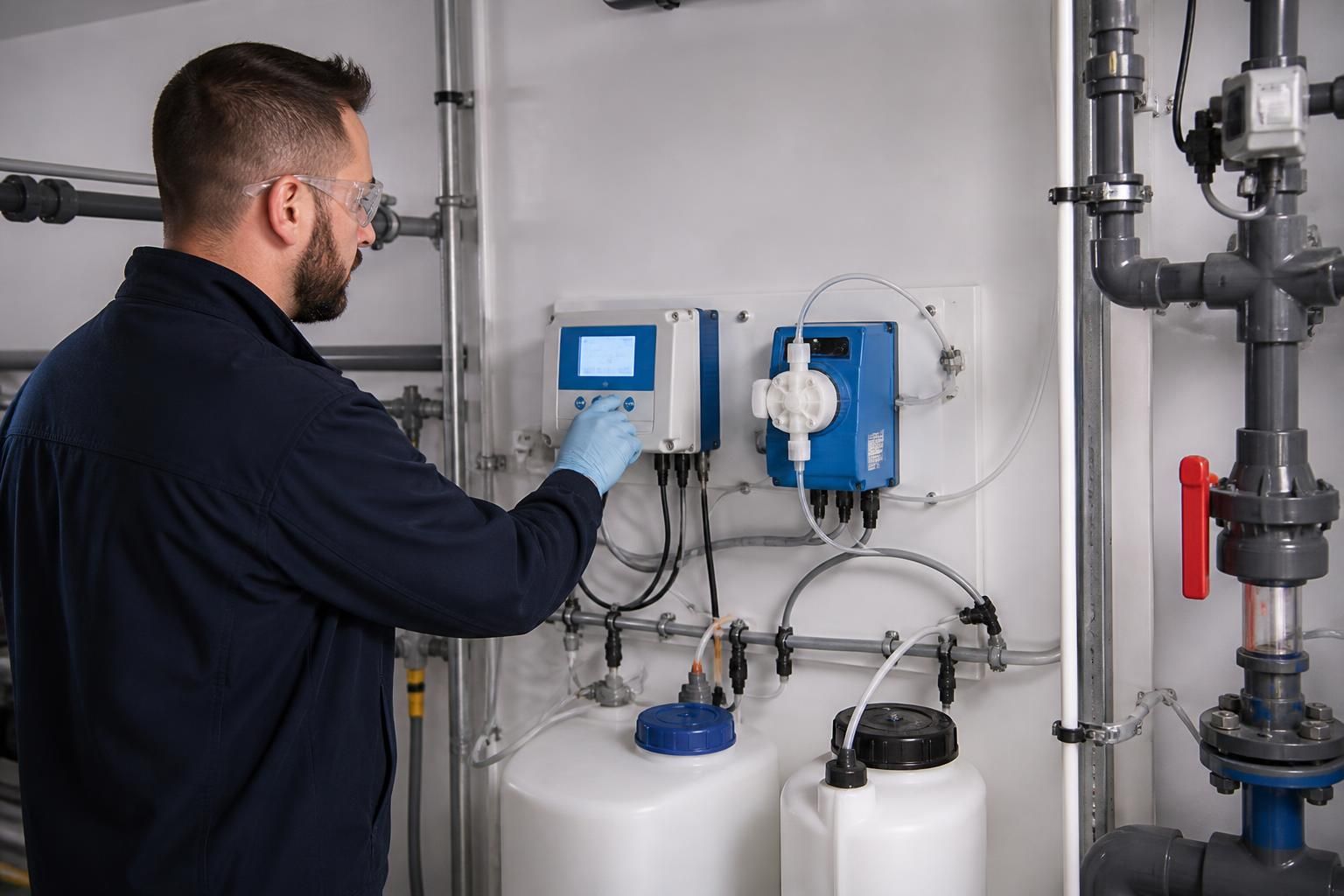
Chlorinator & Dosing System Specification
A properly specified chlorinator and dosing system combines equipment selection, chemical dosing control, monitoring, installation requirements and documented handover. The specification should reflect system design, water use, risk controls, applicable standards and planned maintenance responsibilities.
System duty and design basis
Define the treatment objective from system flow, water usage, storage arrangements and required disinfectant residual. The duty calculation should account for peak demand, contact time, hydraulic conditions and the identified contamination risks.
Dosing equipment selection
Select compatible metering pumps, chemical storage, injection assemblies, pipework and control equipment for the application. Materials, pump capacity and chemical resistance should suit the disinfectant, operating conditions and planned maintenance regime.
Safety and containment controls
Include secure chemical storage, spill containment, appropriate labelling, isolation points and measures to prevent backflow or uncontrolled dosing. The arrangement should support safe access and align with site procedures for chemical handling.
Measurement and control
Use suitable monitoring points and control logic to check flow, dosing performance and disinfectant levels. Low-chemical, loss-of-flow and fault alarms can help identify conditions requiring investigation before treatment performance is affected.
Installation and commissioning
Installation should provide accessible equipment, correctly positioned injection points, suitable electrical connections and secure pipework. Commissioning includes checking dose settings, interlocks, calibration, leak prevention, flushing and operating instructions.
Verification and records
A managed system should have documented commissioning results, monitoring records, calibration details, maintenance activities and fault actions. Handover information should identify responsibilities and reflect relevant water hygiene guidance, applicable standards and site risk assessments.
Understanding Chlorinators, Dosing and Compliance
A chlorinator adds a controlled quantity of chlorine to water so the required disinfectant residual can be maintained through the relevant system. Dosing may be adjusted in response to flow, demand or measured residual, while contact time, water chemistry and distribution conditions affect how effectively treatment works. A residual result should therefore be interpreted alongside the sampling location, system use and treatment objective, rather than viewed in isolation.
The duty holder remains responsible for ensuring the system is risk assessed, operated according to its documented control arrangements and supported by appropriate records. Chlorine readings, chemical usage, alarm events, calibration checks and corrective actions should be reviewed for trends, with unusual or inconsistent results investigated before assumptions are made about treatment performance.
Key components and operating principles
A typical arrangement may include a chemical storage vessel, dosing pump, injection point, non-return protection, control panel and measurement equipment. Dosing can be set at a fixed rate, linked to water flow or adjusted using a residual measurement. The correct arrangement depends on whether the system requires continuous treatment, controlled disinfection of a defined volume or another documented water hygiene application; dosing equipment should not be specified without understanding the complete system.
Operating instructions should state who may adjust dosing settings, replenish chemicals, respond to alarms and authorise remedial action. Clear responsibilities help prevent unauthorised changes and ensure that chlorinator performance is considered alongside the wider water hygiene arrangements.
For an existing or proposed installation, Blue Fish Water Management can review the system requirements, control arrangements and supporting documentation, then advise on practical improvements where needed. This provides a clear basis for managing chlorinator water treatment as part of an organised compliance programme.
Applications for Chlorinators and Dosing Systems
Chlorinators and dosing systems may be suitable for varied premises, water uses and system configurations. The examples below indicate how the approach can be adapted to different building conditions, contamination concerns, operational demands and client management requirements.
Large or complex premises
Chlorinators and dosing systems can support buildings with extensive distribution networks, multiple outlets or changing water demand. Equipment selection and control settings should reflect the network layout, flow patterns and the locations where disinfectant residuals need to be maintained.
Buildings with variable occupancy
Premises that experience changing occupancy or fluctuating water use may require dosing arrangements that account for uneven demand. Reviewing usage patterns helps determine whether the system needs additional monitoring, revised control settings or changes to the wider management approach.
Long or branched distribution systems
Extended pipe runs and branched networks can create differences in flow, temperature and residual concentration between outlets. Dosing design should be considered alongside storage, circulation and representative sampling points so that treatment performance is assessed across the system.
Systems with persistent contamination concerns
Where testing or risk assessment identifies an ongoing contamination concern, controlled chlorination may form part of a wider corrective strategy. The treatment objective, water chemistry and required contact conditions should be established before equipment is selected or settings are changed.
Sites with vulnerable water users
Buildings used by people who may be more susceptible to the consequences of waterborne exposure require particularly clear control arrangements. Dosing equipment should be integrated with documented risk controls, suitable monitoring and defined escalation procedures rather than treated as a standalone measure.
Existing systems requiring improvement
A review may identify unsuitable equipment, inconsistent dosing, incomplete records or control arrangements that no longer reflect how a building is used. In these circumstances, improvements may involve adjustment, replacement, recommissioning or better coordination with sampling and maintenance activities.

Technical Standards for Chlorinator and Dosing System Projects
Chlorinators and dosing systems are engineered around source water, intended use and distribution arrangement. Blue Fish Water Management reviews hydraulic conditions, chemical compatibility, injection points and equipment access before recommending a practical configuration. This aligns the equipment with the treatment objective and site constraints.
Technical personnel examine installation details, commissioning requirements and operating controls, including chemical storage, dosing lines, isolation points and instrumentation. Commissioning checks confirm that equipment operates as intended and that instructions are understood by the responsible team.
Quality control includes documented checks, calibration information, test results and clear handover records. Any discrepancy is assessed against the system risk assessment and addressed through an agreed action. Clients receive a maintainable installation with supporting documentation.
Questions to Ask Before Appointing a Chlorinator and Dosing System Provider
What competence should a chlorinator and dosing system provider demonstrate?
A suitable provider should demonstrate relevant chlorination experience, explain its dosing methodology, identify competent personnel, and provide documented evidence supporting recommendations, commissioning decisions and system management arrangements for your site.
Read moreHow will the provider document chlorinator performance after commissioning?
Require reports to record baseline readings, configured dosing parameters, alarm tests, corrective actions, dates, responsible personnel and recommendations, creating an auditable record to support future maintenance decisions and compliance review.
Read moreWhat ongoing support is included after chlorinator commissioning?
Ask whether support covers scheduled servicing, fault diagnosis, consumable management, recalibration and adjustments, and how changes are authorised. Confirm exclusions, visit arrangements, escalation routes and responsibility for updating operating instructions.
Read moreWhat chlorine dosing methodology will be used for our water system?
The provider should explain whether dosing is flow-paced, residual-controlled or manually adjusted, how setpoints are selected, and how water chemistry, contact time and changing demand influence decisions during site operation.
Read moreWhich accreditations should a chlorinator and dosing system provider hold?
Check that claimed accreditations are relevant to chlorination, testing or management activities, current, and held by the contracting entity. Ask for scope details, exclusions and evidence, not logos alone only.
Read moreDiscuss Your Chlorinator and Dosing System Requirements
To discuss your chlorinator water treatment requirements, contact Blue Fish Water Management for practical advice on suitable scope, existing equipment and ongoing controls. The team can clarify next steps and prepare a tailored quotation where appropriate.