
Waste Water Tank Cleaning for Businesses
Waste water tank cleaning removes accumulated solids, sludge and deposits from tanks serving commercial, industrial and domestic premises. Planned cleaning supports safe operation, helps identify defects and provides documented evidence for businesses managing maintenance, environmental responsibilities and hygiene risks.
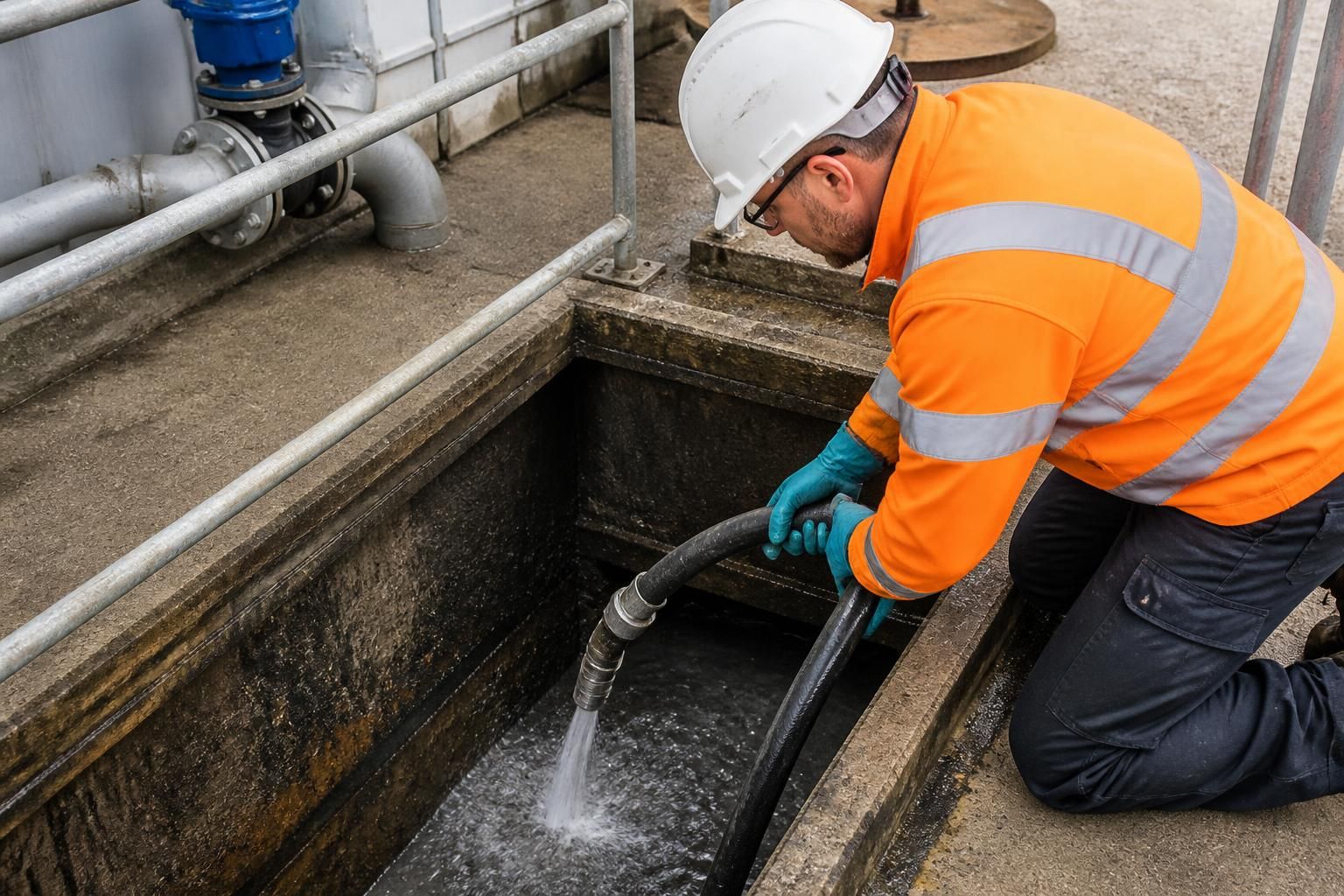
Compliance Evidence
Waste water tank cleaning supports maintenance decisions, helps meet UK water safety responsibilities, and clarifies inspection or remedial action requirements.
What Waste Water Tank Cleaning Includes
The service begins with a review of tank use, access and maintenance history, followed by cleaning suited to its construction and contents. Safe access, waste handling and checks of internal surfaces, inlets, outlets and associated components form part of the work.
Clear findings and practical recommendations identify defects or access issues requiring attention, giving facilities managers a record for maintenance planning and future inspections.
Sludge and Deposit Removal
Cleaning removes settled sludge, solids and other deposits that can reduce usable tank capacity and affect normal operation.
Tank-Specific Cleaning
The cleaning approach is matched to the tank’s construction, contents and condition rather than applying a standard process to every installation.
Condition Observations
Internal surfaces and connected components are examined for visible deterioration, obstructions or other issues that may require planned attention.
Controlled Waste Handling
Material removed during cleaning is managed as part of the work, helping businesses address the environmental responsibilities associated with tank maintenance.
Documented Maintenance Evidence
The completed work provides clear information for facilities teams to retain within maintenance records and use when planning future inspections or remedial works.
Practical Deliverables from Waste Water Tank Cleaning
Waste water tank cleaning should produce more than a visibly cleaner vessel. Depending on the site, useful deliverables may include a defined work scope, safety records, waste documentation, condition observations and clearly separated actions for compliance or maintenance follow-up.
Site-Specific Cleaning Plan
The cleaning plan identifies the tank, access arrangements, isolation requirements and intended cleaning method. This gives the site team a clear basis for coordinating the work safely with other operations.
Technical Condition Review
Cleaning provides an opportunity to review accessible internal features, including inlets, outlets, baffles, covers and visible surfaces. Findings can help distinguish routine maintenance needs from defects requiring further investigation.
Before-and-After Photographs
Photographic evidence can record the tank's condition before cleaning, the work undertaken and the resulting internal condition where access and safety arrangements permit. Images provide useful supporting evidence for maintenance records and management review.
Cleaning Completion Record
A completion record should identify the tank cleaned, describe the work carried out and note any limitations affecting the inspection or cleaning process. Retaining this information supports traceable asset maintenance.
Action-Based Recommendations
The final report can separate observations from recommended next steps, such as further inspection, repair, monitoring or inclusion in a planned maintenance programme. This helps responsible businesses prioritise follow-up without confusing cleaning evidence with a separate remedial assessment.
Questions to Ask Before Commissioning Waste Water Tank Cleaning
How often should waste water tanks be cleaned?
Cleaning frequency depends on tank capacity, incoming solids, usage, previous inspection findings and operational risk; review it after each service rather than relying on a fixed interval for every site.
Read moreWhat does waste water tank cleaning involve?
The process typically includes isolating the tank, removing contents, washing internal surfaces, extracting residues, inspecting accessible components, managing waste appropriately and documenting findings before the equipment is returned to service.
Read moreHow should businesses prepare for waste water tank cleaning?
Preparation includes confirming access, isolation requirements, tank location, contents, site hazards and operational constraints. Provide relevant drawings, previous records and contact details, then brief affected personnel about arrangements and timings.
Read moreWhen is confined space entry needed for waste water tank cleaning?
Confined space entry may be needed where access openings or internal conditions create restricted movement or atmospheric risks. Assessment determines whether entry is necessary and the controls required before work.
Read moreWhat should a waste water tank cleaning quotation include?
A quotation should specify the cleaning scope, access assumptions, isolation arrangements, waste handling, inspection inclusions, health and safety controls, reporting, remedial exclusions, costs and applicable terms for the site concerned.
Read moreHow We Approach Waste Water Tank Cleaning
Waste water tank cleaning is planned around the tank’s construction, contents, access arrangements and any necessary isolation. Before work begins, Blue Fish Water Management agrees the work scope and site controls with the responsible business contact, so operational constraints and safety requirements are understood in advance.
During the process, relevant observations are recorded rather than concealed by the cleaning itself. Findings are explained clearly, with any recommended follow-up separated from the completed cleaning work so businesses can make informed maintenance and compliance decisions.
What is agreed before cleaning?
The scope can identify the tank or tanks involved, required access, isolation arrangements, safety controls, cleaning activities and any information needed from the responsible business contact. Where operational constraints affect the work, these are discussed in advance rather than assumed.
After the work, the responsible person can use the recorded findings to decide whether further inspection, repair or a revised cleaning schedule is appropriate. Any action should reflect the tank’s condition, use and wider site risk rather than follow a standard interval without review.
Where follow-up is needed, Blue Fish Water Management can explain the significance of the observations and help define the next stage, allowing the business to progress maintenance decisions with a clear understanding of what has been completed and what remains outstanding.
Discuss Your Waste Water Tank Cleaning Requirements
To discuss your waste water tank cleaning requirements, contact Blue Fish Water Management with details of the tank, site and intended scope. The team can confirm suitability, clarify initial requirements and agree an appropriate next step.