
Industrial Tank Cleaning Services
Industrial tank cleaning services for commercial and industrial water systems help remove accumulated sediment and contamination, supporting water quality, effective legionella control and compliance. Blue Fish Water Management provides planned cleaning and practical advice suited to each site’s operational requirements.
Water Compliance
Industrial tank cleaning supports safe water systems by removing contamination, helping organisations meet UK responsibilities and establish evidence-based maintenance actions.
What Industrial Tank Cleaning Includes
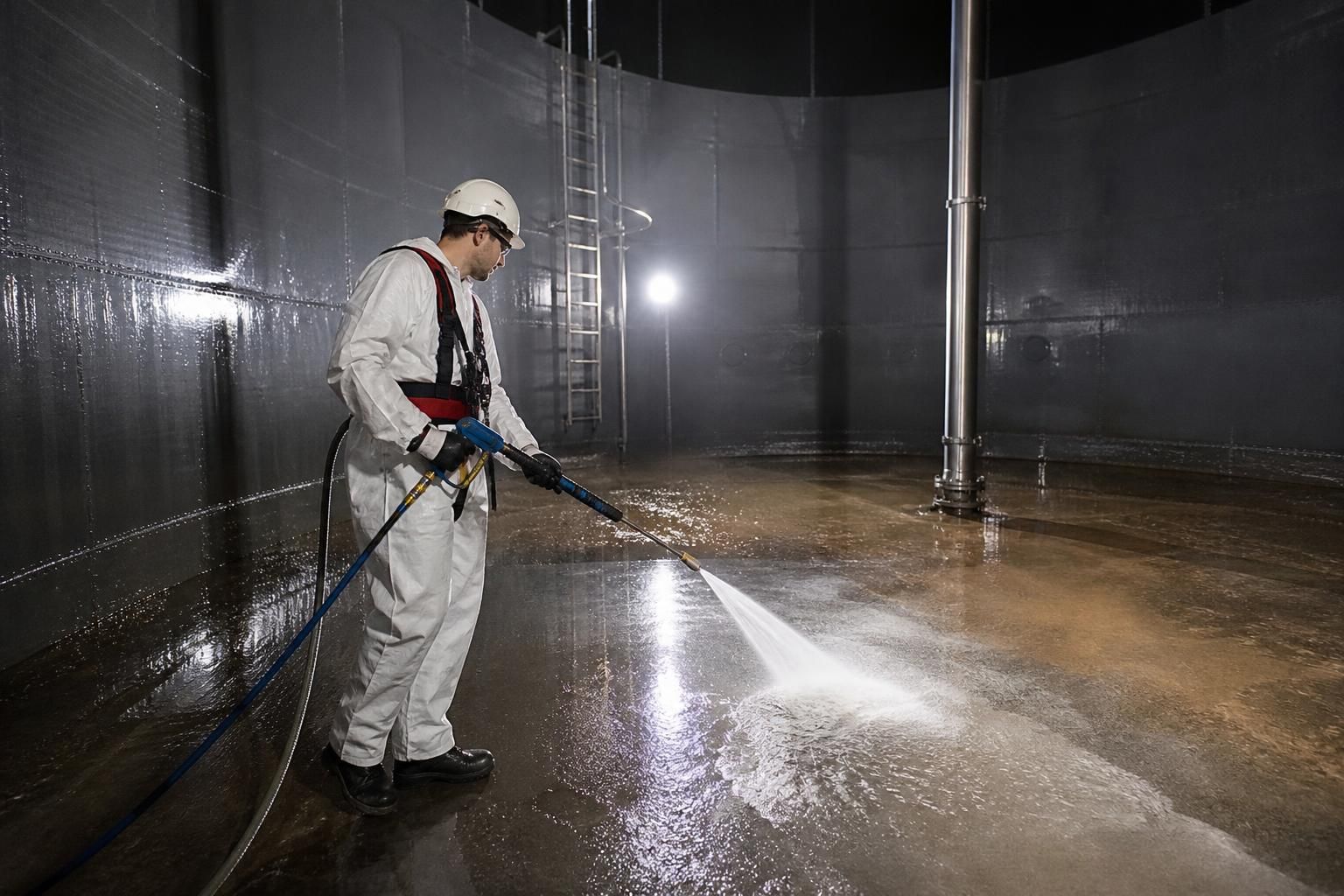
Industrial tank cleaning services cover the assessment, preparation, cleaning and disinfection of tanks used in business water systems. The approach reflects the tank’s construction, contents, deposits and operational controls.
Blue Fish Water Management provides advice, completion records and follow-up recommendations where contamination or defects are identified. These records support maintenance planning and help teams determine whether corrective action is needed.
Tank Condition Review
The tank, surrounding installation and available maintenance information are reviewed to identify cleaning requirements and relevant control considerations.
Planned Site Preparation
The cleaning approach is arranged around the tank design, water system configuration and site controls, with appropriate measures considered before work begins.
Sediment and Deposit Removal
Accumulated sediment, scale and other deposits are removed from accessible tank surfaces to reduce sources of water contamination.
Cleaning and Disinfection
Cleaning and disinfection activities are carried out as part of the tank service to support hygienic water storage and legionella control.
Defect and Contamination Findings
Visible defects, contamination or conditions that may affect tank performance are noted so that suitable corrective action can be considered.
Completion Evidence
Service records document the work completed and provide a practical reference for ongoing maintenance planning and compliance decisions.
Industrial Tank Cleaning: Expertise, Evidence and Reporting
Typical deliverables can include documented work methods, site-specific control measures, sampling arrangements, photographic records and clear close-out reports. Together, these outputs help responsible persons review contractor activity, track outstanding actions and demonstrate that tank-cleaning decisions form part of managed water-system compliance.
Site-Specific Work Methods
Cleaning is planned around the tank design, connected water system and operational requirements. Documented work methods set out the proposed sequence, controls and responsibilities before work begins.
Practical Control Measures
Site-specific control measures address access, isolation, hygiene and the protection of water quality during the cleaning activity. These arrangements help integrate tank cleaning with the wider water safety plan.
Planned Cleaning Activities
The scope can cover the controlled removal of accumulated sediment and contamination from industrial and commercial water tanks. Cleaning requirements are considered in relation to the condition and use of the system.
Sampling Arrangements
Where appropriate, sampling arrangements can form part of the work plan or follow-up process. The resulting information helps responsible persons assess water quality and determine whether further action is required.
Photographic Evidence
Photographic records can document relevant tank conditions, cleaning activity and the completed result. This provides a practical evidence trail for internal reviews, audits and maintenance records.
Clear Close-Out Reporting
Close-out reports summarise the work completed, relevant findings and any outstanding actions. Clear reporting helps organisations retain evidence of contractor activity and manage subsequent water-system compliance tasks.
Questions About Industrial Tank Cleaning Services
What methods are used for industrial tank cleaning?
Work typically involves isolating the tank, managing residual water, accessing internal surfaces, removing deposits, inspecting condition and restoring the system under documented, site-specific safety and operating controls for each installation.
Read moreWhat types of industrial tanks require professional cleaning?
Professional cleaning may apply to potable water storage tanks, break tanks, process-water vessels, sprinkler tanks and other installations where deposits, biofilm or contamination affect water safety, hygiene or safe operation.
Read moreHow frequently should industrial tanks be cleaned?
Cleaning frequency should reflect risk assessment findings, tank condition, usage, water turnover and contamination history. Review intervals after inspections, system changes or incidents, rather than relying on a universal timetable.
Read moreWhat information is needed before arranging industrial tank cleaning?
Useful information includes tank capacity and location, stored water purpose, connected systems, access constraints, recent inspection findings, contamination concerns, isolation options, site rules and required documentation for effective work planning.
Read moreWhat risks must industrial tank cleaning services control?
Controls should address confined-space entry, work at height, electrical and mechanical isolation, biological exposure, chemical residues, contaminated water, restricted access, and prevention of unsafe reintroduction of the tank into service.
Read moreHow Industrial Tank Cleaning Is Planned and Reported
Industrial tank cleaning services begin with a review of the tank’s condition, access arrangements, water-system function and any constraints affecting safe isolation. This allows the cleaning method and associated controls to reflect the installation rather than relying on a standard procedure.
After the work, Blue Fish Water Management explains relevant findings, identifies any issues requiring attention and distinguishes completed actions from further recommendations. Clear communication helps responsible persons understand the condition of the tank and decide what maintenance or monitoring should follow.
Defining the work before attendance
Blue Fish Water Management considers relevant system information, tank access, isolation requirements, known water-quality concerns and site controls when preparing the work scope. Any limitations that could affect the inspection or cleaning process can then be identified before work begins, helping the responsible person understand what the service is intended to cover.
Once the findings have been reviewed, the responsible person can determine whether any separate remedial work or changes to the water-system management plan are justified. Recommendations should remain proportionate to the tank’s observed condition and its role within the wider system.
Where further action is identified, Blue Fish Water Management can explain the reason for it and distinguish proposed work from tasks already completed. This gives the client a clear basis for prioritising follow-up decisions and maintaining a transparent compliance record.
Discuss Your Industrial Tank Cleaning Requirements
Discuss your industrial tank cleaning requirements with Blue Fish Water Management to review the installation, confirm whether the service is suitable, and agree the next practical step for your site.