
Safely Disinfect a Window Cleaning Tank
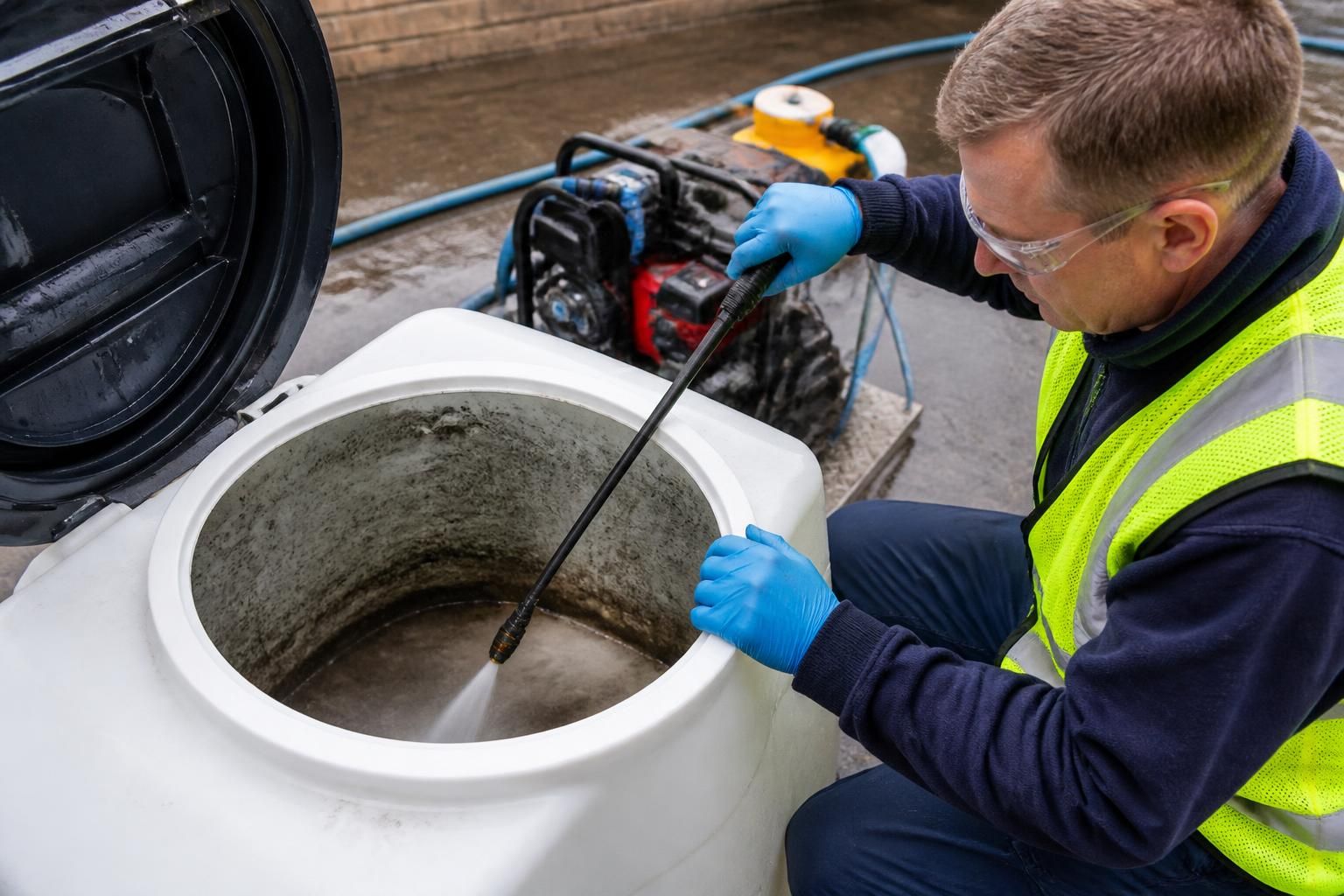
Disinfecting a window cleaning water tank involves isolating the equipment, removing deposits, applying a suitable disinfectant, rinsing thoroughly and verifying water quality before reuse. This guidance helps businesses replace contaminated tank water safely while supporting documented hygiene controls.
Safe Reuse
Use documented disinfection controls to protect water quality, meet UK responsibilities, and establish whether a tank is safe to reuse.
A Structured Disinfection Approach
Professional guidance for a window cleaning water tank considers its construction, use, water source and contamination risk. These factors determine whether cleaning, disinfection or replacement is the appropriate control, rather than applying the same treatment to every installation.
The engagement can define handling precautions, acceptance criteria and retained records, helping businesses apply a consistent decision-making process.
Tank and Risk Review
Assess the window cleaning tank, its water source, connected equipment and contamination concern before defining the appropriate disinfection scope.
Documented Treatment Plan
Set out the sequence of work, handling controls and acceptance criteria so the tank can be treated consistently and safely.
Cleaning and Disinfection
Address internal contamination through suitable cleaning and disinfection measures selected for the tank’s condition and intended use.
Controlled Return to Use
Complete the required post-treatment checks and retain clear evidence of the work before the tank is brought back into service.
What a Compliant Disinfection Service Provides
Key deliverables include a site-specific method statement, chemical and safety information, equipment inspection findings, post-treatment test results and a clear handover record. Together, these documents help responsible persons evidence what was done and determine the next control action.
Tank and system scope
The record identifies the storage tank, connected pipework and intended use, clarifying which components were included in the disinfection and which were outside the agreed scope.
Risk-based treatment rationale
The treatment record explains why the selected disinfection approach was suitable for the tank’s condition, construction, access arrangements and likely contamination risks.
Isolation and reinstatement checks
Checks confirm that the tank and connected equipment were safely isolated before treatment and correctly returned to service afterwards, reducing the risk of uncontrolled use during the work.
Traceable treatment record
A chronological record of the work, including relevant timings, responsible personnel and treatment stages, creates an auditable account for internal water hygiene records.
Outcome interpretation
Results and observations are interpreted against the intended control objective, helping the responsible person distinguish successful disinfection from a need for further investigation or treatment.
Corrective action recommendations
Where defects, recurring contamination or unsuitable operating practices are identified, the report sets out practical follow-up actions such as cleaning, repairs, monitoring or review of the tank’s management controls.
Questions to Ask Before Commissioning Water Tank Disinfection
Can a window cleaning water tank be disinfected without replacing it?
Safe disinfection requires isolating the window cleaning water tank, removing sludge and biofilm, selecting compatible chemicals, controlling contact time, managing wastewater, rinsing, and confirming suitability before reuse after water testing.
Read moreWhat disinfectant should be used for a window cleaning water tank?
Use a disinfectant selected through a site-specific risk assessment, compatible with the tank and equipment. Follow its label for concentration, contact time, rinsing, neutralisation and water-quality verification before safe reuse.
Read moreWhen should a window cleaning water tank be replaced rather than disinfected?
Replace when structural damage, persistent leaks, degraded materials, inaccessible contamination, or failed cleaning leaves the window cleaning water tank unsuitable. Confirm compatibility, document findings, and assess the replacement system before commissioning.
Read moreWhat risks must be assessed before disinfecting a window cleaning water tank?
Assess contamination sources, tank condition, chemical compatibility, confined-space hazards, electrical interfaces, exposure routes, wastewater disposal, cross-connections and operational consequences. Record controls, responsibilities and approval requirements before disinfection work formally begins.
Read moreHow is contamination confirmed before disinfecting a window cleaning water tank?
Confirm contamination through documented inspection, representative water sampling and laboratory analysis, interpreting results alongside tank condition, usage history and control records rather than relying on visual appearance or odour alone.
Read moreHow Tank Disinfection Findings Are Reported
Safe disinfection of a window cleaning water tank starts with checking whether the tank, fittings and connected equipment are suitable for treatment. If surfaces cannot be reached, damage prevents effective cleaning, or contamination is likely to persist, replacing the water tank may be more appropriate than applying repeated chemical treatments.
Blue Fish Water Management explains the proposed controls, any limitations and the evidence needed before the tank is used again. Advice is based on the condition and use of the equipment, so the business can understand what has been completed, what risks remain and whether further corrective work is necessary.
What the assessment establishes
The findings identify practical constraints that may affect the treatment, such as inaccessible surfaces, damaged components or areas that cannot be drained properly. These points are explained before work proceeds, allowing the responsible person to understand whether disinfection is suitable or whether cleaning, repair or replacement should be considered.
Once the findings have been reviewed, the responsible person can decide whether the window cleaning water tank may return to service, needs further corrective work or should be replaced. The decision should reflect the tank’s condition, the effectiveness of cleaning and disinfection, and the intended use of the water.
Keep the completed records with the site’s water hygiene documentation and apply any recommended inspection or monitoring measures. If contamination recurs, investigate the source rather than repeatedly treating the tank without addressing the underlying cause.
Discuss Your Water Tank Disinfection Requirements
Contact Blue Fish Water Management to discuss how your window cleaning water tank is used, review its suitability for disinfection, and agree the appropriate next step, whether that involves treatment, further investigation or replacement.