
Legionella Risk Assessment Pricing
Legionella risk assessment cost depends on the water systems, premises, scope and evidence required. Understanding how providers calculate pricing helps organisations compare quotations, identify included work and budget appropriately for compliant water safety management.

The Technical Basis of Legionella Risk Assessment Pricing
A legionella risk assessment is a structured evaluation of how water systems could create and spread Legionella bacteria, followed by documented control measures. A technically sound assessment considers system design, stored and circulating water, outlets, usage patterns, temperature controls and the condition of relevant equipment.
Under the Health and Safety Executive’s L8 guidance and HSG274, the appointed responsible person must ensure that significant findings are recorded and that suitable control arrangements are maintained. The assessor therefore needs to identify foreseeable risks, distinguish existing controls from recommended actions and produce evidence that supports the organisation’s ongoing water safety management.
Blue Fish Water Management applies practical knowledge of domestic, commercial and industrial water systems when reviewing assessment findings and compliance arrangements. Its wider technical services include UKAS-accredited water testing, monitoring, compliance audits, training and remedial works, allowing recommendations to be considered alongside the procedures and records needed to manage legionella risk effectively.
How Legionella Risk Assessment Pricing Is Established
Pricing becomes clearer when the assessment is treated as a defined sequence: clarify the brief, review available records, inspect relevant water systems, agree the scope of work, document findings and identify proportionate follow-up actions.
- 1
Define the premises and assessment brief
Pricing starts with the type of premises, its size, occupancy, water systems and the purpose of the assessment. A clear brief helps the provider identify which buildings, areas and systems are included rather than pricing against broad assumptions.
- 2
Review existing information
Available schematics, asset records, previous risk assessments, monitoring logs and maintenance documents can affect the work required. Reviewing these records helps establish what is already known and where further verification or evidence may be needed.
- 3
Assess system complexity
The number and type of water systems, stored water assets, outlets, temperature controls and areas requiring inspection all influence the assessment scope. More complex arrangements generally require a broader review than a straightforward installation.
- 4
Confirm the site inspection requirements
A quotation should explain which plant rooms, outlets, tanks, calorifiers and associated equipment will be inspected. It should also make clear whether access arrangements, multiple buildings or restricted areas create additional assessment requirements.
- 5
Check what the quoted price includes
Compare whether the fee covers the site assessment, review of supplied records, risk evaluation, written report and recommendations. Separately identified costs may apply to water testing, monitoring, training or remedial works, so the quotation should distinguish assessment work from follow-up services.
- 6
Review the report and recommended actions
The completed report should record significant findings, explain the relevant risks and identify proportionate control measures. Where further investigation, testing or remedial work is recommended, these actions should be described separately so the organisation can plan future expenditure.
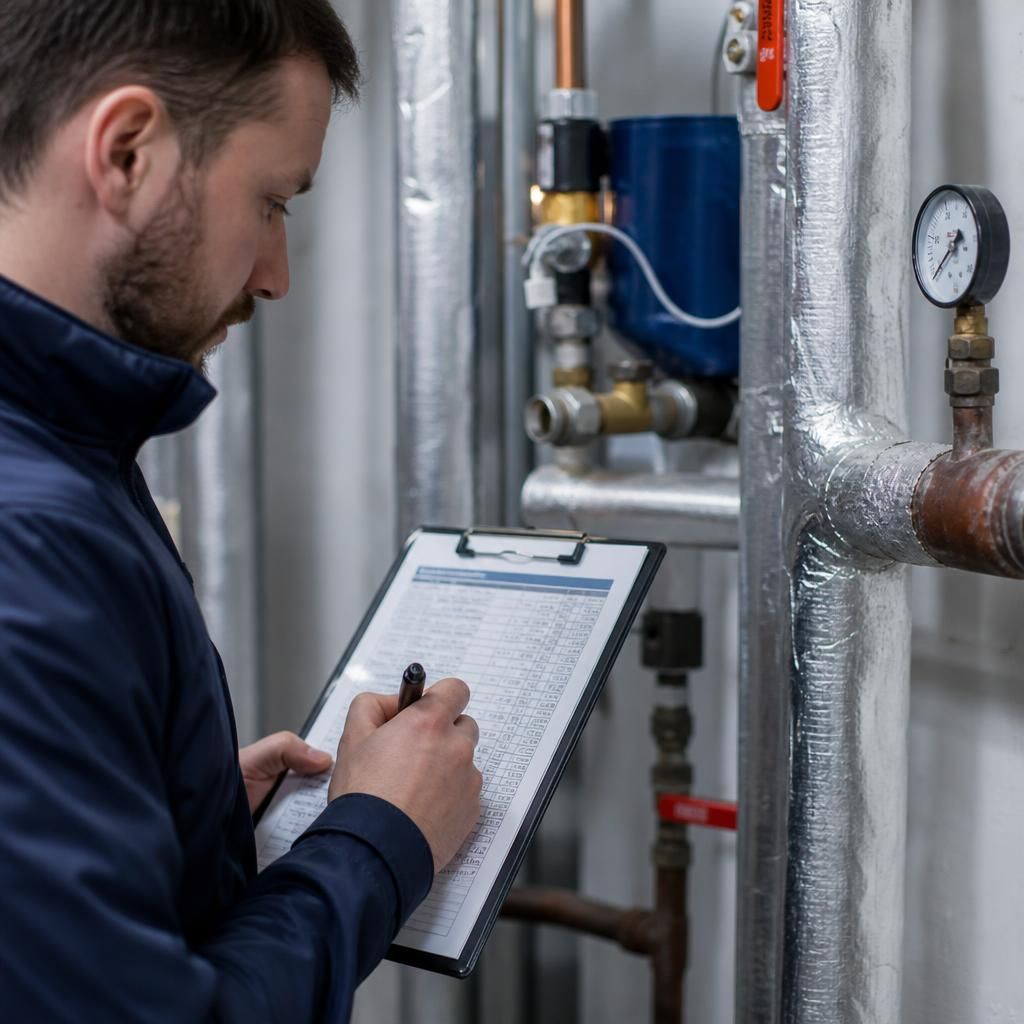
What a Completed Legionella Risk Assessment Should Include
A completed legionella risk assessment should provide a clear, site-specific record of the water systems examined, the hazards identified and the controls already in place. The report should show how conclusions were reached rather than simply listing general precautions.
Technical findings may cover storage vessels, distribution pipework, temperature measurements, outlets, usage patterns, dead legs, access limitations and equipment condition. Each observation should be linked to its relevance to Legionella risk, with supporting photographs, readings or system information where appropriate.
The final report should distinguish significant findings from routine observations and set out prioritised recommendations. It should identify responsible actions, supporting evidence and any need for further investigation, enabling the organisation to assess the quoted work against a clearly defined professional deliverable.
Legionella Risk Assessment Pricing: Frequently Asked Questions
Are follow-up actions included in a legionella risk assessment price?
An assessment quotation should state whether site attendance, records review, measurements, reporting, travel and follow-up recommendations are included, while identifying exclusions, assumptions and potential additional investigations clearly before work begins.
Read moreWhat factors affect legionella risk assessment cost?
Cost reflects premises size, system complexity, outlet numbers, stored-water arrangements, access, documentation quality, travel requirements, assessor expertise and specialist investigation for unusual or higher-risk systems at the specific premises concerned.
Read moreHow should organisations compare legionella risk assessment prices?
Organisations should compare quotations by checking the assessment scope, assessor competence, reporting standard, evidence provided, assumptions, exclusions and compliance relevance, rather than selecting solely on the lowest headline price alone.
Read moreIs water testing included in a legionella risk assessment price?
Water testing is not automatically included; it should be itemised separately in the quotation. Sampling may be recommended where conditions, history or existing evidence indicate that microbiological investigation is necessary.
Read moreCan a low legionella risk assessment price indicate incomplete work?
Yes, an unusually low quotation may omit essential inspection, evidence, consultation or reporting. Check deliverables, assessor competence, exclusions and compliance rationale before accepting a price that simply appears unusually economical.
Read morePractical Expertise
Blue Fish provides consistent, pragmatic legionella pricing advice and dependable assessment delivery for domestic, commercial and industrial properties across locations.
Discuss Your Assessment Scope and Pricing
Discuss your premises, water systems and required evidence with Blue Fish to clarify the appropriate assessment scope and pricing. The team can explain what the quotation covers, answer practical questions and help you determine the next step for compliance.