
Legionnaires Inspections for Safer Water
A legionnaires inspection is a structured check of water systems, equipment and management controls that could influence Legionella risk. Blue Fish Water Management provides inspections for organisations seeking clear findings, practical recommendations and evidence to support safer, compliant water-system management.

Practical Benefits of Legionnaires Inspections
Inspections compare physical conditions, records and management arrangements, helping responsible persons identify where controls need attention. They can show whether maintenance practices match documented procedures and whether issues have been assigned proportionate actions.
Blue Fish presents findings to support accountability and monitoring. This evidence helps organisations review work, retain records and reassess controls when system arrangements or building use change.
Clearer View of System Risk
A structured inspection brings physical conditions, operational practices and control arrangements into one review, making potential weaknesses easier to understand.
Evidence-Based Decisions
Recorded observations give responsible persons a sound basis for deciding whether existing controls remain suitable for the water system.
Earlier Issue Recognition
Visible defects, unusual conditions or gaps in arrangements can be identified before they become established weaknesses in system management.
Practical Priorities
Inspection findings help separate immediate concerns from lower-priority improvements so actions can be planned according to their significance.
Stronger Compliance Records
A documented inspection provides a clear account of what was checked, what was found and how the organisation is responding.
More Consistent Control
Regularly reviewing arrangements helps organisations maintain consistent Legionella controls as equipment, occupancy and building use develop.
Questions About Legionnaires Inspections
Who is responsible for arranging a legionnaires inspection?
An inspection can suit commercial or industrial water systems. It reviews relevant assets, controls and documentation, with access and available records arranged by the responsible person beforehand.
Read moreHow often should legionnaires inspections be carried out?
There is no universal interval: frequency should reflect system complexity, occupancy, usage, previous findings and control performance. Reinspect after significant changes, remedial works or evidence that arrangements no longer effective.
Read moreWhat does a legionnaires inspection include?
Inspection scope commonly covers plant condition, outlet temperatures, storage vessels, calorifiers, dead legs, representative outlets, cleaning evidence, monitoring arrangements and management documentation, with observations informing proportionate recommendations where required.
Read moreWhat records should be retained after a legionnaires inspection?
Retain the inspection report, photographs, readings, identified defects, recommended actions, completion evidence and relevant correspondence. Records should be dated, traceable to the system, and available for compliance review and audit.
Read moreHow long does a legionnaires inspection take?
Duration varies with system size, complexity, access arrangements and available documentation. The inspector confirms the expected scope beforehand, helping plan access and ensuring the inspection covers relevant assets effectively.
Read more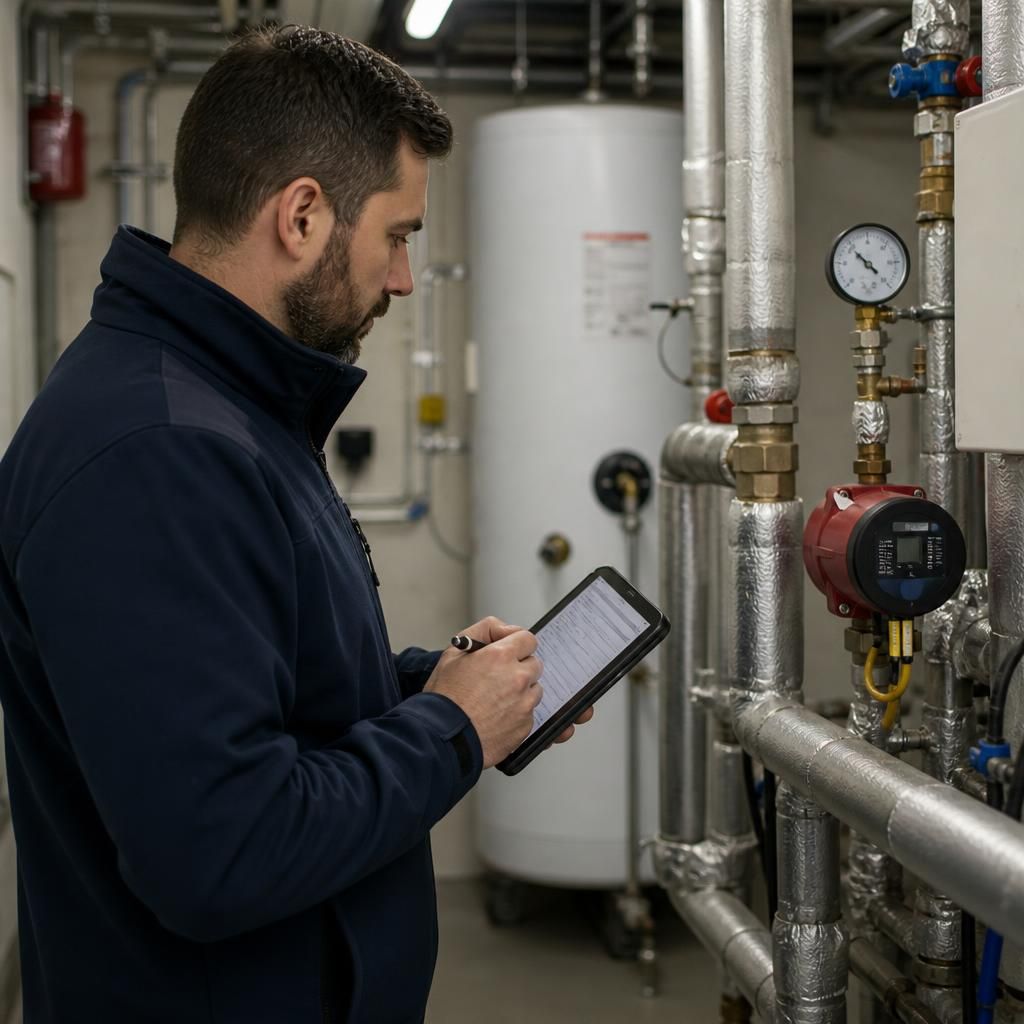
Technical Expertise Behind Legionnaires Inspection Findings
A legionnaires inspection examines water systems and control measures for conditions that may support Legionella growth or transmission. It considers storage vessels, distribution pipework, outlets and temperature control, alongside how assets are managed.
Blue Fish Water Management applies technical knowledge to interpret inspection evidence against relevant control expectations. Where sampling is needed, its UKAS-accredited water testing capability can provide laboratory evidence to complement site observations. This helps distinguish an isolated defect from a recurring weakness.
Inspection records identify assets examined, observations, limitations, risk significance and next steps. Blue Fish provides technical documentation for an organisation’s water safety file, supporting contractor instructions and review of corrective work. Findings are written to support proportionate decisions and consistent follow-up.
Practical Partnership
Blue Fish builds dependable client relationships through pragmatic legionnaires inspections, clear communication and evidence-led guidance supporting consistent water safety management.
Discuss Your Legionnaires Inspection Requirements
If you are reviewing water-system controls, discuss your circumstances with Blue Fish Water Management. Share the relevant building, system and management details to receive informed guidance on whether a legionnaires inspection is the appropriate next step.