
Water Tank Pressure Washing & Jetting
Water tank pressure washing and jetting use controlled high-pressure water to remove sediment, scale, biofilm and other deposits from storage tanks and associated surfaces. This page explains where the method fits, how work is managed and key compliance considerations.
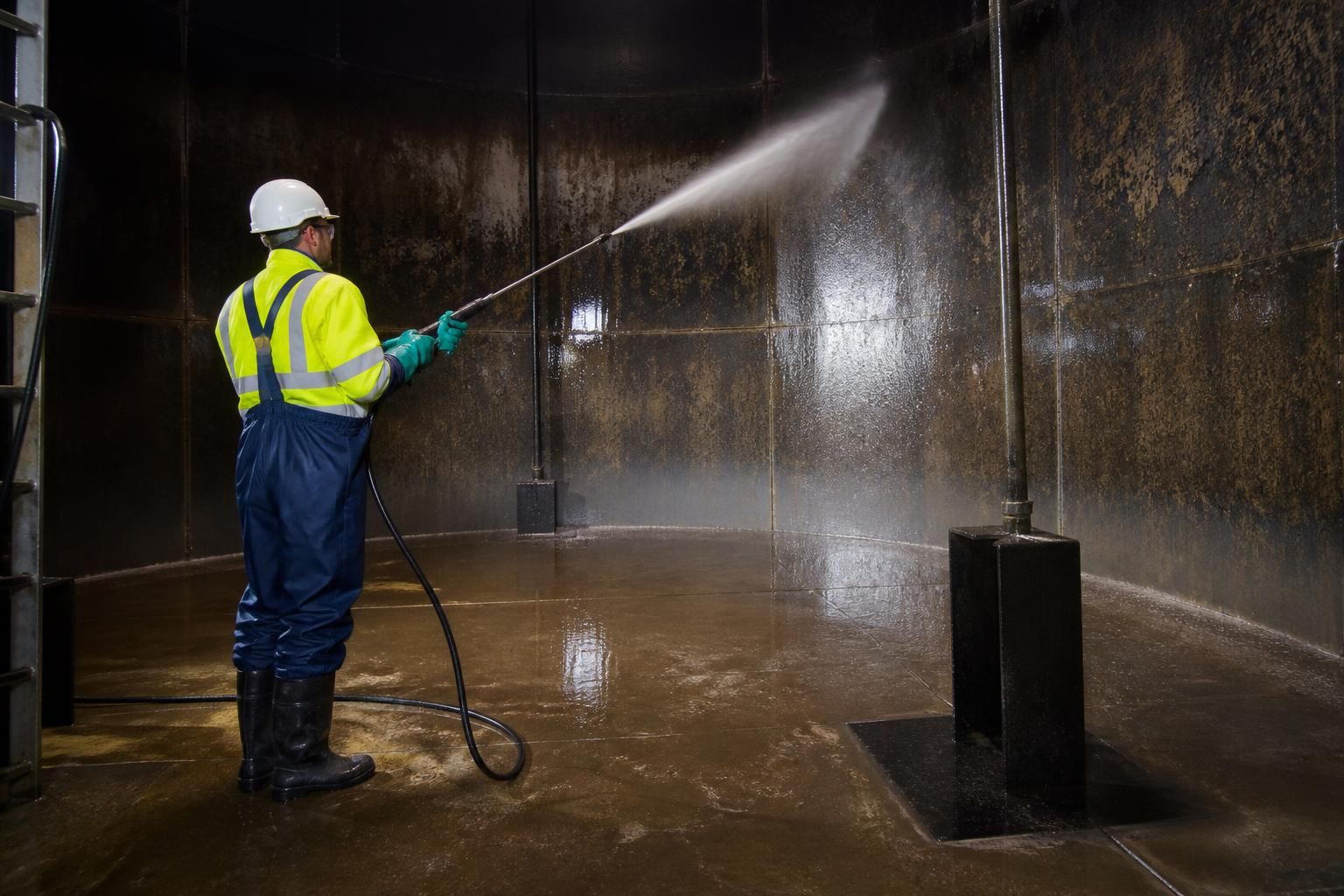
The Practical Challenges of Water Tank Pressure Washing and Jetting
Pressure washing and jetting a water tank requires more than selecting a pressure cleaner with water tank. Operators must control access, spray force, drainage, contamination, confined-space risks and post-cleaning verification without compromising the tank or supply system.
Controlling jetting pressure
High-pressure water can dislodge deposits effectively, but excessive force may damage tank coatings, seals, fittings or connected components. The method, nozzle selection and operating pressure must suit the tank material and condition rather than relying on maximum available pressure.
Managing confined-space risks
Accessing a tank for inspection or cleaning can create confined-space hazards, including restricted movement, poor ventilation and difficult rescue. A suitable risk assessment, competent personnel, access controls and emergency arrangements are needed before entry or internal work begins.
Protecting the water system
Cleaning activities must prevent dirty water, loosened deposits, cleaning equipment and other contaminants from entering the potable supply or adjacent services. Isolation, covering, controlled drainage and appropriate hygiene procedures are important parts of the work.
Removing and disposing of wash water
Jetting produces contaminated wash water containing sediment, scale and biological material. Drainage arrangements should be planned in advance so that discharge does not flood plant areas, damage property or enter unsuitable drains, while disposal follows applicable site and environmental requirements.
Working around ageing tanks
Older tanks may have corrosion, weakened panels, damaged liners or defective access covers that are not obvious before cleaning. Pressure washing can expose or worsen these defects, so the tank and associated equipment should be assessed before work and any limitations recorded.
Verifying cleanliness after jetting
A visibly cleaner tank is not, by itself, evidence that the system is ready for use. Post-cleaning checks should confirm that deposits and residual water have been removed, the tank has been reinstated correctly and any required disinfection, sampling or remedial action has been addressed.
What Should You Review Before Arranging Pressure Washing or Jetting?
Reviewing whether water tank pressure washing or jetting is appropriate starts with the tank’s condition and hygiene history. Consider the type of deposits present, the tank material and lining, evidence of corrosion or damage, and whether cleaning alone is likely to address the identified concern.
Before appointing a contractor, ask how the pressure or jetting method will be selected for the tank, how existing defects will be recorded, and what information will be provided after the work. The proposed scope should distinguish removable contamination from repairs or follow-up water hygiene measures that may need separate attention.
What should be assessed first?
Review previous inspection and cleaning records, photographs, water hygiene findings and any reported changes in water quality. The contractor should inspect the tank, identify the type and extent of deposits, and record defects such as damaged coatings, corrosion, leaking joints or weakened fittings. Pressure washing or jetting may remove deposits, but it does not by itself repair structural or lining defects.
Use the review to agree a written scope that identifies the tank, the areas to be cleaned, the cleaning method, responsibilities and any conditions that would require the work to stop. This provides a clear basis for coordinating the activity with the site’s water safety arrangements.
After the work, retain the service report and update relevant tank and water hygiene records. If findings indicate deterioration, recurring contamination or a wider system issue, arrange proportionate investigation rather than relying on pressure washing or jetting alone.
Benefits of Well-Managed Tank Pressure Washing and Jetting
Controlled pressure washing and jetting can improve removal of settled deposits and make post-cleaning inspection more practical. Suitable equipment and technique help limit damage to tanks, coatings and fittings, supporting safer storage-system operation.
Records show what was cleaned, which findings need attention and whether further controls are required. Coordinating isolation, drainage, cleaning and recommissioning as one task can reduce disruption.
Supports safer water storage
Removing accumulated sediment, scale and biofilm helps maintain cleaner internal tank surfaces and supports the site’s wider water safety controls.
Creates clearer compliance evidence
A detailed record of the method, areas treated, findings and any recommendations gives responsible persons useful evidence for water hygiene reviews and audits.
Improves visibility of tank condition
Cleaning exposes surfaces, joints, coatings and fittings more clearly, helping defects such as corrosion, cracking or lining deterioration to be identified.
Keeps the method proportionate
Selecting pressure levels, nozzles and working techniques according to the tank material and deposit type helps achieve effective cleaning without treating every tank in the same way.
Supports better maintenance planning
Cleaning findings can inform future inspection intervals, remedial priorities and decisions about whether recurring deposits indicate a wider water system issue.
Helps manage recommissioning
Bringing drainage, cleaning, rinsing, refilling and return to service into one documented plan provides a more controlled route back to normal operation.
Questions About Water Tank Pressure Washing & Jetting
How can businesses assess a contractor’s competence for water tank jetting?
Competent contractors assess tank construction, contamination and connected equipment before selecting pressure appropriately. They document findings, cleaning activities and limitations, enabling responsible managers to coordinate isolation, reinstatement and follow-up actions.
Read moreWhat should a water tank pressure washing report include?
A report should identify the tank, date, method, equipment settings, areas treated, deposits removed, photographs where appropriate, defects observed, waste arrangements, recommissioning checks, and recommendations for investigation or monitoring required.
Read moreHow disruptive is water tank pressure washing to business operations?
Disruption depends on tank location, capacity, access, isolation requirements and connected services. Advance coordination can help sequence drainage, cleaning, inspection and refilling around critical operations, with contingencies clearly documented beforehand.
Read moreWho should coordinate water tank pressure washing with the site’s water safety plan?
Site water safety managers should coordinate the activity with facilities, infection control and relevant contractors, confirming risk assessments, control measures, responsibilities and approval before cleaning, refilling and recommissioning the system.
Read moreWhen is water tank jetting unsuitable for the tank or its lining?
Jetting is unsuitable where pressure could damage fragile linings, corroded metal, sealed fittings or structurally compromised tanks. Alternative methods may be needed, with repairs, relining or replacement considered before cleaning.
Read moreDiscuss Your Water Tank Pressure Washing Requirements
Discuss your tank’s condition, access arrangements and cleaning objectives with Blue Fish. The team can help clarify whether pressure washing or jetting is appropriate, identify information needed for a tailored scope, and advise on suitable next steps.