
Dechlorination Methods for Safe Water Use
Dechlorination methods remove or neutralise chlorine before treated water is discharged or used. This guide compares chemical neutralisation, activated carbon and controlled dilution, explaining when each approach suits different systems, discharge conditions and operational constraints in commercial and industrial settings.
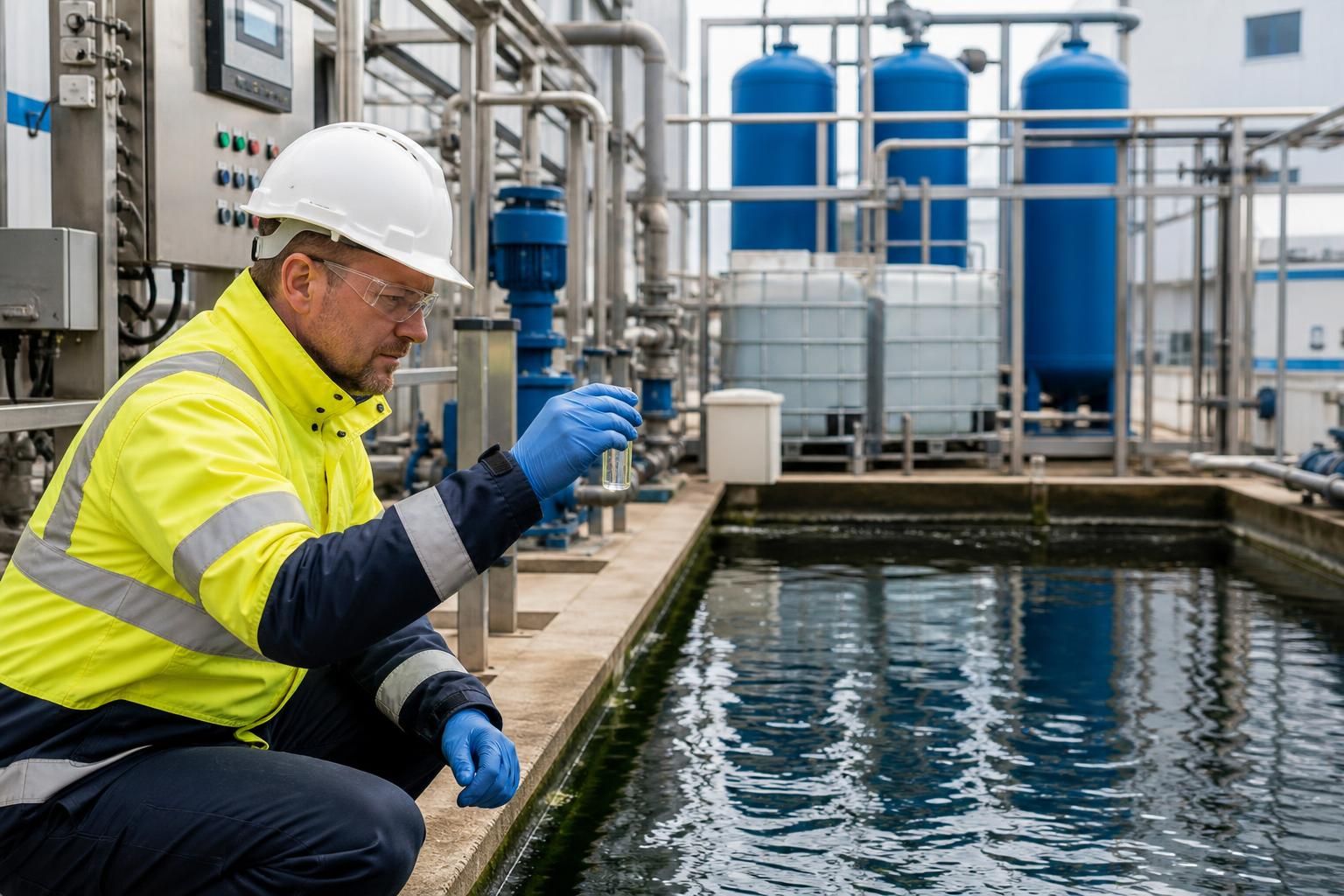
Compare Dechlorination Methods by Application
Selecting a dechlorination approach requires more than identifying the available treatment option. Assess the water volume, chlorine concentration, discharge conditions, monitoring requirements and whether the system can be isolated or controlled. These factors help define the appropriate scope, operational input and evidence needed to demonstrate safe water management.
Chemical Neutralisation for Controlled Discharge
Chemical neutralisation uses a measured reducing agent to react with residual chlorine before water is released or transferred. It is suited to larger or variable-volume flows where treatment can be dosed and verified, but requires correct chemical selection, storage, dosing control and residual testing.
Activated Carbon for Point-of-Use Treatment
Activated carbon removes chlorine as water passes through a carbon medium. It can suit lower-flow applications, final polishing and systems where chemical dosing is undesirable. Cartridge or vessel capacity, contact time, flow rate and media replacement must be managed to prevent breakthrough.
Controlled Dilution for Suitable Discharges
Controlled dilution reduces the chlorine concentration by combining treated water with a compatible, lower-chlorine flow. This approach is only appropriate where the resulting discharge remains within applicable acceptance criteria and sufficient control is available. It should not replace treatment where dilution would simply transfer the risk.
Batch Treatment for Isolated Volumes
Batch treatment is appropriate where water can be contained, mixed and tested before discharge. A measured neutralising dose can be applied to a tank or isolated section, followed by verification of the residual chlorine concentration. This provides clear control over discrete volumes but depends on reliable mixing and representative sampling.
Continuous Treatment for Ongoing Flows
Continuous dechlorination is designed for systems that produce a steady or regularly recurring discharge. Dosing or filtration equipment operates as water passes through the treatment point, with monitoring used to identify changes in flow or chlorine load. Interlocks, alarms and maintenance arrangements may be needed where untreated discharge is unacceptable.
Combined Methods for Variable Conditions
Some systems use more than one method, such as chemical neutralisation for the main flow with activated carbon as a final polishing stage. Combining approaches can address changing chlorine concentrations or different discharge points, but each stage should have a defined purpose, operating limit and verification method.
What Effective Dechlorination Involves
A robust dechlorination service combines suitable treatment equipment with controlled operation, chlorine verification, discharge records and clear handover information. This evidence supports safe implementation and helps dutyholders demonstrate that agreed controls were applied consistently.
Chemical neutralisation
A measured reducing agent neutralises residual chlorine in a controlled contact stage. This method can suit planned discharges where flow, dosage and contact time can be managed, with the receiving conditions and discharge requirements assessed beforehand.
Activated carbon treatment
Activated carbon removes chlorine as water passes through a suitable filter bed. It may be appropriate for lower-flow applications or where chemical dosing is undesirable, provided the media capacity, flow rate and replacement arrangements are properly controlled.
Controlled dilution
Dilution reduces chlorine concentration by combining treated water with an appropriate water stream. It is only suitable where the resulting discharge remains within agreed limits and flow volumes, mixing and discharge conditions can be demonstrated.
Method selection
The appropriate method depends on chlorine concentration, water volume, discharge route, available space, operating controls and the consequences of treatment failure. A practical assessment compares these factors before equipment or dosing arrangements are selected.
Operational verification
Dechlorination requires defined control points for dosing, filtration or dilution, supported by representative chlorine checks. Results should be assessed against the agreed acceptance criteria so that abnormal readings can be investigated before discharge or reuse.
Compliance handover
A complete service records the selected method, operating parameters, checks completed and any corrective actions. Clear handover information helps site teams maintain the treatment arrangement and provides evidence that the agreed controls were applied.
Which Dechlorination Method Best Fits Your Water System?
What information does a provider need before recommending a dechlorination method?
Choose chemical neutralisation for controlled, measurable treatment; activated carbon where adsorption suits the flow; or dilution where discharge conditions permit, following competent assessment and documented verification of results before discharge.
Read moreWhen is controlled dilution appropriate for dechlorination?
Controlled dilution is appropriate when treated water can be blended safely with a volume of uncontaminated water, and discharge conditions permit verified chlorine concentrations without compromising receiving systems or obligations.
Read moreWhen is activated carbon suitable for dechlorinating water?
Activated carbon suits flows where adsorption can remove chlorine without introducing a neutralising chemical. Assess contact time, carbon condition, flow rate, disposal arrangements and verified residual chlorine before operation begins.
Read moreWhen is chemical neutralisation suitable for dechlorination?
Chemical neutralisation suits discharges with measurable chlorine loads requiring rapid, controllable adjustment. Select the reagent and dose from water chemistry, equipment compatibility and verification requirements, then document final residual results.
Read moreHow do discharge conditions affect the choice of dechlorination method?
Discharge limits, receiving-water sensitivity, access, flow variability and consent requirements influence method selection. Together, they determine containment needs, treatment configuration, operating controls and the evidence required before discharge is authorised.
Read moreQuestions to Ask Before Dechlorination
Before choosing a dechlorination approach, clarify the treatment scope, the water system involved and the conditions governing its discharge or reuse. Ask who will design and supervise the work, what relevant competence they hold, and how the method will be adapted if chlorine levels, flow conditions or site constraints change.
Confirm what records will be supplied, how results will be reviewed, and which timescales apply to planning, treatment and any corrective action. The agreement should also identify who remains responsible for checking the treated water, retaining documentation and managing any further dechlorination needs.
Confirm the treatment boundaries
Ask whether the work covers temporary dosing or filtration equipment, operator attendance, sampling, discharge arrangements and removal of treatment equipment. Clarify how variations such as changing flow, storage conditions or chlorine demand will be assessed, and identify any areas or systems that remain outside the agreed scope.
Use the answers to turn the proposed approach into a written dechlorination plan before work begins. It should explain the selected method, operating controls, acceptance criteria and what will happen if site conditions differ from those anticipated.
If the information supplied is incomplete or the method cannot be clearly justified for the intended discharge, pause the arrangement and obtain further technical advice. Dechlorination should proceed only when the treatment decision, evidence requirements and handover arrangements are understood by everyone involved.
Discuss Your Dechlorination Requirements
Discuss your water system, proposed discharge and operational constraints with Blue Fish Water Management to compare suitable dechlorination methods. We can help identify the next practical step, including treatment planning, verification requirements and documentation needed for informed decision-making.