
Water Tank Relining & Refurbishment
Water tank relining and refurbishment use specialist coatings, repairs and cleaning to improve cold water storage tanks. Blue Fish Water Management supports facilities managers, contractors and site owners with practical measures for hygienic storage and water safety compliance.
Safe Storage
Assess tank condition before relining or refurbishment, then use findings to support safe water systems, UK responsibilities and proportionate action.
What Water Tank Relining Includes
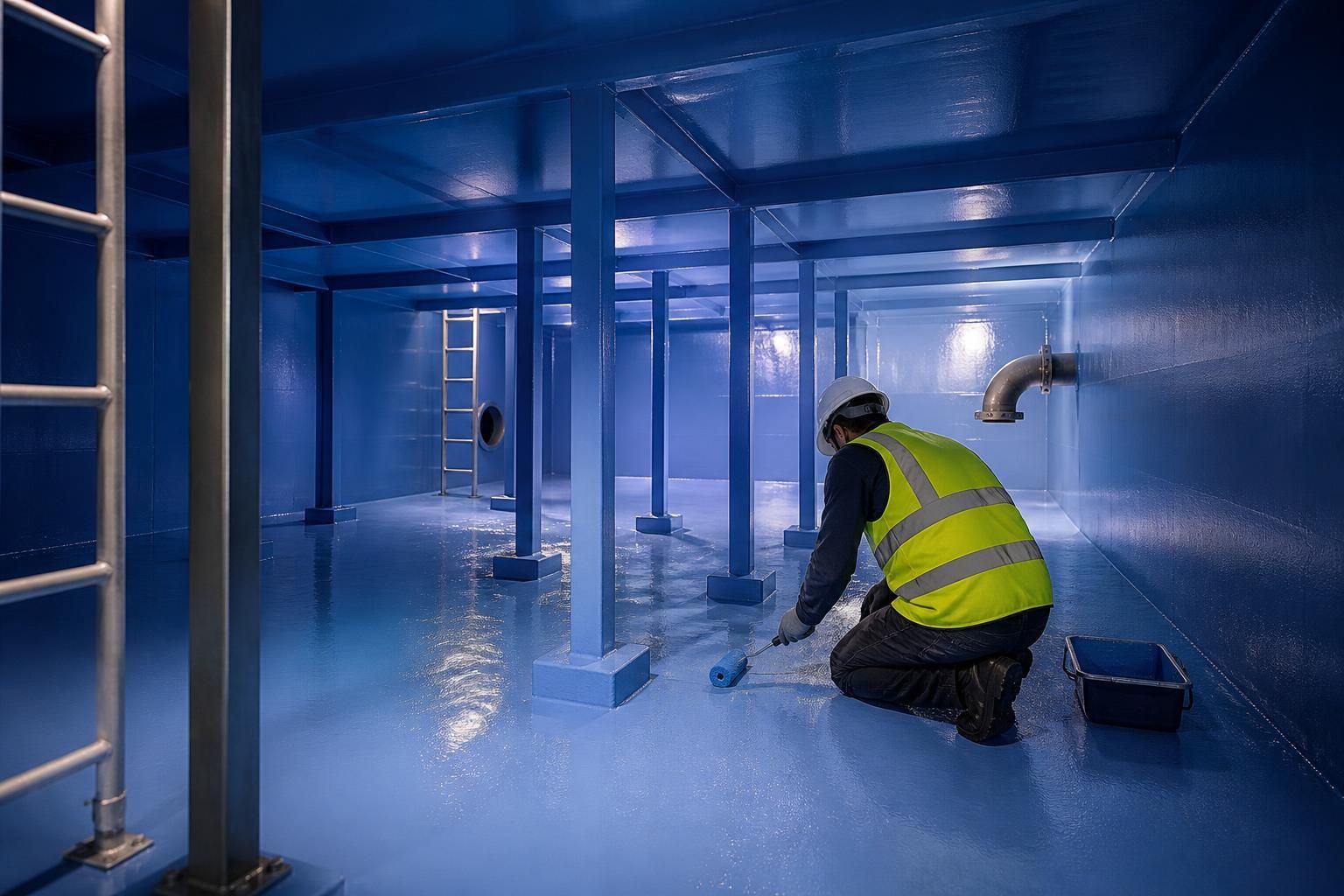
Water tank relining addresses deterioration in an existing vessel where replacement may not be proportionate. Its scope separates defects needing repair from surfaces suitable for a new lining, taking account of construction, access and use.
Blue Fish provides condition-led recommendations, remedial work and verification records within a water hygiene programme. This supports decisions, planned isolation and evidence for ongoing system management.
Condition Assessment
Inspect the tank’s construction, surfaces, defects, access and operational use to establish whether relining or refurbishment is suitable.
Defect Repairs
Address deterioration and local defects before coating, so the existing tank provides a sound base for the refurbishment work.
Specialist Relining
Apply an appropriate specialist lining to suitable tank surfaces to restore protection where full replacement is not proportionate.
Tank Cleaning
Include cleaning measures that remove contamination and prepare the storage vessel for hygienic service within the wider water management programme.
Water Safety Measures
Plan isolation and remedial controls around the tank’s use to support hygienic cold water storage and responsible system management.
Verification Records
Provide records of completed works and verification findings to support compliance evidence, future monitoring and planned maintenance decisions.
Practical Outputs from Water Tank Relining
A useful water tank relining specification should identify the proposed lining system, preparation standards, repair details and inspection requirements. It should also produce clear documentation so facilities teams can demonstrate controlled work, suitable materials and follow-up responsibilities.
Defined Work Scope
A written scope should distinguish cleaning, local repairs, full relining and replacement of associated components. This gives the client a clear basis for reviewing quotations and confirming which tank defects the work will address.
Method Statement and Risk Controls
The work package should explain access, tank isolation, preparation, application and recommissioning arrangements. It should also identify controls for confined spaces, contamination risks and disruption to the cold water system.
Material Suitability Evidence
Documentation should record the proposed lining materials, their intended use and relevant product information. This helps demonstrate that the selected system is appropriate for hygienic cold water storage and compatible with the tank substrate.
Inspection Records
Inspection findings should be recorded at key stages, including substrate preparation, repairs, coating application and the finished surface. Photographs and dated check sheets provide useful evidence of the work completed.
Recommissioning Information
Handover records should set out the cleaning, flushing and inspection steps completed before the tank returns to service. Any limitations, outstanding actions or conditions for continued use should be clearly identified.
Compliance Handover Pack
The completed pack can bring together the scope, method statement, material information, inspection evidence and recommissioning records. Facilities teams can retain this with water safety files to support audits, future maintenance planning and review of the tank.
Questions to Ask Before Commissioning Water Tank Relining
What materials are suitable for water tank relining?
Suitability depends on tank construction, leak severity, access, stored-water use and coating compatibility. Obtain a condition survey, method statement, hygiene controls, programme and post-work inspection evidence before any commissioning work.
Read moreWhen should a storage tank be relined rather than replaced?
Relining is considered when tank remains structurally sound but has corrosion, seepage or deterioration. Replacement may be more appropriate where damage, contamination, access constraints or capacity changes make refurbishment disproportionate.
Read moreWhat safety controls are required during water tank relining?
Controls should cover isolation, confined-space assessment, access, ventilation, fall prevention, PPE, hygiene, rescue arrangements and contamination prevention, supported by a task-specific risk assessment and method statement before work begins onsite.
Read moreWhat evidence of competence should a water tank relining contractor provide?
Look for documented relevant experience, trained personnel, risk assessments, method statements, material data, confined-space controls, insurance and references, with inspection records confirming workmanship and hygienic reinstatement after completion and commissioning.
Read moreWhat should a water tank relining quotation include?
A quotation should state the work boundary, access arrangements, preparation, repairs, coating application, cleaning, disinfection, testing, exclusions, programme, aftercare responsibilities and itemised costs, enabling informed comparison before approval and commissioning.
Read moreHow Water Tank Relining Work Is Assessed and Reported
Water tank relining and refurbishment are planned interventions based on the tank’s condition, construction and intended use. Blue Fish Water Management explains whether repair, relining or replacement is the more suitable course, including any constraints that could affect the recommendation.
Clients can expect findings to be discussed in clear terms, with observed defects, proposed actions and relevant limitations kept distinct. This gives facilities teams a transparent basis for approving work, coordinating site requirements and retaining a useful record of the decision.
What the survey considers
The assessment may consider tank materials, access, internal surfaces, evidence of corrosion or leakage, support arrangements, inlet and outlet details, and the condition of associated components. Where access or visibility is restricted, that limitation should be recorded so recommendations are based on confirmed observations rather than assumptions.
Once the recommended approach has been accepted, the work can be coordinated with the site’s responsible person, access arrangements and any necessary controls for taking the tank out of service. This helps ensure that the relining or refurbishment scope is understood before contractors attend site.
After completion, retain the work records with the water system’s maintenance and risk management information. Any limitations, inspection requirements or future actions should remain visible to those responsible for managing the tank.
Discuss Your Water Tank Relining Requirements
To discuss whether relining or refurbishment is appropriate for your tank, contact Blue Fish Water Management. Share available inspection findings, tank details and site constraints so the proposed next step can be considered on an informed basis.