
Potable Water Chlorine Levels & Monitoring
Potable water chlorine level monitoring measures disinfectant concentrations in drinking water systems to verify effective control without compromising safe use. Blue Fish Water Management supports those responsible for commercial, industrial and domestic premises with sampling, testing and compliance-focused interpretation.
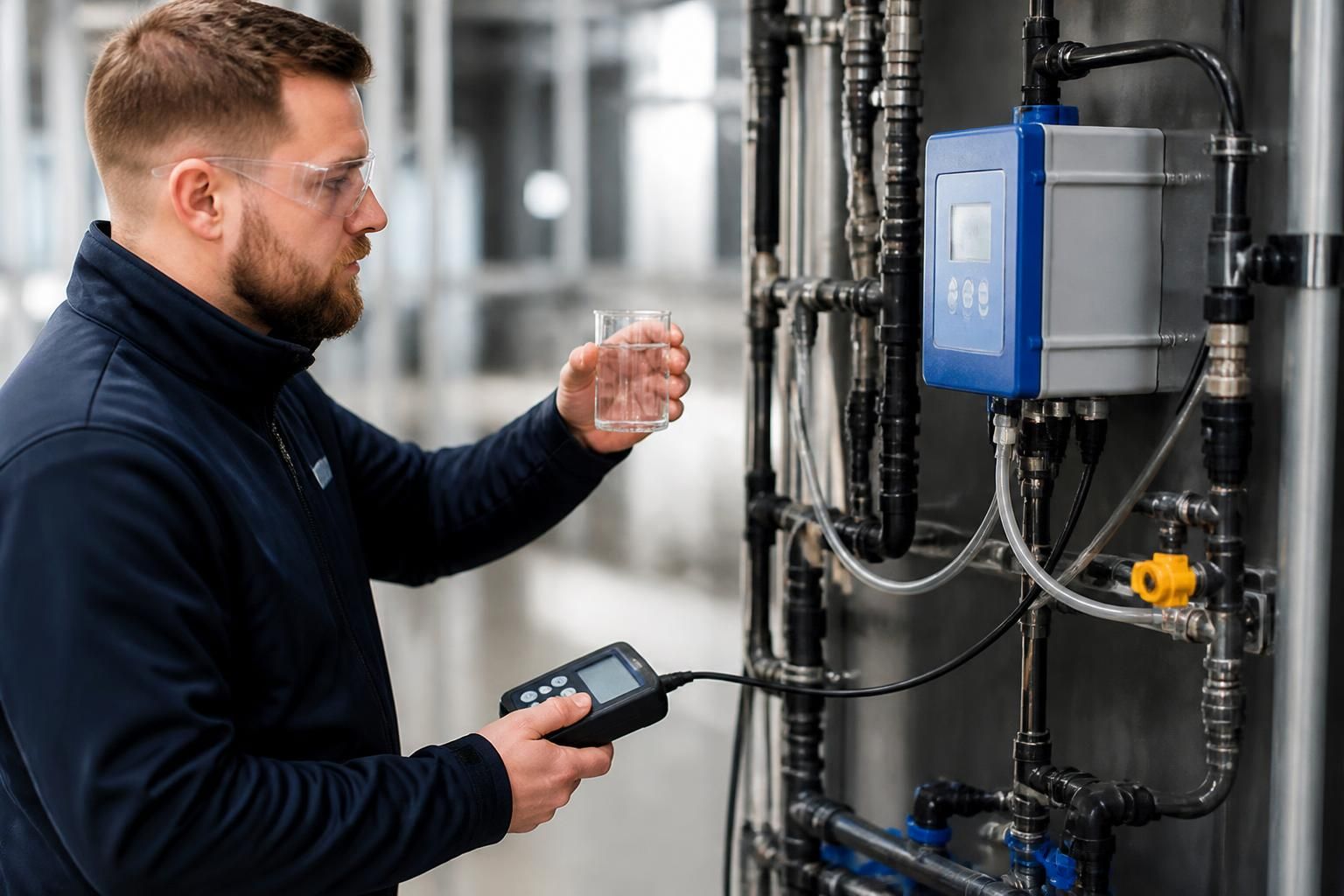
Potable Water Chlorine Monitoring Options Compared
Different potable water chlorine monitoring approaches vary from occasional verification sampling to structured, ongoing oversight. The appropriate choice depends on system complexity, risk profile, operational responsibility and the evidence needed to demonstrate that disinfection remains controlled.
Occasional spot checks
Manual checks at selected outlets provide a snapshot of free chlorine levels. This approach may suit straightforward systems requiring basic verification, but isolated readings offer limited evidence of how levels change between sampling visits.
Scheduled manual monitoring
A planned programme samples defined points at intervals suited to the system’s risk profile. It requires consistent site access, accurate records and review of results, making it more suitable where trend information and documented control are needed.
Continuous online monitoring
An online analyser measures chlorine levels continuously at a selected point and can identify changes between manual samples. It is more appropriate for complex, high-use or operationally critical systems, but requires suitable installation, calibration, maintenance and interpretation.
Post-treatment verification
Sampling after chlorination, remedial work or system changes checks whether the intended chlorine residual has been established and maintained. This is a focused option for confirming treatment performance, rather than replacing routine monitoring where ongoing control is required.
Investigative monitoring
Additional sampling can be used when chlorine results are unexpected, inconsistent or outside the organisation’s control criteria. Samples are selected to help identify where conditions change within the system and to inform proportionate corrective action.
Potable Water Chlorine Monitoring: Key Service Elements
Potable water chlorine monitoring can include planned sampling, residual disinfectant testing, result interpretation and documented review. Blue Fish Water Management aligns these activities with system risk, operational controls and relevant UK compliance duties, creating evidence for responsible persons.
Planned Monitoring Schedule
Sampling frequencies and review points are considered against the water system’s risk profile, use and existing control measures. A documented schedule helps ensure chlorine levels are checked consistently rather than only after a concern arises.
Representative Sampling
Samples are taken from relevant points in the potable water system so results provide useful information about disinfectant residuals across the areas being assessed. Sampling locations can be reviewed when system layouts, usage or operating conditions change.
Residual Chlorine Testing
Testing establishes the disinfectant concentration present at the time of sampling. Measurements are recorded with the relevant sampling information, allowing results to be assessed in relation to the system’s operating requirements.
Result Interpretation
Individual readings are considered alongside previous results, sampling points, water temperature, system condition and known operational activity. This helps distinguish an isolated variation from a developing control issue.
Investigation of Variations
Unexpected, low or inconsistent readings can prompt checks of dosing arrangements, storage, circulation, stagnation risks and other relevant controls. Where further investigation is needed, findings can inform remedial recommendations and follow-up monitoring.
Compliance Records and Review
Results, observations and actions are collated into clear records for responsible persons and compliance audits. Ongoing review helps keep the monitoring approach aligned with the risk assessment and the duties applying to the potable water system.
Questions About Potable Water Chlorine Monitoring
What potable water chlorine level should a monitoring programme target?
Monitoring frequency should reflect system design, occupancy, treatment method and risk assessment. Routine residual checks may require escalation to further targeted sampling, investigation or corrective action when results vary materially.
Read moreHow should abnormal potable water chlorine results be investigated?
Investigate abnormal results by checking sampling conditions, recent system changes, dosing equipment, storage and distribution points. Compare trends, confirm findings through repeat testing, then document risk-based corrective actions and outcomes.
Read moreWhat records should potable water chlorine monitoring produce?
Records should identify sampling locations, dates, methods, personnel, laboratory findings, residual readings, deviations, decisions and completed actions. Retain them within the compliance file so reviews can demonstrate control and accountability.
Read moreWho should interpret potable water chlorine monitoring results?
Interpretation should involve a competent water hygiene professional who understands system design, sampling limitations and risk controls, working with the responsible person to assess significance and determine proportionate action where necessary.
Read moreWhich sampling points should potable water chlorine monitoring cover?
Cover outlets, storage tanks, incoming mains, treatment outlets, representative distal points and vulnerable areas, selecting locations that reflect stagnation, temperature variation, usage patterns and potential exposure within the distribution system.
Read moreWhat to Clarify Before Potable Water Chlorine Monitoring Begins
Before arranging potable water chlorine monitoring, clarify which outlets, storage vessels, pipework and treatment points fall within scope, and whether sampling will assess routine residuals, post-disinfection conditions or a specific concern. Ask who will carry out the work, what competence and test methods apply, and how sampling locations and frequencies will be selected.
Confirm what evidence will be supplied, including results, units, sampling details, interpretation and any recommended action. It is also important to agree reporting timescales, arrangements for investigating readings outside the required range, and who remains responsible for reviewing trends and maintaining the monitoring programme.
Confirm the outlets and system points to be monitored
Ask whether the plan covers incoming supply points, storage tanks, distribution outlets, low-use areas, sentinel outlets and any points affected by treatment or blending. Clarify whether the objective is routine monitoring, verification after disinfection, investigation of a concern or assessment of changing operating conditions. A documented rationale for each sampling location makes the results more meaningful and helps identify gaps when the system or its use changes.
Once these points have been agreed, the monitoring programme should be documented alongside the system’s control procedures and risk assessment. This gives the responsible person a clear basis for deciding when results require investigation, corrective action or further technical review.
Blue Fish Water Management can help translate monitoring findings into practical compliance actions, whether the results confirm established controls or indicate that the potable water system needs closer examination.
Discuss Your Potable Water Chlorine Monitoring Requirements
Discuss your potable water chlorine levels with Blue Fish Water Management for practical advice tailored to your system and responsibilities. We can help clarify the most suitable next step, from reviewing existing information to arranging further specialist input.