
Water Tank Cleaning
Water tank cleaning removes sediment, biofilm and other contamination from storage tanks, followed by disinfection where appropriate. Blue Fish Water Management provides planned cleaning for commercial and industrial water systems, supporting legionella control, water hygiene and documented compliance.
Problems Caused by Dirty Water Tanks
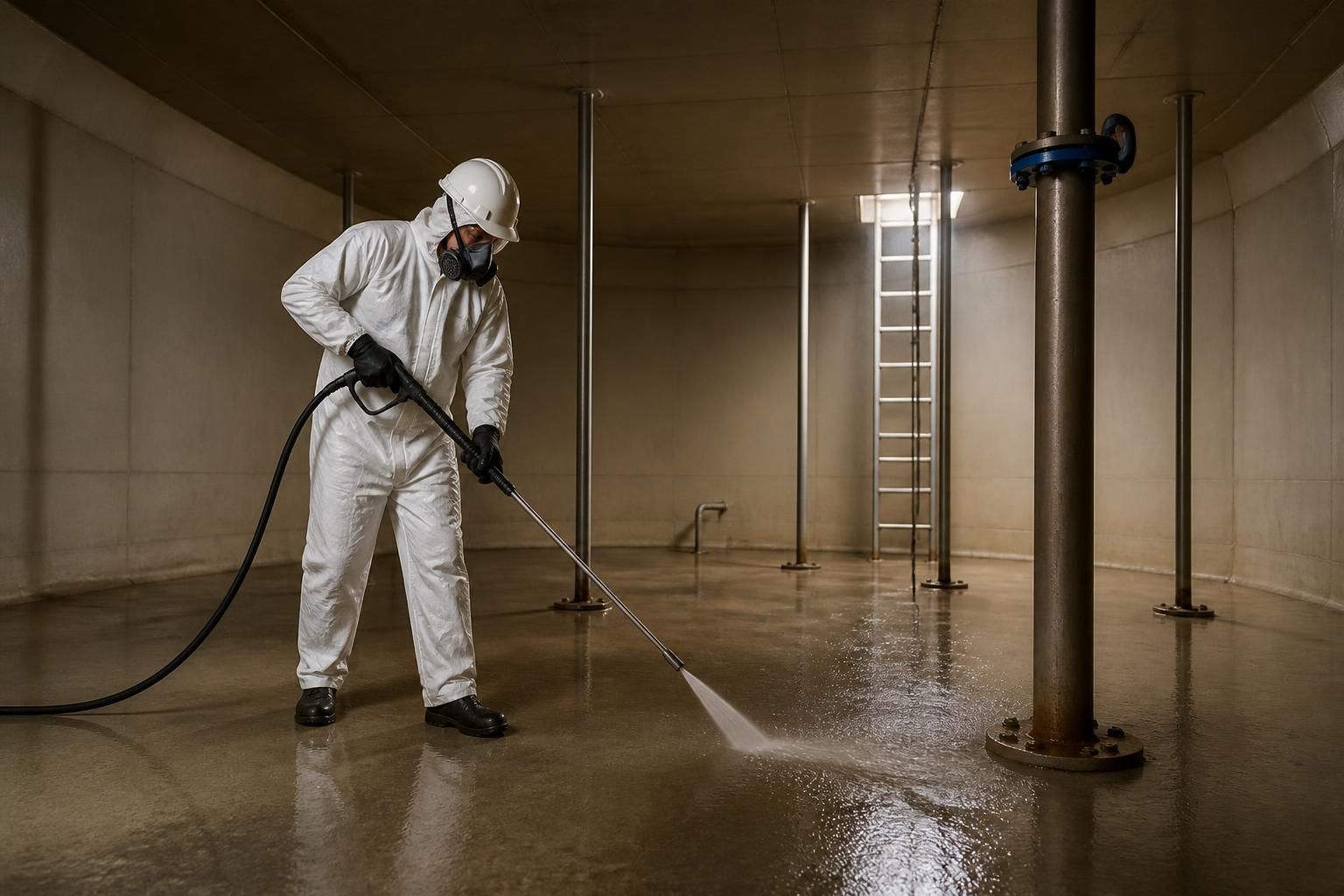
Dirty water tanks can affect water quality by allowing sediment, scale and organic matter to accumulate on internal surfaces. This material may discolour water, produce unpleasant tastes or odours, and restrict outlets, valves or associated pipework.
Accumulated deposits and stagnant areas can also create conditions that support bacterial growth. Where storage tanks are not inspected and maintained appropriately, contamination may spread through the connected water system and increase the need for corrective action.
Overdue or poorly documented tank maintenance can create compliance concerns for businesses responsible for water safety. Cleaning requirements should therefore be considered alongside tank condition, water usage, system design and the findings of the relevant risk assessment.
When Water Tank Cleaning May Be Required
Professional water tank cleaning may form part of planned maintenance or follow a specific trigger. Common reasons include routine service intervals, visible deposits, altered water quality, remedial activity, and preparation for inspection or review of legionella control measures.
Planned Maintenance
Scheduled tank cleaning helps remove deposits before they become a more significant water hygiene concern. Frequency should reflect tank condition, system design, usage and the findings of the relevant risk assessment.
Visible Deposits or Contamination
Cleaning may be required when inspection identifies sediment, scale, sludge, biofilm or other material on tank surfaces. These findings should be recorded and assessed alongside the condition of the tank and its fittings.
Changes in Water Quality
Discolouration, unusual tastes or odours can indicate that storage conditions require investigation. Tank cleaning may form part of the corrective response, alongside checks on connected pipework and other system components.
After Remedial Work
Cleaning and disinfection may be appropriate after repairs, modifications or other remedial activity that could introduce debris or disturb deposits within the tank or connected water system.
Inspection and Risk Review
Tank cleaning can support preparation for planned inspection, compliance auditing or a review of legionella control measures. Documentation should identify the work completed, relevant findings and any further actions required.
Practical Tank Cleaning and Water Hygiene Support
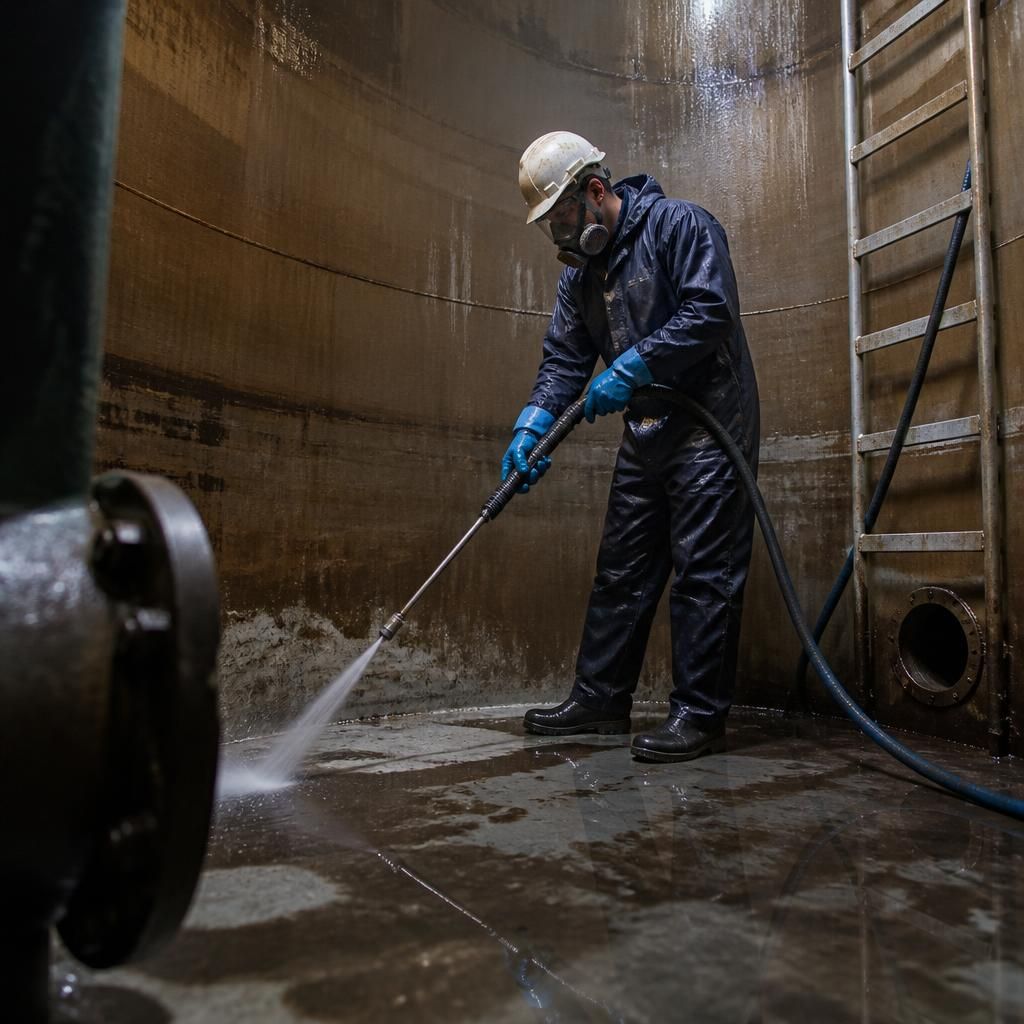
Water tank cleaning should be based on the tank’s condition, its role in the supply system and relevant water safety controls. Work may involve safe isolation, controlled draining, removal of deposits, inspection of internal components and careful reinstatement, with methods suited to the tank material and system design.
Blue Fish Water Management uses a practical, documented approach to planned and corrective work. The team considers access, outlet protection and connected equipment, helping clients understand what was completed and what further action may be appropriate. Clear records can support maintenance planning and compliance reviews.
If cleaning identifies damaged fittings or weaknesses in system management, the findings can inform wider water hygiene advice. Blue Fish supports commercial and industrial clients across the UK, treating tank cleaning as part of proportionate water safety management.
Water Tank Cleaning FAQs
How often should commercial water tanks be cleaned?
An appropriate schedule is set through the site’s water safety arrangements, with reassessment after alterations, contamination incidents, prolonged stagnation or evidence that control measures are no longer effective in practice.
Read moreWhat does professional water tank cleaning involve?
It combines pre-cleaning assessment, safe isolation, hygienic removal of contamination, condition checks, suitable disinfection, and post-work verification, creating evidence that the storage tank is suitable for continued operation and oversight.
Read moreHow does water tank cleaning support legionella control?
Removing sediment, biofilm and contamination reduces places where Legionella may persist or multiply. Cleaning therefore complements temperature control, monitoring, risk assessment and documented management of the wider connected water system.
Read moreWhat are the risks of neglecting water tank cleaning?
Neglected tanks may develop heavier deposits, blocked outlets, damaged components and deteriorating water quality. These conditions can disrupt system operation, increase remedial requirements and leave businesses with inadequate maintenance records.
Read moreWhat should businesses check before arranging water tank cleaning?
Businesses should confirm tank location, material, capacity, access constraints, connected systems, isolation arrangements, recent water-quality concerns, and available maintenance records before requesting a suitable cleaning method and scope of work.
Read moreDiscuss Your Water Tank Cleaning Requirements
If you need advice on the appropriate cleaning frequency, method or follow-up actions, speak with Blue Fish Water Management. Discuss your tank’s condition and water hygiene requirements to identify a proportionate service for your premises and compliance needs.