
Grease & Waste Water Tank Cleaning
Grease and waste water tank cleaning removes accumulated fats, oils, grease, sludge and other deposits from commercial systems. Planned cleansing helps reduce blockages, odours and contamination risks while supporting hygienic operation, maintenance planning and water safety compliance.
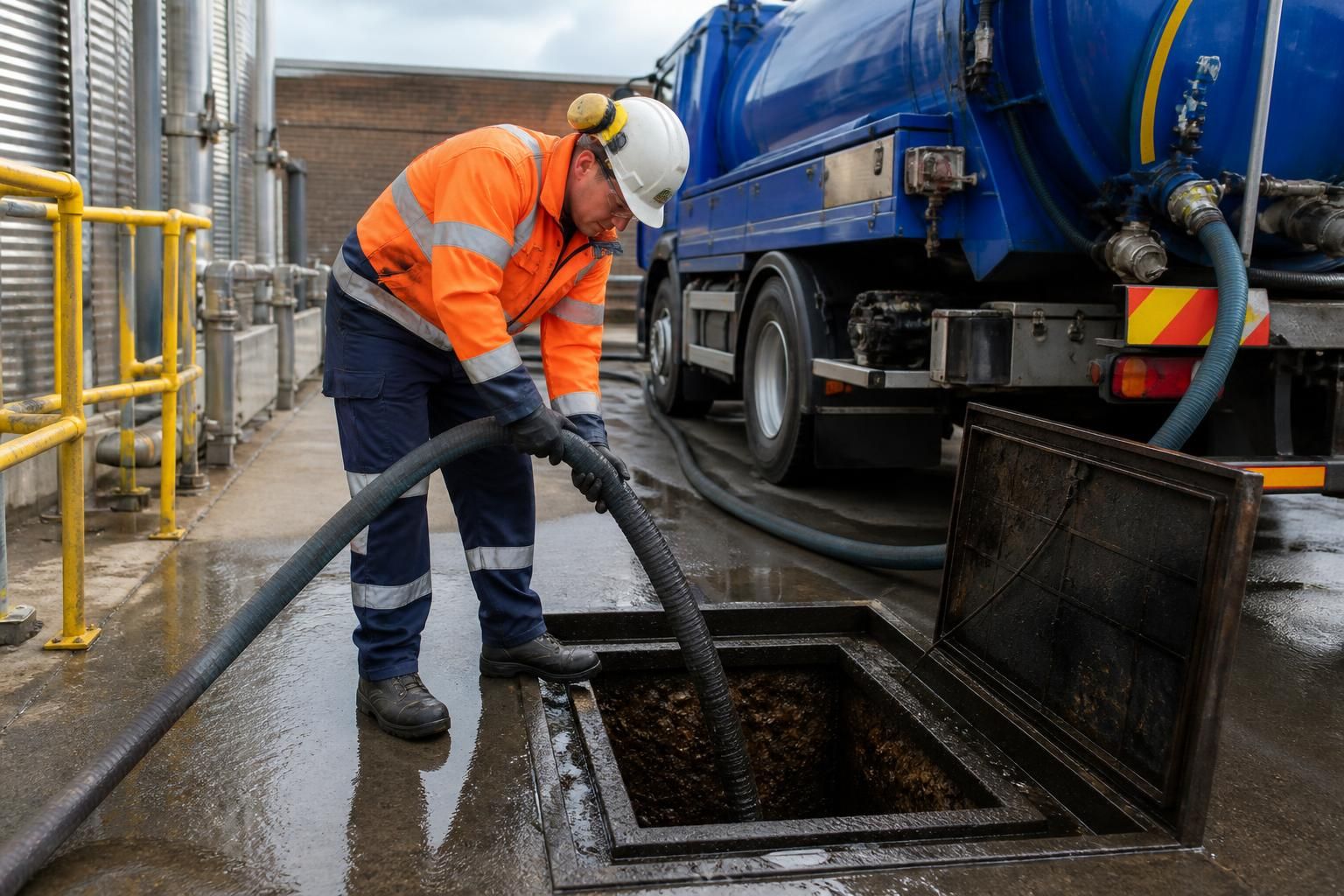
Key Challenges in Grease and Waste Water Tank Cleaning
Businesses must coordinate grease and waste water tank cleaning with production, access, disposal and record-keeping requirements. Difficulties can arise from uncertain tank condition, restricted entry, unsuitable equipment, changing waste characteristics and inadequate follow-up after cleansing.
Uncertain deposits and tank condition
Grease, sludge and settled waste can conceal corrosion, damaged fittings or restricted outlets. A suitable cleaning plan should account for the tank’s construction, access points, deposit depth and connected pipework before work begins.
Restricted access and confined-space hazards
Tank locations may involve narrow access routes, awkward covers, vehicle restrictions or confined-space risks. Cleaning arrangements must prevent unauthorised entry and define safe methods for inspection, extraction and ventilation where required.
Waste handling and disposal requirements
Removed grease and wastewater remain controlled site waste that must be contained, transported and disposed of through appropriate arrangements. Waste descriptions, transfer records and disposal routes should be checked rather than assumed.
Coordination with business operations
Cleaning may require isolation of pumps, drains, interceptors or connected processes. Poor coordination can disrupt production, affect drainage performance or expose staff and contractors to contaminated water and residues.
Changing waste characteristics
The contents of a tank can vary with the site’s processes, cleaning chemicals, discharge patterns and maintenance history. These changes affect the equipment, personal protective equipment and handling controls needed for the work.
Verification after cleaning
Removing visible deposits does not by itself confirm that outlets, chambers, pipe connections and associated components are functioning correctly. Post-cleaning checks and clear records help identify defects, remaining restrictions and follow-up maintenance needs.
Reviewing Your Grease and Waste Water Tank Cleaning Needs
Grease tank cleaning and waste water tank cleaning are maintenance activities for systems that collect fats, oils, grease, suspended solids or contaminated water before discharge, treatment or disposal. The appropriate approach depends on the tank’s design, contents, connected equipment and the condition identified during inspection.
Review recent maintenance records, tank drawings, access arrangements and disposal documentation before deciding what work is proportionate. Useful questions include whether the tank is separating grease or storing waste water, whether deposits are affecting connected pipework, and whether inspection or sampling indicates a wider hygiene or compliance concern.
What to establish before cleaning
Check the tank’s purpose, capacity, construction, connected drainage or treatment equipment and the types of waste entering it. Review whether the contents have changed since the system was installed, as changes in production or cleaning chemicals can affect deposits and the condition of associated components. Where the contents are uncertain, obtain suitable information before work begins rather than relying on appearance alone.
Use the review findings to agree a proportionate scope of work, including safe access, suitable cleaning methods, waste transfer arrangements and any precautions for connected equipment. Where deposits, damage or restricted access affect the assessment, a site inspection can help establish whether cleaning alone is appropriate or whether further remedial attention is needed.
After the work, retain the cleaning report and disposal records with relevant maintenance documentation. These records provide a useful basis for planning future inspections and adjusting the cleaning interval when tank use, waste characteristics or operating conditions change.
Benefits of Effective Grease and Waste Water Tank Cleaning
Effective grease and waste water tank cleaning removes settled material that can interfere with separation, storage and downstream flow. It makes tank condition easier to assess and helps prevent deterioration from going unnoticed.
Clear records support compliance reviews and help coordinate maintenance with operational requirements. Comparing findings over time supports decisions about inspection scope, remedial action and ongoing control.
Safer Working Conditions
Removing accumulated grease and sludge creates a more controlled environment for inspection, maintenance and work around tank access points.
Improved System Function
A clean tank provides more usable capacity and supports the intended separation, storage or treatment process.
Better Odour Control
Clearing decomposing organic deposits can help reduce persistent odours associated with poorly maintained waste water systems.
Stronger Compliance Evidence
A defined cleaning scope and documented outcome give responsible teams clearer evidence for internal reviews and compliance discussions.
Fewer Maintenance Surprises
Cleaning exposes deposits, deterioration and access limitations that could otherwise complicate future maintenance planning.
Improved Long-Term Control
Comparing tank condition and cleaning outcomes over successive visits supports more informed decisions about inspection and maintenance requirements.
Questions About Grease and Waste Water Tank Cleaning
Who is responsible for arranging grease and waste water tank cleaning?
A competent contractor should confirm tank type, waste classification, access constraints, equipment requirements and disposal route, then document findings, actions and recommendations for responsible managers, with records retained for audit.
Read moreWhat evidence should businesses request after grease tank cleaning?
Request a dated cleaning report detailing tank condition, deposits removed, methods used, waste quantities and disposal destination, supported by transfer documentation, photographs where appropriate, and recommendations for subsequent follow-up inspection.
Read moreHow can grease tank cleaning be planned to minimise disruption to business operations?
Plan cleaning around production cycles, isolate affected equipment where feasible, confirm access and washdown requirements beforehand, and coordinate drainage, waste removal and recommissioning with responsible site personnel and relevant contractors.
Read moreWhat determines the right cleaning method for a grease or waste water tank?
The method depends on tank construction, deposit consistency, waste characteristics, access, connected systems and safety controls. Vacuum removal, mechanical cleaning or water jetting may be selected accordingly following inspection findings.
Read moreWhat indicates that a grease tank needs cleaning?
Warning signs include recurring odours, slow drainage, visible grease around inlets or outlets, rising liquid levels, overflow staining and repeated blockages affecting connected pipework or separators, should prompt timely assessment.
Read moreDiscuss Your Grease or Waste Water Tank Cleaning Requirements
Discuss your grease or waste water tank with our team to clarify the system’s requirements, review relevant maintenance information and identify an appropriate cleaning scope. Request tailored professional advice before arranging work or planning future maintenance.