
Chlorine Monitoring & Control for Businesses
Chlorine monitoring and control measures disinfectant levels in business water systems, helping organisations verify effective treatment, identify departures from target conditions and maintain evidence for water safety management. Blue Fish Water Management provides practical guidance, testing and system oversight.
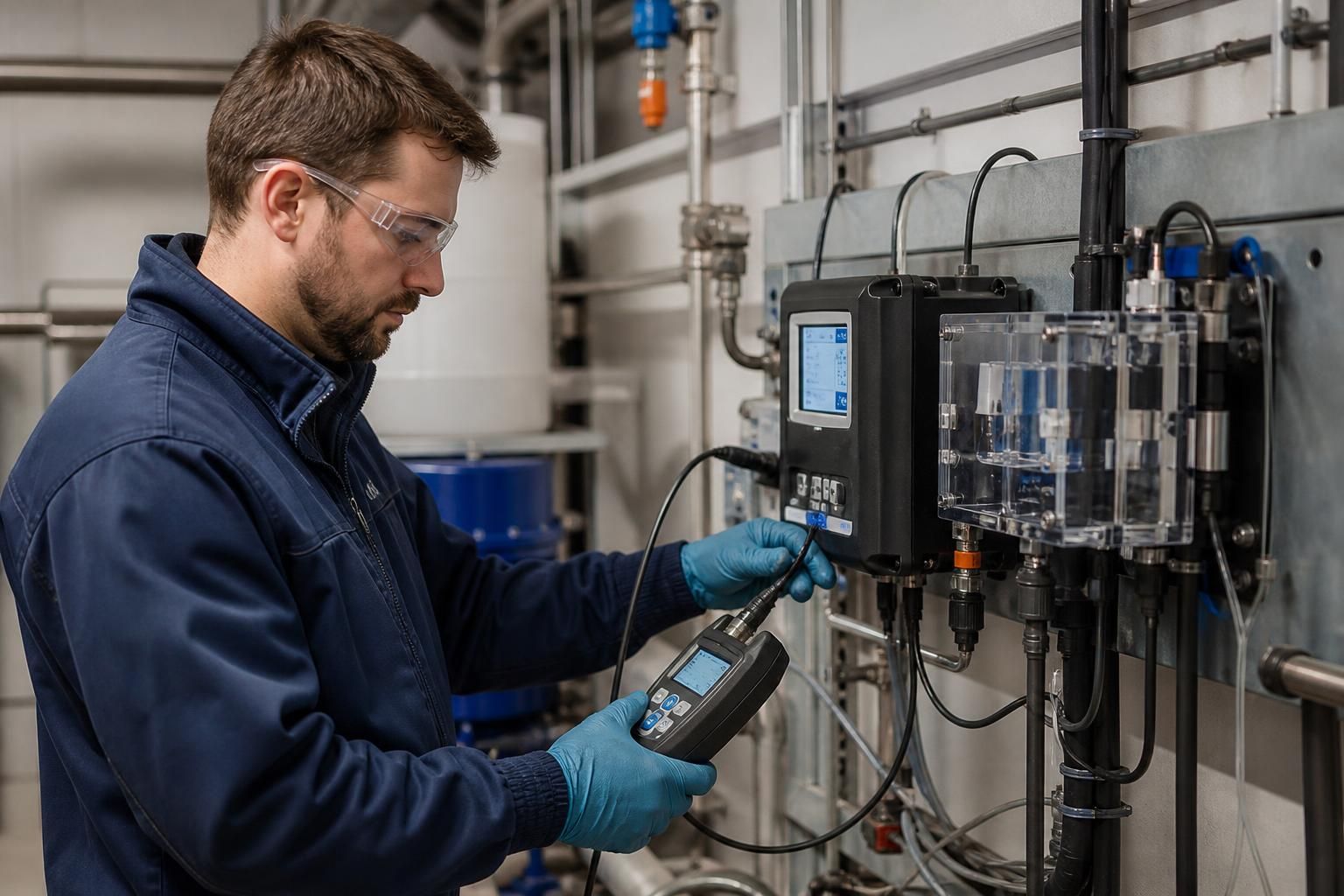
Which Chlorine Monitoring and Control Approach Is Right for Your System?
The most suitable chlorine monitoring and control approach depends on system design, disinfectant regime, risk profile and evidence required. Options range from periodic manual checks to continuous instrumented oversight, with different levels of provider involvement and control over operating conditions.
Periodic Manual Testing
A proportionate approach for smaller or less complex systems where chlorine residuals can be checked at defined points. Staff or a water hygiene provider record results using suitable field-testing methods, creating evidence for routine monitoring and highlighting changes that require investigation.
Provider-Led Monitoring Visits
Regular visits by a competent water hygiene provider suit organisations that need independent checks or do not have the resources to manage testing internally. The scope can include sampling, review of control measures and reporting against the site's water safety procedures.
Continuous Online Monitoring
Fixed sensors provide ongoing visibility of chlorine residuals at selected locations, making this approach suitable for larger, complex or higher-risk systems where conditions may change between manual checks. Readings can support trend analysis, alarm management and investigation of departures from target conditions.
Automated Chlorine Dosing Control
Automated dosing links chlorine measurement with equipment that adjusts treatment input within defined operating parameters. It is appropriate where maintaining a controlled disinfectant level requires frequent correction, but the equipment, calibration, alarms and safeguards must form part of the wider management system.
Integrated Monitoring and Control Programme
A combined programme may use manual verification, online instruments, dosing controls, laboratory testing and documented review. This suits organisations seeking evidence across multiple sites or system types, with the level of provider involvement matched to operational complexity, risk and compliance requirements.
What Does Chlorine Monitoring and Control Include?
Effective chlorine monitoring and control combines defined sampling points, suitable instruments, documented results and action thresholds. The selected approach should also address calibration, trend review, investigation of abnormal readings and clear responsibilities for adjusting treatment without compromising system safety.
Identify Critical Monitoring Points
Monitoring locations are selected to represent the parts of a water system where chlorine levels may vary. Points can include treated water outlets, storage areas and representative downstream outlets, creating a practical basis for assessing control across the system.
Measure Disinfectant Levels
Appropriate instruments and test methods are used to measure chlorine concentration consistently. Readings should be taken in accordance with the agreed monitoring plan and recorded with the relevant location, date and system information.
Maintain Measurement Accuracy
Equipment selection, condition checks and calibration arrangements support dependable results. Any limitations affecting a reading should be recognised so that operational decisions are based on reliable information.
Review Results and Trends
Recorded measurements can be assessed over time to identify recurring variation, gradual deterioration or differences between monitoring points. Trend review helps responsible persons distinguish an isolated result from a developing control issue.
Investigate and Correct Abnormal Readings
Results outside the agreed operating range should trigger a proportionate investigation. This may involve checking the dosing arrangement, storage conditions, water flow, equipment and recent system changes before corrective action is documented.
Keep Clear Compliance Records
Monitoring schedules, results, equipment checks, investigations and corrective actions should be retained as part of the water safety record. Clear documentation helps organisations demonstrate how chlorine control is managed and reviewed.
Questions About Chlorine Monitoring and Control
Does your water system need continuous chlorine monitoring?
Support should match system complexity, risk profile and existing controls: independent testing may suit routine verification, while integrated monitoring, investigation and corrective-action support may be needed for higher-risk water systems.
Read moreWhat should chlorine monitoring records demonstrate?
Records should demonstrate measured free or total chlorine, sampling location, date, time, method, instrument status, result, target range, reviewer, interpretation, and actions taken when findings require investigation or treatment adjustment.
Read moreWho should review chlorine monitoring results?
Results should be reviewed by a competent person with authority to interpret findings, compare them with system requirements, escalate concerns, and coordinate proportionate corrective action with the relevant system owner.
Read moreWhat should happen when chlorine monitoring identifies an out-of-range result?
The provider should confirm the deviation, assess potential system impact, investigate its cause, document findings, and agree proportionate corrective action with the responsible system owner before safely restoring treatment targets.
Read moreWhat equipment is suitable for chlorine monitoring?
Suitable equipment may include portable DPD photometers for verification, online chlorine analysers for continuous measurement, chlorine probes, data-logging interfaces and sampling accessories selected for system conditions and site risk profile.
Read moreQuestions to Ask Before Starting Chlorine Monitoring and Control
Before proceeding with chlorine monitoring and control, establish which water systems, assets and treatment stages are included, what competence the provider has for the work, and how the approach will reflect the system’s risk assessment. Ask what evidence will be produced to demonstrate that the monitoring process is technically sound and suitable for the intended use.
Clarify the reporting format, how significant findings will be communicated, and the timescale for completing the work and issuing records. The agreement should also identify which routine checks, maintenance actions and decisions remain with the system owner, and when further technical review or remedial action would be recommended.
What should the monitoring plan cover?
The plan should set out sampling locations, sampling frequency, the type of chlorine measurement required and the conditions under which readings will be taken. It should explain how the selected points represent the system, how target conditions are established from the risk assessment and how changes to the system will trigger a review of the monitoring scope.
Once these points have been answered, the proposed monitoring arrangement should be reviewed against the system’s risk assessment and written control procedures before work begins. This provides a clear basis for confirming the included assets, agreed decision-making process and records that will be retained.
Chlorine readings should be interpreted in the context of the wider water system rather than treated as isolated results. A suitable provider will explain what the findings mean, identify when further investigation is warranted and help the system owner maintain an appropriate, documented control process.
Discuss Your Chlorine Monitoring Requirements
Discuss your chlorine monitoring and control requirements with Blue Fish Water Management. We can help you identify the appropriate next step, clarify practical considerations and develop an approach aligned with your organisation’s water safety responsibilities.