
Water Chlorination Services
Water chlorination services use controlled chlorine dosing to disinfect mains, tanks and other water systems, reducing contamination risks when supported by appropriate testing. Blue Fish Water Management provides practical assessment, chlorination, dechlorination and verification for organisations managing potable water compliance.
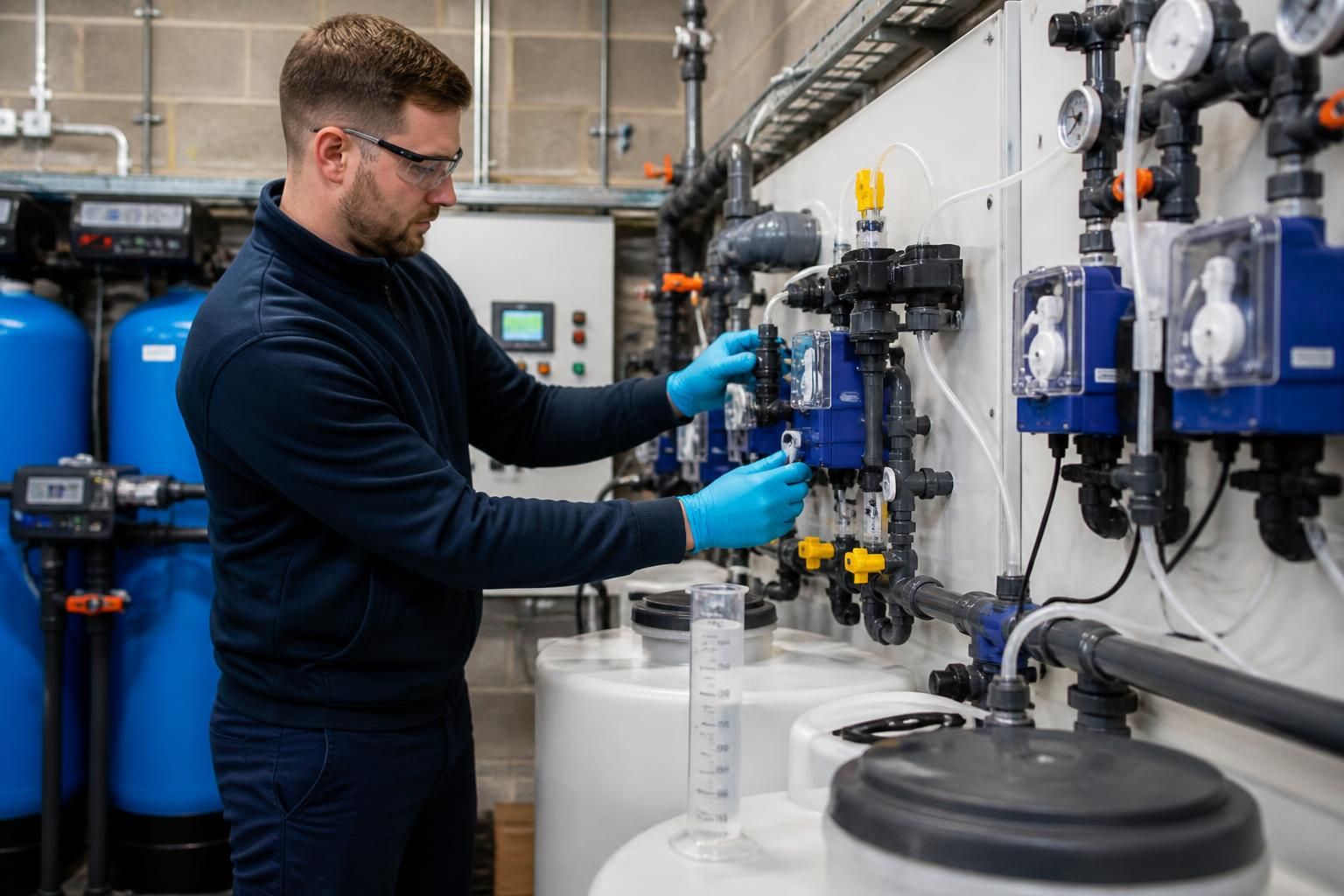
When Water Chlorination Is Required
Water chlorination may be specified at several stages of a system’s lifecycle. Common applications include commissioning new installations, treating contamination during remedial works, carrying out planned disinfection, and responding to identified infection risks where controlled treatment and verification are required.
New System Commissioning
Newly installed water systems may require chlorination before being brought into service. Treatment helps address contamination introduced during construction, installation or connection works, subject to the system design and relevant compliance requirements.
System Alterations
Extensions, replacements and significant modifications can disturb water systems or introduce contamination. Chlorination may form part of the commissioning process after works, with sampling used to verify the condition of the system before use.
Remedial Treatment
Where contamination is identified, chlorination can support remedial action alongside investigation and corrective works. The treatment scope should reflect the affected parts of the system and be followed by appropriate verification.
Planned Disinfection
Planned disinfection may be used as part of a documented water hygiene programme or during maintenance activities. Controlled dosing, contact conditions, flushing and testing need to be considered together rather than treating chlorination as an isolated task.
Infection-Risk Response
An identified infection risk may require targeted water chlorination following a suitable assessment. Treatment decisions should account for the system configuration, potential sources of contamination, dechlorination requirements and post-treatment testing.
Water Chlorination Services: Practical Questions Answered
Who should arrange water chlorination for a commercial water system?
Provide system schematics, tank capacities, outlet details, materials, occupancy patterns, recent test results and access constraints. These details help define dosing, sampling points, safety controls and verification requirements in advance.
Read moreWhen is water chlorination required for a commercial water system?
Chlorination is required after new mains installation, tank cleaning, system alterations, contamination findings or prolonged stagnation, with treatment scope determined by risk assessment and verification testing for the specific system.
Read moreHow is water chlorination verified after treatment?
Verification combines post-treatment sampling with review of chlorine residuals, microbiological results and procedures. Results are assessed against specified criteria, with findings recorded before the system is returned to normal operation.
Read moreWhich water systems can be treated by water chlorination?
Services can cover potable water mains, storage tanks, distribution pipework and associated outlets. Scope depends on system design, usage, contamination risks, access, and the required treatment method for each installation.
Read moreWhat does commercial water chlorination involve?
Commercial water chlorination involves assessing the system, selecting suitable chlorine dosing, isolating affected sections, protecting personnel, controlling contact time, then flushing and documenting results before recommissioning for safe, compliant operation.
Read moreWhich Water Chlorination Requirement Applies?
The appropriate chlorination route depends on what requires treatment and why. New-build commissioning verifies newly installed systems; remedial work addresses a known defect; tank or pipework disinfection targets specific components; suspected contamination requires investigation-led treatment and follow-up evidence.
New-build commissioning chlorination
Newly installed mains, tanks and distribution pipework may require chlorination before being brought into service. The process is planned around the installation, followed by appropriate sampling and verification to provide evidence that the system is suitable for commissioning.
Remedial chlorination
Remedial chlorination is used where testing, inspection or a risk assessment identifies a water hygiene defect requiring corrective action. Treatment should follow investigation of the cause and be supported by post-chlorination testing rather than being treated as a standalone fix.
Storage tank disinfection
A tank may need targeted disinfection after contamination, maintenance, refurbishment or other work that could affect water hygiene. The scope should account for the tank condition, associated fittings and any connected pipework, with verification after treatment.
Pipework disinfection
Pipework disinfection focuses on the internal surfaces of a new, altered or contaminated distribution system. The method and extent depend on the layout and condition of the pipework, including whether sections can be isolated and flushed effectively.
Suspected contamination response
Suspected contamination requires an investigation-led approach rather than automatic chlorination. Relevant information is gathered, samples may be taken, and treatment is selected according to the findings; follow-up testing helps determine whether further action is needed.
What Our Water Chlorination Service Includes
Treatment planning identifies the system scope, isolation points, chemical controls and access requirements. Controlled dosing and suitable contact time are managed with precautions for people, equipment and the water system.
Samples are taken from representative outlets and submitted for UKAS-accredited analysis. Certification and reports document findings, while practical advice explains any further remedial action, follow-up checks or monitoring needed.
Treatment Planning
The system is reviewed to define the treatment scope, isolation points, access arrangements and control measures before work begins.
Controlled Chemical Dosing
Chlorine is introduced at a controlled concentration, with precautions designed to protect people, equipment and the water system.
System Disinfection
Mains, tanks and associated pipework can be treated to address contamination risks within the defined chlorination programme.
Representative Sampling
Samples are collected from suitable outlets so that the condition of treated water can be assessed across the relevant system.
UKAS-Accredited Testing
Samples are submitted for UKAS-accredited analysis to provide objective evidence of the treatment outcome.
Certification
Completion documentation records the treatment and verification details needed to support water hygiene compliance records.
Clear Reporting
A structured report explains the findings, relevant observations and any limitations identified during the chlorination process.
Remedial Advice
Where further action is indicated, practical advice sets out appropriate remedial work, follow-up checks or ongoing monitoring.
Discuss Your Water Chlorination Requirements
If you are reviewing a planned installation, investigating a water quality concern or checking existing controls, discuss the system with Blue Fish Water Management. The team can help clarify whether mains chlorination, tank disinfection or further verification is appropriate.