
Chlorine Filters for Water Safety
Chlorine filters and dosing equipment support controlled water treatment by managing chlorine levels and protecting downstream use. Blue Fish Water Management advises on suitable equipment selection, installation and monitoring to help commercial operators maintain safe, compliant systems.
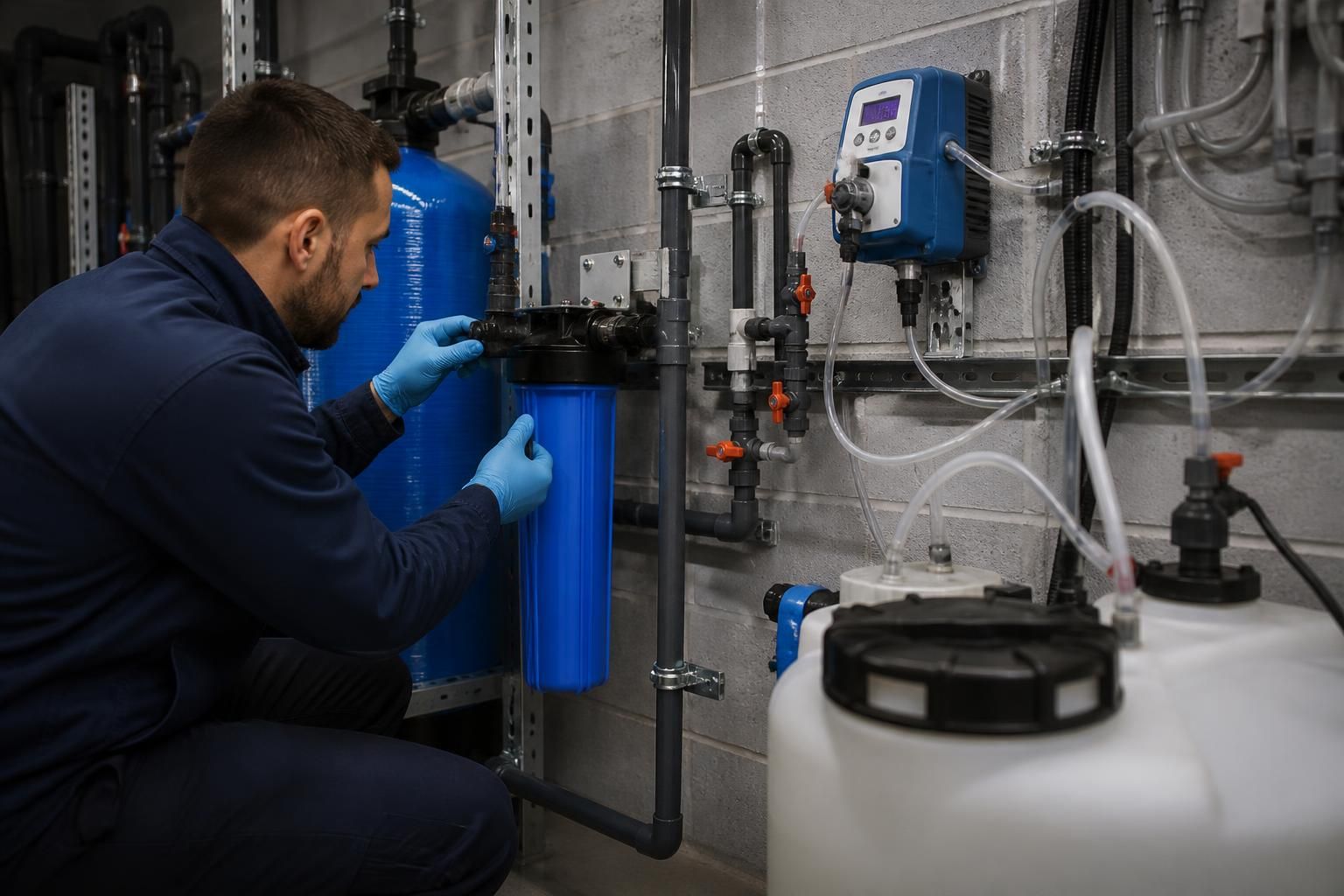
Chlorine Equipment Specification and Control
Effective chlorine filters and equipment specification considers the water system, treatment objective, flow conditions and points of use. A managed arrangement should define filtration, dosing, monitoring, maintenance, records and verification so operators can assess performance and act on deviations.
Filtration Selection
Chlorine filtration should be matched to the incoming water quality, system design and intended point of use. The specification may cover filter type, particulate control, flow capacity, housing arrangement and replacement requirements, helping protect downstream components and maintain consistent treatment conditions.
Dosing Equipment
A controlled dosing arrangement brings together chemical storage, metering equipment, injection points and associated pipework. Equipment selection should reflect the treatment objective, operating conditions and required level of control, with safe access for inspection and maintenance.
Residual Monitoring
Monitoring confirms whether chlorine levels remain within the defined operating requirements for the system. Measurements should be taken at appropriate control points, recorded consistently and reviewed alongside flow changes, maintenance activity and any relevant water testing.
Safety Controls
Chlorine equipment requires safeguards against chemical handling risks, dosing interruption and abnormal operating conditions. Suitable controls can include clear labelling, secure storage, isolation arrangements, alarm functions and procedures for responding to faults or out-of-range results.
Maintenance Requirements
Planned maintenance should cover filter condition, pump operation, injection assemblies, tubing, storage arrangements and monitoring equipment. Inspection intervals and replacement tasks should be defined in system documentation so deterioration is identified before it affects treatment control.
Records and Verification
A properly managed installation produces an auditable record of equipment details, servicing, chlorine measurements, faults, corrective actions and verification activity. UKAS-accredited water testing can support the wider evidence base where independent analysis is required for water safety management.
Understanding Chlorine Filters and Equipment
“Chlorine filter” can describe different equipment. A particulate filter removes suspended matter, while activated carbon media can reduce chlorine and some chlorine-related tastes and odours; neither should be selected without defining whether the objective is protection of equipment, preparation for use, or removal of residual disinfectant. Filter capacity, media condition, flow rate and pressure loss all affect performance.
The dutyholder or appointed water safety lead remains responsible for ensuring that equipment is used within its intended operating limits and maintained under the site’s water safety arrangements. Results should be interpreted against the treatment specification, risk assessment and relevant control limits: a chlorine reading is useful evidence of conditions at the sampling point, but it does not by itself demonstrate that every part of a system has been adequately treated.
Particulate and activated carbon filters
Particulate filters remove suspended solids that may affect valves, pumps, injectors and other downstream components. Activated carbon filters can reduce chlorine and certain tastes and odours, but they also remove disinfectant residual and may require closer microbiological control downstream. Selection should therefore consider the incoming water quality, required flow, pressure loss, filter rating, contact time and the consequences of reducing residual chlorine.
Before chlorine filters or associated equipment are installed, the proposed arrangement should be checked against the system’s water quality, materials, flow demands and intended point of use. Commissioning should establish a documented baseline, confirm that the equipment operates as specified and identify the inspections, servicing or media replacement required.
Where equipment is altered or introduced into an established water system, the change should be recorded within the site’s water safety documentation. Blue Fish Water Management can help commercial dutyholders review the application, interpret monitoring information and determine whether further investigation or remedial action is appropriate.
Applications for Chlorine Filters and Equipment
Chlorine filters and associated equipment may be used across offices, housing, healthcare, education, hospitality and industrial premises. Their role depends on whether the site needs chlorine reduction, particulate control, treatment support or protection for downstream equipment.
Potable water systems requiring chlorine reduction
Activated carbon filters may be considered where the treatment objective includes reducing residual chlorine, taste or odour at a defined point of use. The media, flow rate and contact time must be matched to the incoming water and intended demand.
Systems needing particulate protection
Sediment or cartridge filters can help control suspended matter before water reaches valves, dosing equipment or other downstream components. Selection should account for particle loading, pressure loss and the inspection or replacement arrangements needed to prevent blocked filters.
Dosing and chlorination installations
Filters may support chlorination equipment by protecting dosing components from particulate contamination, while dosing pumps, storage arrangements and injection points must be assessed as part of the complete treatment design. Filtration does not replace correct disinfectant control.
Large commercial premises
Offices, housing developments, hospitality sites and other premises with varied outlets may need equipment positioned for a specific area rather than applied uniformly across the whole system. Demand patterns, outlet use and the location of sampling points should inform the arrangement.
Healthcare and higher-risk environments
In healthcare settings and other premises where vulnerable people may be exposed, chlorine filters must be considered within the wider water safety plan. Reducing residual disinfectant at a point of use can affect downstream control, so the purpose and consequences of the installation should be documented.
Industrial and process water applications
Industrial sites may require chlorine reduction or particulate control to protect processes, equipment or defined uses. The proposed filter should be assessed against the source water, process requirements, materials compatibility, peak flow and any consequences of exhausted media.
Established systems undergoing alteration
Where filters or chlorine equipment are added to an existing installation, the change should be reviewed for effects on flow, pressure, stagnation, access and monitoring. Commissioning records should identify operating limits, maintenance requirements and the evidence needed to verify ongoing performance.

Technical Standards for Chlorine Equipment and Filters
Chlorine filters and equipment are assessed as part of a controlled water-safety process, rather than treated as interchangeable components. The technical review considers the treatment objective, the system’s operating conditions and the evidence needed to show that the equipment is performing as intended.
Blue Fish Water Management’s experienced personnel apply practical water-hygiene knowledge when examining existing arrangements, identifying unsuitable configurations and advising on corrective work. Their approach connects equipment condition with site risk and the requirements set out in the relevant management documentation.
Clients can expect clear technical findings, defined actions and records that support informed maintenance decisions. Quality controls include checking work against the agreed specification, documenting significant observations and distinguishing confirmed results from matters requiring further investigation. This provides a defensible standard for ongoing water-safety management.
Questions to Ask Before Appointing a Chlorine Equipment Provider
What qualifications and relevant experience does your chlorine equipment team hold?
Confirm the provider can evidence relevant competence and accreditation, explain its selection and maintenance methodology, define responsibilities, provide reports, agree realistic timescales, and support follow-up review when findings require action.
Read moreWhat information is needed to specify suitable chlorine filters and equipment?
Provide water source, flow rate, pressure, temperature, treatment objective, existing chlorine concentration, contaminants, pipework materials, available installation space, discharge arrangements, monitoring requirements, intended point of use and maintenance access.
Read moreWhat maintenance schedule will apply to the chlorine filters and associated equipment?
It should cover inspection of flow and pressure, chlorine performance, leaks, controls and connections, with media replacement and calibration intervals based on manufacturer guidance, water quality, duty and monitoring results.
Read moreWhat evidence will the chlorine equipment provider supply after commissioning?
Request commissioning records showing equipment settings, baseline readings, flow and pressure checks, chlorine results, deviations and corrective actions. The provider should supply operating instructions, handover documentation, test certificates and recommendations.
Read moreHow will chlorine handling risks be controlled during equipment installation and operation?
The provider should assess storage, dosing and exposure risks, specify controls, provide suitable protective equipment, secure chemicals, manage spills, and document emergency procedures and operator training for work and incidents.
Read moreDiscuss Your Chlorine Equipment Requirements
Discuss your proposed application with Blue Fish Water Management to clarify whether filtration, chlorine reduction or associated equipment is appropriate. The team can review available information, define a practical scope and prepare advice or a tailored quotation for your site.