
Unvented Hot Water Tank Cleaning
Unvented hot water tank cleaning removes sediment, scale and organic contamination from pressurised hot water storage systems. This page explains the cleaning process, hygiene considerations, access requirements and how planned maintenance supports reliable operation and legionella control.
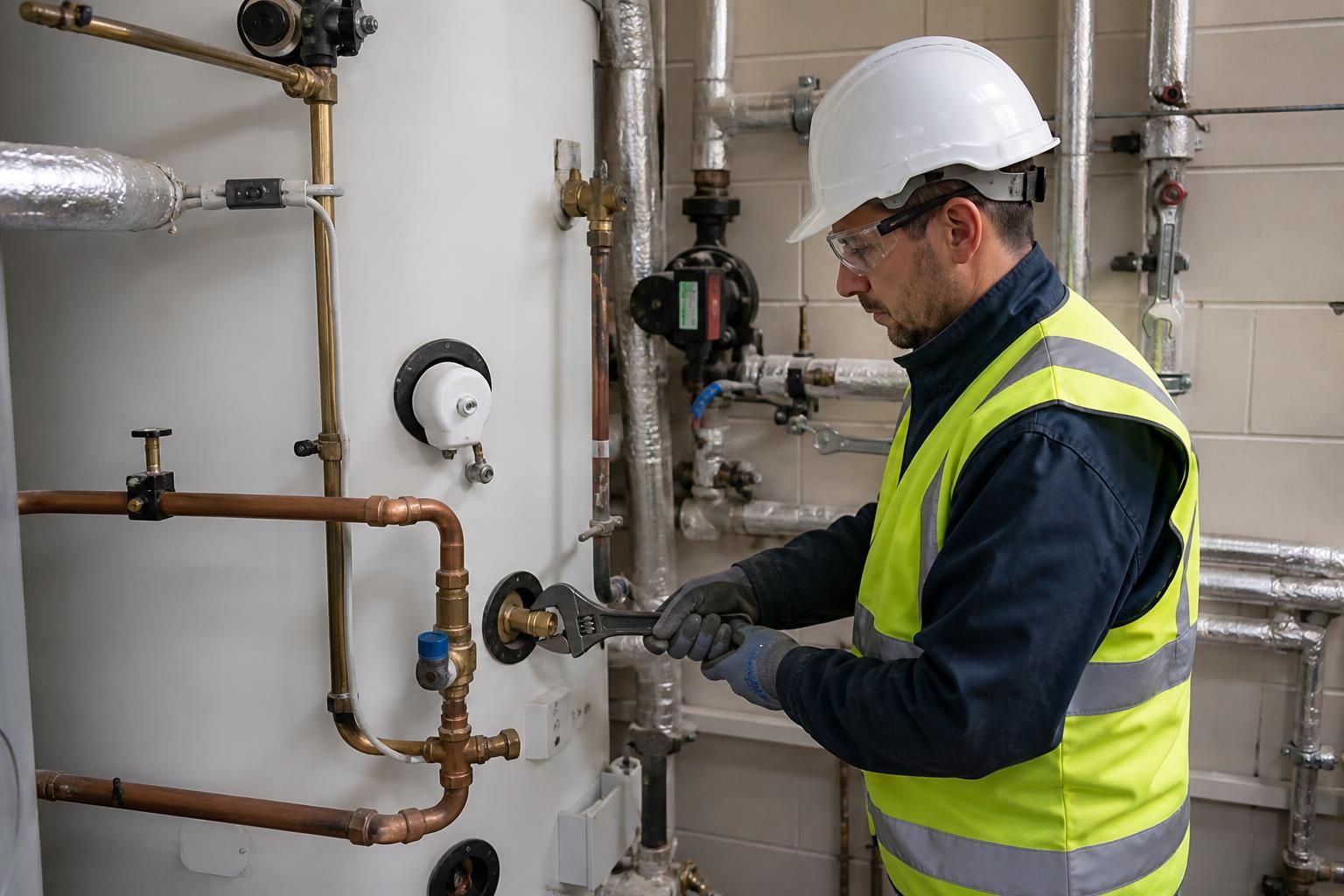
Key considerations for unvented hot water tank cleaning
Managing cleaning for an unvented hot water tank involves more than routine servicing. Pressurised equipment, confined access, stored hot water, contamination controls and compliance records create practical responsibilities that must be coordinated without compromising system integrity or staff safety.
Pressurised-system safety
An unvented cylinder stores water under pressure, so cleaning must be planned around safe isolation, cooling, draining and depressurisation. Safety controls should cover hot surfaces, scalding water, stored pressure and any associated electrical equipment.
Competence and regulatory duties
Work affecting an unvented hot water system should be undertaken by suitably competent personnel, particularly where safety valves, expansion controls or other G3-related components may be disturbed. The system must be returned to a safe operating condition after cleaning.
Protecting safety components
Temperature and pressure relief valves, expansion vessels, tundishes and discharge pipework are critical to safe operation. Cleaning should avoid contamination, obstruction or incorrect reconnection, with relevant components checked after the work.
Hygiene controls during cleaning
Removing sediment or organic contamination can release deposits into the system and surrounding work area. Clean equipment, controlled drainage, suitable disinfection measures and hygienic refilling help prevent recontamination of the stored water.
Access and isolation planning
Cylinder cupboards and plant areas may restrict access to drain points, inspection openings, valves and discharge routes. Before work begins, the responsible team should confirm isolation points, drainage arrangements, safe working space and protection for nearby building finishes.
Temperature and legionella control
Cleaning does not replace the need to manage hot water temperatures and other factors that influence legionella risk. The system should be assessed as part of the wider water hygiene programme, including checks for areas where deposits or stagnation may persist.
Recommissioning and records
After cleaning, the cylinder should be refilled, checked for leaks and returned to its intended operating settings. Recording the work, findings, cleaning method, defects and any follow-up actions supports maintenance decisions and demonstrates how the system has been managed.
Questions to ask before cleaning an unvented hot water tank
Review the unvented hot water tank’s maintenance records, water quality findings, temperature controls, safety-device checks and any recent changes in use. Pay particular attention to recurring scale, discolouration, odour, reduced heating performance or evidence of contamination, as these may indicate that inspection and cleaning require consideration.
Before arranging work, confirm the tank’s capacity, location, isolation points, access route and whether the system can be safely taken out of service. The appropriate action may be routine cleaning, targeted investigation or wider remedial work, depending on the condition of the vessel, connected pipework and available records.
Review condition, use and previous findings
Look for persistent sediment, scale at accessible components, unusual odours, discolouration, fluctuating hot water performance or repeated hygiene concerns. Compare these findings with previous inspection and cleaning records, changes in occupancy or demand, and any alterations to the hot water system. If the cause is uncertain, an inspection may be more proportionate than immediately arranging a full clean.
The answers should help determine whether cleaning can be planned as a standalone task or needs to form part of wider unvented hot water tank maintenance. Where inspection identifies damaged components, persistent contamination or issues with temperature control, these should be assessed alongside the cleaning requirement rather than treated as separate concerns.
Before work begins, agree the proposed method, isolation arrangements, post-cleaning checks and records to be provided. A clear scope allows the tank to be returned to service with its condition, hygiene status and any recommended follow-up actions properly documented.
Benefits of a well-managed unvented hot water tank cleaning programme
Unvented hot water tank cleaning is a controlled process for removing internal deposits and contamination while protecting the integrity of a pressurised vessel. Planned correctly, it gives maintenance teams a basis for assessing condition, documenting work and managing the tank’s return to service.
This supports safer operation, clearer compliance records and better long-term control, with defects linked to proportionate follow-up.
Improved hygiene control
Removing sediment, scale and organic contamination supports a cleaner internal environment and strengthens the wider approach to legionella control.
Clearer compliance evidence
A defined cleaning scope, inspection record and post-cleaning checks provide traceable evidence for water safety and maintenance reviews.
Better operational insight
Inspection findings can show whether deposits, contamination or component condition are affecting the tank’s operation and require further attention.
More controlled planning
Agreeing isolation, access, cleaning and return-to-service arrangements in advance helps maintenance teams coordinate the work with normal site operations.
Proportionate follow-up
Documented defects and hygiene findings help responsible teams distinguish routine cleaning from targeted investigation or remedial work.
Stronger long-term control
Linking cleaning records with water quality findings, temperature checks and maintenance history creates a more useful basis for ongoing system management.
Questions About Unvented Hot Water Tank Cleaning
Who is qualified to clean an unvented hot water tank?
Cleaning should be planned by personnel familiar with pressurised hot-water systems, manufacturer requirements and water hygiene principles, with findings, actions and verification recorded for responsible site management and audit purposes.
Read moreHow disruptive is unvented hot water tank cleaning for business operations?
Disruption depends on tank capacity, system configuration and isolation requirements. Planned cleaning may require temporary loss of hot-water service, with access, drainage, refilling and recommissioning coordinated around existing site operations.
Read moreWhat records should businesses retain after unvented hot water tank cleaning?
Retain commissioning records, cleaning method, inspection findings, photographs where applicable, test results, disinfection details, defects identified, corrective actions, waste documentation, and return-to-service checks for audit purposes and future maintenance planning.
Read moreCan unvented hot water tank cleaning be tailored to different system configurations?
Yes, cleaning methods can reflect vessel size, internal access, heating arrangement, controls and connected pipework. The scope may combine manual cleaning, specialist equipment, inspection and targeted remedial recommendations where appropriate.
Read moreHow often should an unvented hot water tank be cleaned?
Frequency depends on usage, water quality, scale formation, temperature control and inspection findings. Review the tank within planned maintenance, and clean when evidence or risk assessment indicates contamination or deposits.
Read moreDiscuss Your Unvented Hot Water Tank Cleaning Requirements
Discuss your unvented hot water tank cleaning requirements with Blue Fish Water Management. Explain the system’s circumstances and intended works to clarify the appropriate scope, practical constraints and documentation needed for tailored professional advice.