
Who is responsible for legionella water sampling?
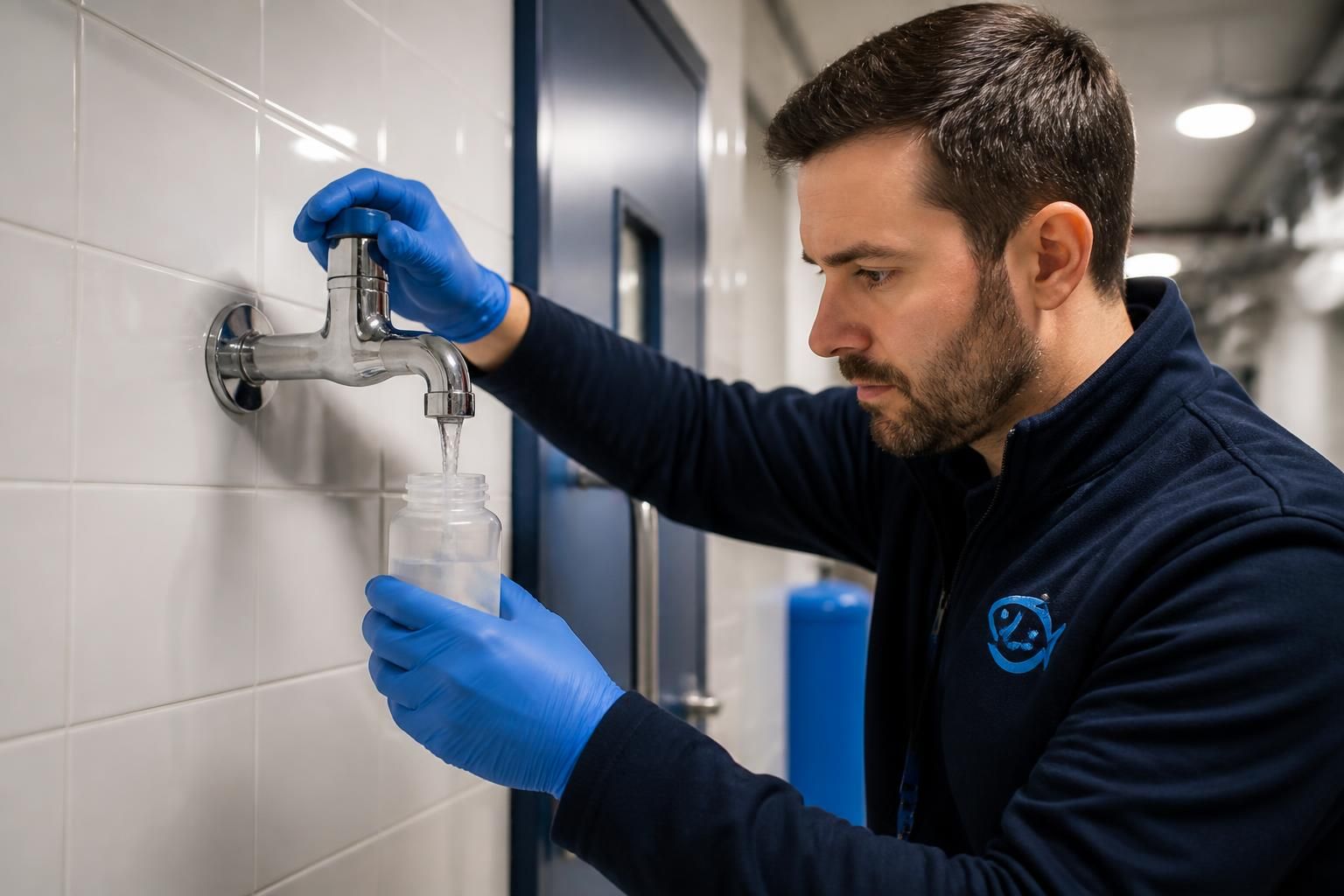
The organisation responsible for legionella water sampling is the dutyholder or nominated responsible person who manages the premises and its water systems. This person must ensure that sampling is justified by the risk assessment, arranged through a suitable process and followed by appropriate action when results identify a potential problem.
The exact dutyholder depends on how the premises are owned, occupied and managed. Common examples include:
- Employers: an employer is generally responsible for water systems under its control in a workplace, even where day-to-day facilities management is delegated.
- Landlords and property owners: the owner may have duties for water systems serving rented, residential, commercial or communal premises, subject to the nature of the tenancy and the arrangements in place.
- Facilities or property managers: a managing agent may organise sampling where this responsibility has been assigned, but the scope of that appointment should be clear and documented.
- Care, healthcare and residential institutions: the organisation operating the premises must establish who has authority for water safety, including sampling, monitoring and remedial decisions.
- Shared or multi-occupied buildings: responsibility may be divided between the building owner, landlord, managing agent, individual occupiers and contractors. Their interfaces need to be defined so that no part of the system is overlooked.
Appointing a responsible person does not mean choosing someone simply because they hold a particular job title. They need sufficient authority, knowledge and competence to understand the water systems, assess the risks, arrange suitable controls and act on findings. Where the internal team does not have the necessary expertise, the dutyholder can obtain competent external advice or testing services.
The person taking the sample is not normally the person who carries the overall legal responsibility for the premises. A competent water hygiene provider may collect samples, arrange laboratory analysis and report the findings. The dutyholder still needs to specify what is required, provide accurate information about the system, ensure safe access and check that the work addresses the risks identified in the assessment.
Responsibility also extends beyond booking a laboratory test. The dutyholder should ensure that:
- the legionella risk assessment identifies whether sampling is needed and which outlets or system components should be included;
- sampling points represent the relevant parts of the water system and are selected by a suitable method;
- samples are collected, transported and tested using appropriate procedures;
- results are received by someone able to recognise when further investigation is necessary;
- any corrective measures are assigned to named people and completed;
- sampling reports, decisions, remedial work and follow-up checks are retained as part of the water safety records.
A contractor’s report should therefore be treated as part of the management process rather than as the end of it. The dutyholder remains responsible for making sure recommendations are considered in the context of the whole system. For example, a result may need to be considered alongside water temperatures, turnover, storage arrangements, dead legs, outlet condition, maintenance history and changes in occupancy.
Where several organisations share control, they should agree their responsibilities in writing. This may include who maintains tanks and calorifiers, who manages outlets within occupied areas, who arranges routine monitoring, who receives laboratory reports and who has authority to isolate equipment or commission remedial work. Contracts can allocate tasks, but they should not create uncertainty about who is accountable for the overall control of the risk.
Sampling is not a substitute for a suitable risk assessment or routine control measures. The dutyholder must first understand the system and maintain it in a condition that reduces the opportunity for legionella growth and exposure. Sampling then provides evidence about the microbiological condition of selected points when the assessment indicates that testing is appropriate.
Businesses should be able to identify their dutyholder, responsible person, appointed contractors and escalation route before sampling takes place. If those roles are unclear, the first step is to review the premises’ control arrangements and risk assessment rather than arranging isolated tests without a defined management response.
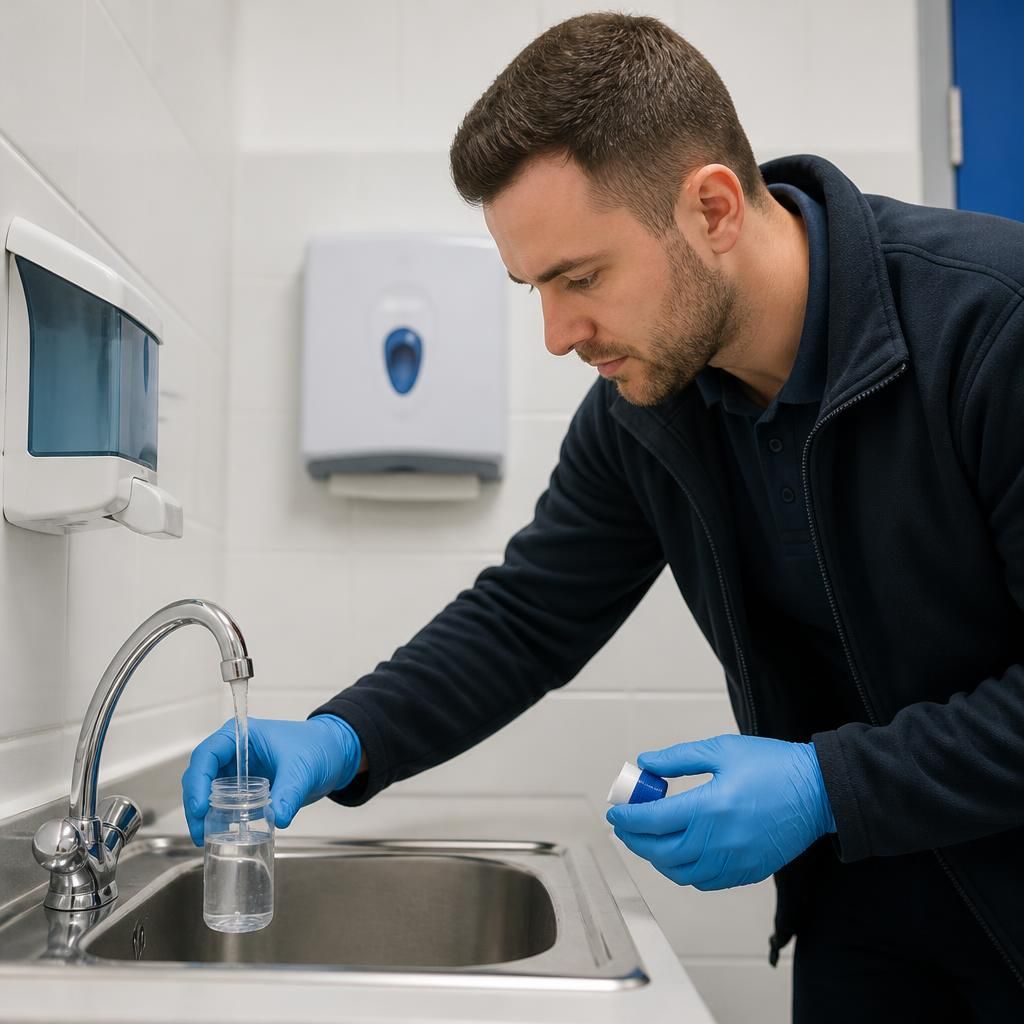
- who commissions the sampling;
- who provides access to the relevant outlets and system information;
- who receives and reviews the laboratory report;
- who decides whether further investigation is needed; and
- who confirms that agreed actions have been completed.
This distinction is particularly important where a laboratory or water hygiene contractor reports results directly to a facilities team. The report may identify a microbiological finding, but the organisation responsible for the premises must ensure that the finding is assessed alongside the system’s operating conditions and that an appropriate management decision follows.
Clarify responsibility for legionella water sampling
If your organisation needs to clarify its sampling responsibilities or review its arrangements, Blue Fish Water Management Ltd can provide practical guidance on legionella control and water hygiene. Contact the team to discuss the requirements of your premises and the appropriate next steps.