
Legionella Checks for Landlords
A landlord legionella risk assessment is a structured review of water systems, premises and management arrangements to identify conditions that may support Legionella growth. Practical legionella checks help landlords understand control measures, record findings and address responsibilities for tenant water safety.
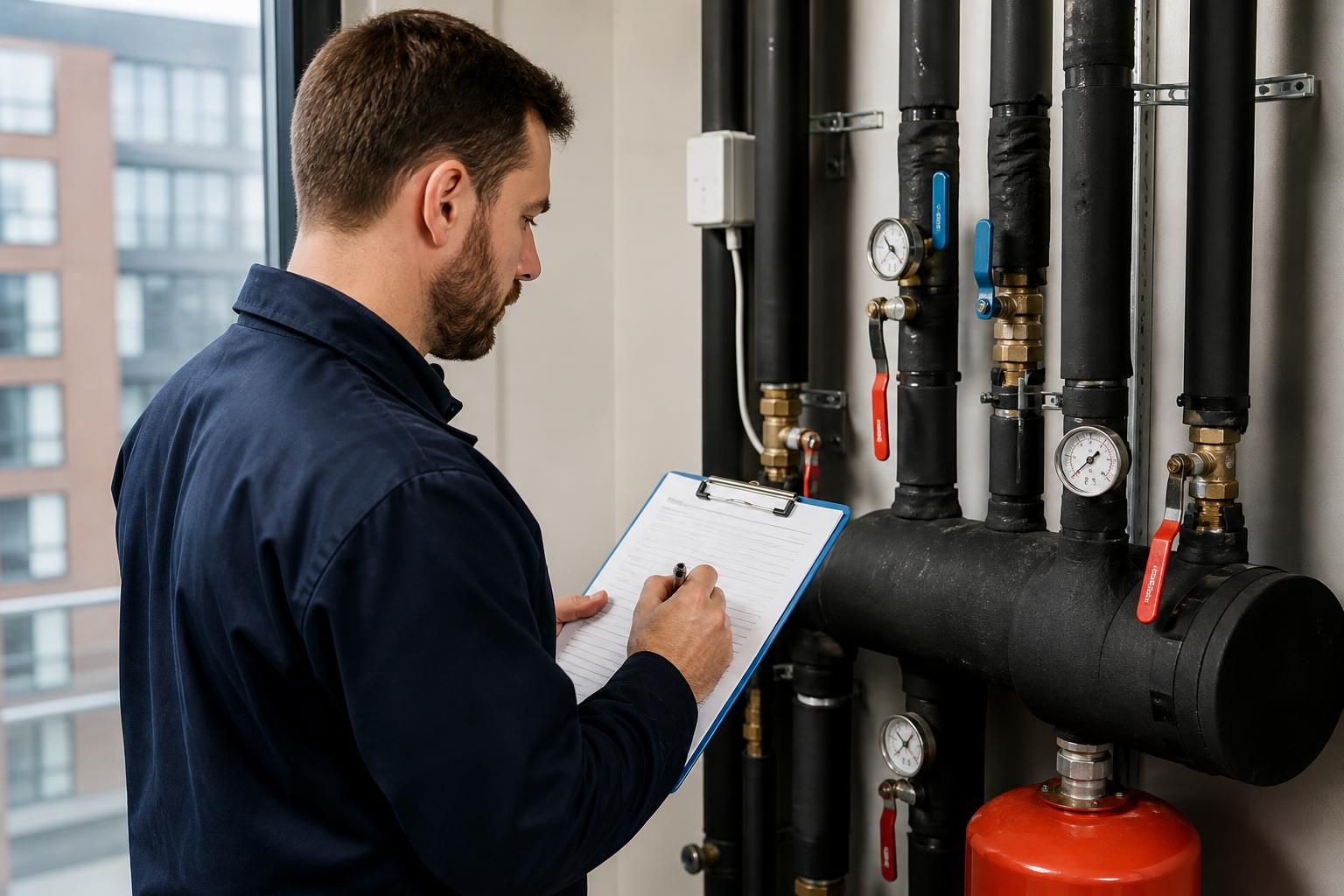
Technical Expertise for Landlord Legionella Compliance
Landlord legionella checks are a documented examination of how water systems are designed, used and managed, with the aim of identifying conditions that could allow Legionella to multiply or spread. They consider more than water samples, including system usage, storage, outlets, temperature control and the arrangements in place to manage identified risks.
Competent assessment requires an understanding of the principles set out in the Health and Safety Executive’s L8 Approved Code of Practice and HSG274 guidance. Relevant factors can include low-use outlets, redundant pipework, stored water, changes in occupancy and areas where safe hot-water temperatures may be difficult to maintain. The inspection should distinguish genuine risks from routine features that do not require unnecessary intervention.
Landlords must ensure that responsibilities are clearly allocated where they control water systems or shared facilities, even when maintenance is delegated to an agent or contractor. A suitable management approach should set out control measures, monitoring arrangements, records, action following adverse findings and review points after significant changes. Blue Fish Water Management provides practical advice to help turn legionella risk assessment findings into proportionate management and remedial actions.
How Landlord Legionella Checks Are Carried Out
A landlord legionella check engagement typically follows a defined sequence: establish the property’s scope and responsibilities, agree information and access requirements, examine relevant systems, record evidence, document conclusions, and identify proportionate actions for ongoing water safety management.
- 1
Confirm the Property Scope
The engagement begins by identifying the relevant premises, water systems, outlets and areas under the landlord’s control. Property use, occupancy arrangements and any shared facilities are considered so the check addresses the correct responsibilities.
- 2
Gather Existing Information
Available drawings, asset records, previous assessments, monitoring logs, maintenance reports and incident records are reviewed where relevant. This information helps clarify system changes, known deficiencies and the control measures already in place.
- 3
Inspect Water Systems and Outlets
The assessor examines storage tanks, hot- and cold-water services, distribution pipework, outlets and areas of low or irregular use. The inspection considers access, condition, temperature management and features that could affect Legionella control.
- 4
Assess Control Arrangements
Findings are compared with the intended management arrangements, including temperature checks, flushing, cleaning, maintenance, contractor responsibilities and record keeping. Where sampling or further technical investigation is appropriate, it is considered in relation to the identified risk rather than used as a substitute for assessment.
- 5
Document the Findings
The completed assessment records the systems reviewed, evidence considered, significant risks, existing safeguards and any limitations affecting the inspection. Clear documentation provides a reference for the landlord, managing agent and relevant contractors.
- 6
Set Out Proportionate Actions
The report identifies remedial measures, monitoring requirements or management changes needed to control the recorded risks. Actions should be allocated to the appropriate responsible person, prioritised sensibly and reviewed after significant alterations, changes in occupancy or other relevant events.

Evidence and Findings in a Landlord Legionella Check Report
A completed landlord legionella check report is the auditable record of what was examined, what evidence was collected and how conclusions were reached. It should be specific to the property rather than rely on generic recommendations.
Clear reporting normally identifies relevant assets or areas, inspection dates, measurements taken, photographs or supporting notes where useful, and any limitations affecting the review. Technical findings should explain the significance of observed conditions, distinguish defects from potential risks, and link each issue to an appropriate control or remedial action.
Recommendations should be prioritised and practical, with ownership and review requirements stated where needed. Blue Fish Water Management can provide structured reports and pragmatic interpretation, helping landlords retain a clear evidence trail for their water safety arrangements.
Questions About Legionella Checks for Landlords
Are legionella checks for landlords required in every rented property?
Landlords should assess legionella risks wherever they control water systems, considering property use, occupants, system design and management arrangements. Duties depend on control, not simply ownership or tenant numbers alone.
Read moreWhen should landlords arrange legionella checks?
Arrange checks before letting a property, system or tenancy change create unmanaged risk, and repeat them after significant alterations, prolonged vacancy, refurbishment, or changes affecting water-system use or occupancy patterns.
Read moreWho can carry out a legionella risk assessment for landlords?
A competent person with knowledge, training and experience should conduct it, ideally independently enough to provide objective findings. Landlords may use a specialist assessor, provided responsibilities and competence are documented.
Read moreWhat happens if a landlord legionella check identifies a risk?
The landlord should record the finding, assess its significance, implement proportionate control or remedial measures, assign responsibility, retain evidence, and review arrangements to confirm risks remain managed over time effectively.
Read moreCan tenants remain in occupation during landlord legionella checks?
Tenants can often remain in occupation while checks are conducted, provided access and safety arrangements are agreed. Temporary restrictions may be necessary where inspection or remedial work affects water use.
Read morePractical Assurance
Consistent, pragmatic advice and dependable delivery help landlords manage water safety across varied property types and locations with greater clarity.
Discuss Your Landlord Legionella Checks
Discuss your property portfolio, existing water safety arrangements and any areas of uncertainty with Blue Fish Water Management. The team can help clarify the appropriate scope for landlord legionella checks and identify the information needed to plan the next step.