
Commercial RO & UV Systems Testing
Commercial RO and UV systems testing verifies that reverse osmosis and ultraviolet treatment equipment is producing water to the required quality for business use. Blue Fish assesses system performance, samples treated water and identifies compliance or maintenance issues requiring action.
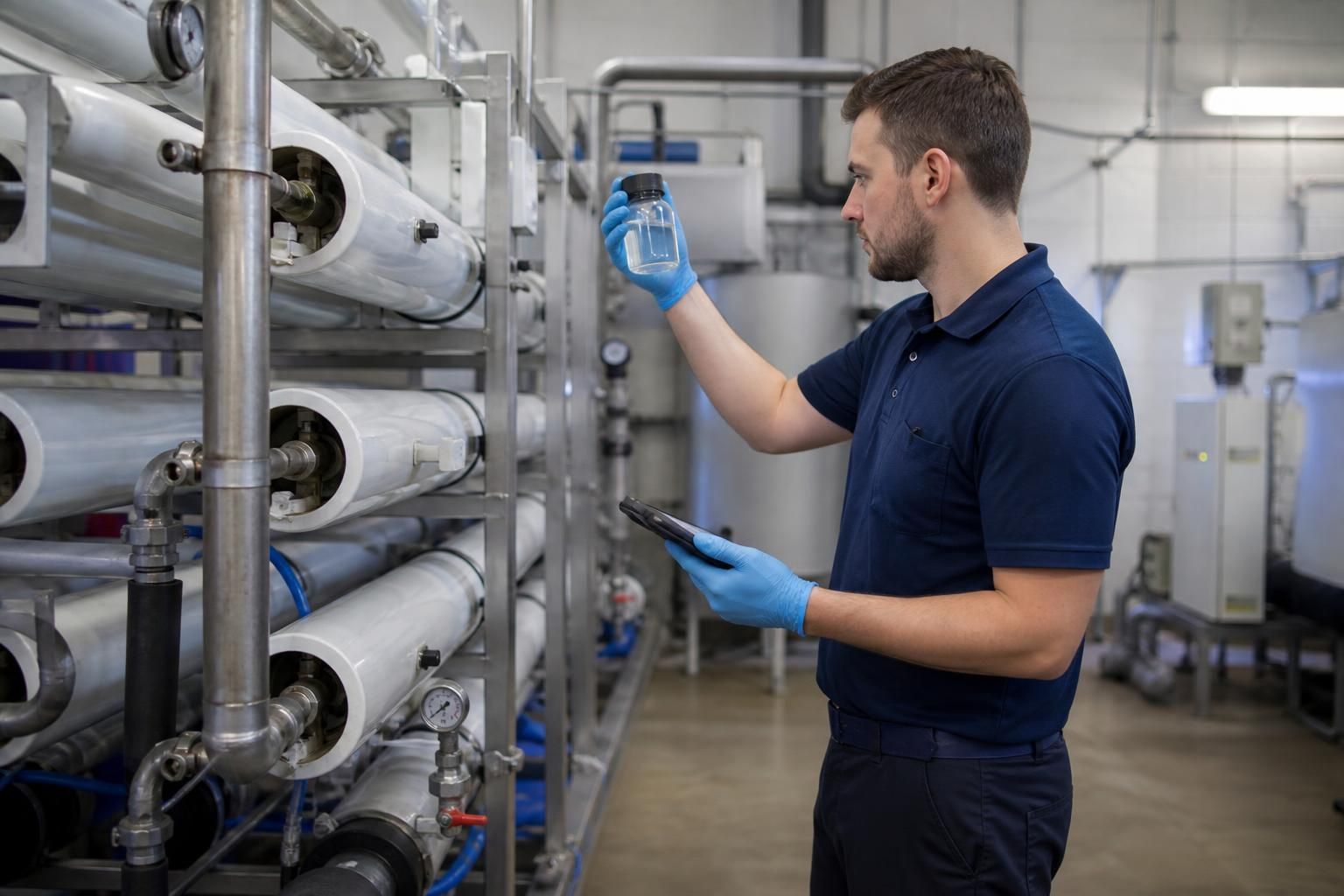
Commercial RO & UV Testing Options Compared
Commercial testing can be structured around a single treatment stage, the complete water system, or an ongoing compliance programme. The appropriate approach depends on system complexity, water use, monitoring requirements and whether the objective is verification, investigation or corrective action.
Treated Water Quality Testing
Sampling at the point of use checks whether water leaving the RO or UV treatment stage meets the required quality criteria. This is suitable for routine verification where the equipment is operating normally and a documented result is needed.
Reverse Osmosis Performance Testing
RO-focused testing examines the treated water and relevant operating indicators to identify declining membrane performance, inadequate rejection or maintenance requirements. It is appropriate where water quality is changing or the system is approaching a planned service review.
Ultraviolet System Validation
UV testing concentrates on whether the disinfection stage is functioning effectively, taking account of factors such as lamp condition, system operation and water quality. This approach suits sites that need to verify UV treatment without commissioning a wider assessment.
Combined RO and UV Assessment
An integrated assessment considers how the RO and UV stages work together, rather than treating each unit in isolation. It is preferable for complex commercial installations where faults, inadequate maintenance or poor results may involve more than one treatment stage.
Investigative Testing
Investigative testing is used when results, operational changes or site observations indicate a possible problem. Sampling and review are directed towards identifying the likely cause, distinguishing treatment failure from wider system issues and defining appropriate remedial action.
Planned Compliance Monitoring
A scheduled monitoring programme combines repeat sampling, record review and system checks at agreed intervals. This is suited to businesses that need continuing evidence of control, trend information and a structured basis for maintenance or compliance decisions.
Key Elements of a Commercial RO & UV Testing Programme
The following elements show how a commercial treatment system can be managed as part of a wider water safety regime, linking equipment records, sampling decisions, control measures and documented follow-up to the organisation’s compliance responsibilities.
System performance checks
Review the operating condition of the reverse osmosis and ultraviolet equipment, including relevant flow, pressure, conductivity and UV performance indicators. These checks help identify reduced treatment efficiency, component wear or operating conditions that may affect treated water quality.
Treated water sampling
Collect representative samples from appropriate points in the system to assess the quality of water produced after treatment. Sampling locations and parameters should reflect the system design, its intended use and the organisation’s wider water safety arrangements.
Results assessment
Interpret laboratory findings alongside equipment observations and available system records. Where appropriate, UKAS-accredited water testing supports a robust evidence base for assessing whether treated water remains suitable for its intended commercial application.
Control measure review
Check that relevant operating controls, monitoring arrangements and maintenance requirements are defined and being followed. This includes considering how faults, abnormal results and changes to treatment performance are identified and escalated.
Documented follow-up
Record inspection findings, sample results and recommended actions in a clear report. Follow-up may include maintenance, remedial work, further sampling or updates to system documentation, helping demonstrate how identified issues are managed within the organisation’s compliance framework.
Questions About Commercial RO & UV Systems Testing
Does your commercial RO and UV system need compliance testing?
Support should match the system’s treatment purpose, monitoring records, sampling history and hazards. Testing may suit routine verification, while investigation or remedial advice is appropriate where results indicate control failure.
Read moreWhat should a commercial RO and UV testing report include?
A report should record sampling locations, test methods, results, acceptance criteria, equipment observations, deviations and recommended actions, creating an auditable record for responsible personnel and future system reviews supporting decisions.
Read moreWho is responsible for commercial RO and UV system testing?
The duty holder retains overall responsibility, while a competent water safety lead coordinates testing and acts on findings. Facilities teams and specialist contractors may perform defined tasks under documented arrangements.
Read moreWhen should commercial RO and UV systems be retested?
Retesting is appropriate after corrective work, component replacement, altered operating conditions, or significant changes to water use. It confirms that controls remain effective before records and procedures are formally updated.
Read moreHow does risk influence commercial RO and UV system testing?
Risk assessment findings should determine sampling points, testing frequency, acceptance criteria and escalation arrangements. Higher-risk uses, vulnerable occupants, complex systems or poor records may justify closer scrutiny and documented follow-up.
Read moreQuestions to Ask Before Arranging Commercial RO & UV Testing
Before arranging commercial RO and UV systems testing, clarify which equipment, outlets and treatment stages are included, and whether the assessment covers operational checks, treated-water sampling, or both. Confirm that the person carrying out the work has suitable competence for the system and can explain the testing method and sampling basis.
Ask what evidence will be provided, how findings and required actions will be reported, and when the results will be available for review. It is also important to establish who is responsible for corrective work, record keeping, repeat testing and routine monitoring after the assessment.
Define the equipment and outlets covered
Request a written description of the system boundary, including pre-treatment, membranes, UV units, tanks, pumps, pipework and representative points of use where relevant. Clarify whether any equipment or outlet is excluded, why exclusions are appropriate, and whether the assessment is intended to verify treatment performance, water quality, or both.
Once these points have been clarified, the testing plan can be documented against the system’s intended use and existing water safety arrangements. Any findings should then be reviewed by the responsible person so that necessary corrective actions, record updates and future review requirements are clearly assigned.
Discuss Your Commercial RO & UV Testing Requirements
Discuss your commercial RO and UV testing requirements with Blue Fish to identify the most appropriate scope for your system. We can provide practical guidance on testing options and the next steps for managing treated water quality.