
Water Test Chemistry & Equipment
Water test chemistry and equipment support monitoring of parameters such as dissolved oxygen, helping facilities teams, engineers and water safety professionals assess system conditions. A dissolved oxygen tester and reagents provide data for investigation, maintenance planning and compliance records.
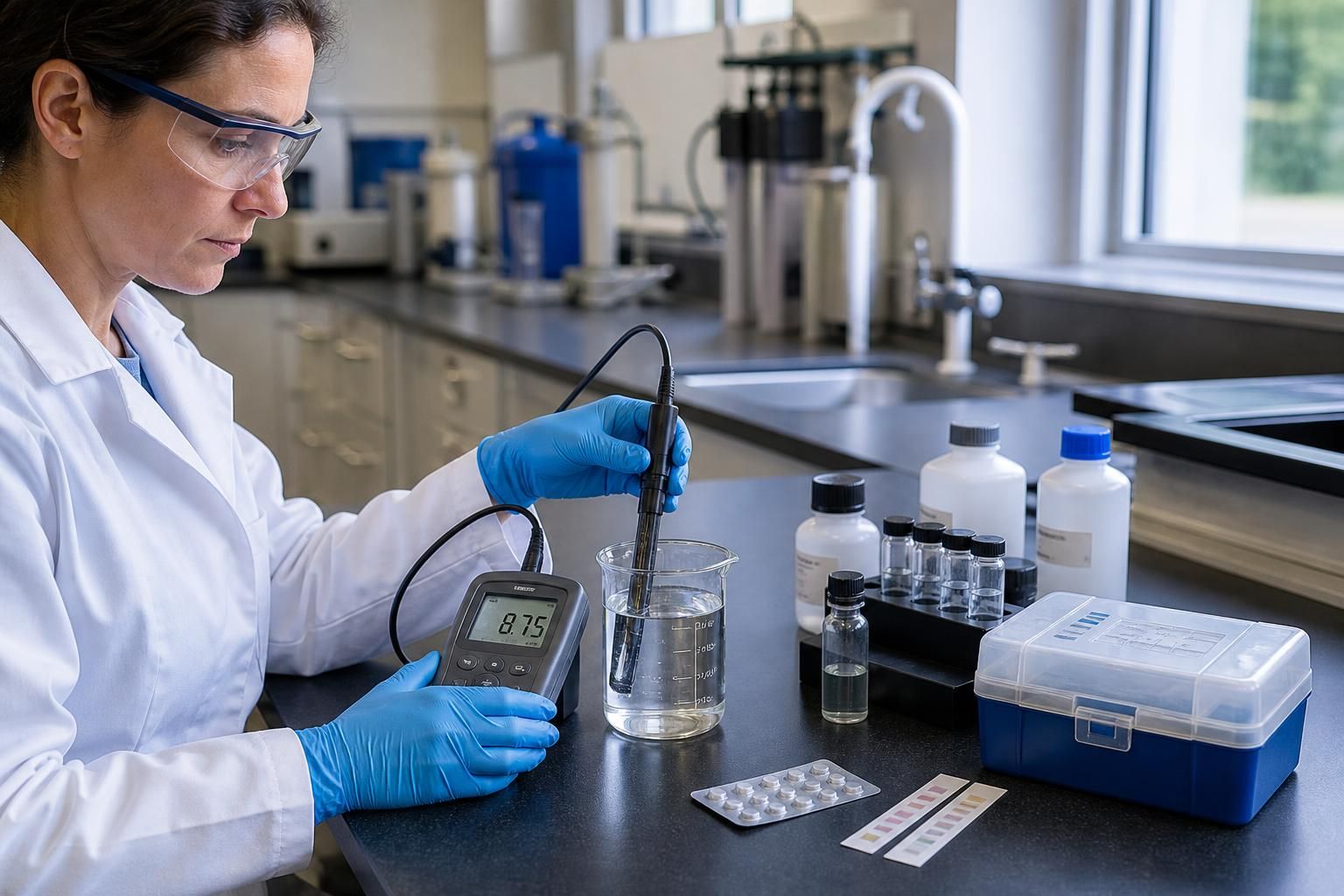
Water Test Chemistry Options for Different Monitoring Needs
Choose water test chemistry and equipment according to the parameter under investigation, required measurement precision and operator involvement. Options range from simple field checks to instrument-based analysis, each suited to different monitoring objectives, sampling conditions and reporting requirements.
Hardness Test Kits
Hardness tests estimate the concentration of calcium and magnesium salts in water. They are suitable for checking scale-forming potential, supporting treatment reviews and comparing conditions across supply points, with titration kits requiring controlled sampling and careful endpoint interpretation.
TDS Meters
A total dissolved solids meter provides a rapid indication of dissolved ionic material through conductivity-based measurement. It is useful for routine field checks, trend monitoring and identifying changes that warrant further investigation, but it does not identify individual substances.
BOD Testing
Biochemical oxygen demand testing assesses the oxygen used by microorganisms when breaking down biodegradable organic matter. It is suited to wastewater and effluent investigations where biological loading is relevant, although the method involves defined sample handling and an incubation period rather than an immediate field result.
COD Analysis
Chemical oxygen demand measures the oxygen equivalent associated with chemically oxidisable material in a water sample. It offers a broader oxidation-based assessment than BOD and can support process monitoring and effluent investigations, provided the method, reagents and safety controls are appropriate.
TOC Analysis
Total organic carbon analysis measures carbon present in organic compounds and is used where organic contamination or carbon loading needs to be tracked. Instrument-based systems are appropriate for repeatable laboratory or process monitoring, while method selection should reflect the sample matrix and reporting requirements.
Portable Photometers
Portable photometers use a reagent reaction and optical measurement to quantify selected parameters. They offer more structured results than visual comparison tests and can suit field sampling where several locations must be assessed, provided calibration, reagent storage and quality checks are managed.
Laboratory-Based Chemistry
Laboratory analysis is appropriate when the required parameter, detection capability or reporting confidence exceeds the practical limits of routine field equipment. It supports controlled preparation, documented methods and formal results, but involves more coordination than an on-site screening measurement.
Practical Water Test Chemistry and Equipment Support
Practical support may cover reagent selection, instrument checks, sampling guidance and interpretation of results. Each element is matched to the parameter being assessed, helping teams maintain consistent records and apply findings to water safety decisions.
Parameter-Specific Test Selection
Testing methods are selected according to the parameter under review, such as dissolved oxygen, hardness, total dissolved solids or organic loading. This helps ensure that the chosen chemistry and equipment produce relevant data for the water system being assessed.
Instrument Checks
Meters and testers require appropriate checks before use. Reviewing probe condition, calibration status, battery level and displayed readings helps identify equipment issues that could affect the reliability of monitoring records.
Reagents and Test Chemistry
Reagents must be suitable for the selected test method and handled according to the relevant instructions. Correct preparation, storage and use support repeatable results and reduce the risk of misleading readings.
Sampling Guidance
Sampling points, containers and handling methods can influence chemistry results. Clear guidance helps facilities teams collect representative samples while recording the location, date, system conditions and test parameter.
Result Review and Interpretation
Individual readings are considered alongside sampling conditions, previous records and the purpose of the investigation. This supports informed maintenance decisions and highlights results that may require further assessment.
Traceable Test Records
Records can bring together equipment details, reagent information, sample identification, readings and observations. Consistent documentation provides an auditable reference for water safety management and UK compliance activities.
Which Water Testing Support Does Your System Need?
How do you choose a dissolved oxygen tester for your water system?
Selection depends on the parameter, system design, sampling purpose and required evidence. Basic field instruments suit routine checks, while laboratory analysis is preferable for investigations, validation or formal compliance records.
Read moreHow should water test chemistry equipment be checked before sampling?
Before sampling, inspect instruments for damage, verify calibration status, check reagent expiry and confirm appropriate ranges. Record checks, resolve discrepancies, and follow the manufacturer’s instructions before collecting representative, valid samples.
Read moreWhen is laboratory water test chemistry more appropriate than field testing?
Laboratory testing is more appropriate when results require greater analytical control, confirmatory evidence, specialist methods, or defensible reporting for investigations, validation, regulatory review, complex system decisions, and formal records.
Read moreWhen should water test chemistry form part of a monitoring plan?
It should form part of a monitoring plan when the parameter informs control decisions, indicates changing system conditions, or supports documented verification of duties, risks, and remedial actions over time.
Read moreWhat should a water test chemistry equipment specification include?
A specification should define the parameter range, resolution, accuracy, measurement method, sampling conditions, calibration requirements, reagent compatibility, maintenance needs, data-recording functions, evidence required, and reporting arrangements.
Read moreWhat Should You Confirm Before Proceeding with Water Test Chemistry and Equipment?
Water test chemistry and equipment comprise the consumables, meters and supporting records used to obtain reliable water-quality measurements. Before proceeding, confirm which parameters are required, the sampling locations and whether the proposed equipment is suitable for the water system and intended use.
Ask who will carry out the work and what competence is required, how calibration and quality evidence will be recorded, and what the report will contain. Clarify the testing timescales, arrangements for reviewing results, actions for unexpected findings and who remains responsible for storing records, maintaining equipment and repeating checks.
Which tests and sampling points are appropriate?
Ask whether the proposed scope includes the relevant parameters, such as dissolved oxygen, hardness, total dissolved solids or other chemistry indicators, and whether sampling points represent the parts of the system under review. Confirm the sampling method, sample containers, preservation requirements and any limitations that could affect interpretation. A clear scope prevents unsuitable equipment or incomplete results from being treated as evidence of system condition.
Once these points are answered, document the selected test method and equipment specification before purchase or use. Include the parameter range, required sensitivity, compatibility with the sample type, reagent shelf life, and relevant storage or handling conditions. This helps prevent an instrument or chemistry being used outside its intended application.
Keep the agreed specification with the water management documentation so future users understand why the equipment was selected and when an alternative method may be needed. Where results support a legionella control programme or another compliance decision, the responsible person should be able to relate the readings to the relevant system controls and decision criteria.
Discuss Your Water Test Chemistry and Equipment Requirements
Discuss your water test chemistry and equipment requirements with Blue Fish Water Management. Share the parameters, system context and intended use so our team can help identify a suitable next step for your monitoring arrangements.