
Reverse Osmosis Water Testing
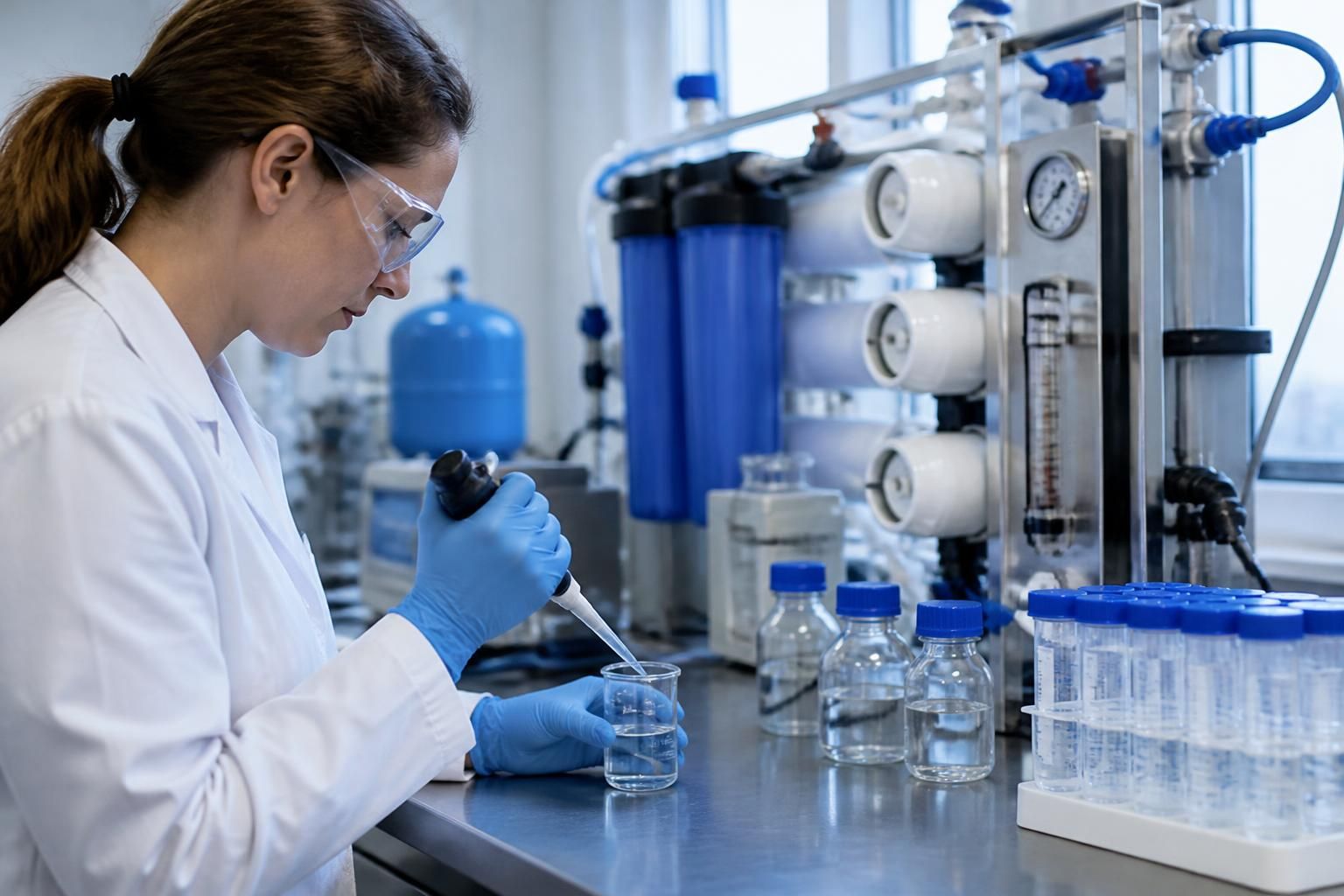
Reverse osmosis water testing uses laboratory analysis to verify treated water quality after filtration. It helps commercial and industrial operators confirm that a reverse osmosis unit is producing water suitable for defined process and compliance requirements.
Which Reverse Osmosis Testing Approach Is Right for Your System?
Reverse osmosis testing can be planned as routine verification, targeted investigation, or a broader assessment of treatment performance. The suitable approach depends on system use, sampling requirements, operational concerns, and whether results are needed for compliance records or process control.
Routine Permeate Testing
Regular analysis of reverse osmosis permeate confirms that treated water quality remains within the limits defined for the process. It is suitable for established systems where ongoing records are needed to support operational control and compliance documentation.
Commissioning and Baseline Testing
Initial testing establishes a documented water-quality baseline after a reverse osmosis system is installed, modified, or brought back into use. Results can be used for comparison during later monitoring and help confirm that the system is performing as intended.
Targeted Investigation Testing
Focused sampling is appropriate when results change, a process concern arises, or treatment performance appears inconsistent. Testing selected points such as feed water, permeate, and reject streams can help identify whether an issue relates to incoming water, membrane performance, or system operation.
Comprehensive System Assessment
A wider assessment combines sampling across relevant stages with a review of system operation, monitoring records, and applicable water-quality requirements. This approach suits sites that need a fuller understanding of treatment performance rather than a single result or isolated sample.
What Reverse Osmosis Water Testing Includes
For reverse osmosis systems, practical support may include sampling point selection, laboratory analysis, test scheduling, results reporting and technical interpretation. Where findings indicate a concern, follow-up testing can help distinguish treatment performance issues from wider water quality influences.
Test parameters defined
The testing scope is aligned with the reverse osmosis system, treated-water use and relevant quality requirements, so the selected analysis produces information that can be applied to the site.
Representative sampling
Sampling locations are selected to assess treated water at appropriate points in the system. This helps separate membrane or treatment performance from influences introduced elsewhere in the installation.
Laboratory analysis
Samples are submitted for laboratory examination, with UKAS-accredited water testing available where the required parameters and reporting arrangements call for it.
Documented results
Results are presented in a structured report showing the parameters tested and the findings recorded for each sample. This provides a clear technical record for internal review and compliance documentation.
Technical interpretation
The findings are considered against the system’s defined operating and water quality requirements. Results outside the expected range can then be assessed in context rather than viewed in isolation.
Follow-up testing
Where an initial result requires clarification, repeat sampling can be used to compare findings and help identify whether the issue relates to treatment performance, sampling conditions or wider water quality factors.
Questions About Reverse Osmosis Water Testing
When should a reverse osmosis system receive laboratory water testing?
Testing should reflect the system’s purpose, feedwater characteristics and required output quality. A defined sampling plan, suitable laboratory analysis and documented interpretation help identify the evidence needed for compliance decisions.
Read moreWhat does a reverse osmosis water test measure?
Analysis typically measures conductivity, total dissolved solids, pH, selected ions and microbiological indicators. Results show whether permeate quality aligns with process specifications and can reveal membrane or pretreatment performance changes.
Read moreWhat should follow a failed reverse osmosis water test?
Review sampling validity, inspect pretreatment and membrane performance, investigate possible contamination, then implement corrective measures. Repeat analysis after intervention and retain documented results to demonstrate resolution and compliance with requirements.
Read moreWhat documentation should accompany reverse osmosis water test results?
Records should identify sampling locations, dates, collection methods, laboratory references, parameters tested, acceptance criteria, deviations and responsible reviewers. Retaining these details supports traceability, sound decisions and defensible compliance formal records.
Read moreHow do you choose a laboratory for reverse osmosis water testing?
Choose a laboratory with appropriate competence for the required parameters, suitable detection limits, controlled sample handling, clear reporting, and experience interpreting reverse osmosis results within documented acceptance criteria and standards.
Read moreWhat to Confirm Before Testing
Before commissioning reverse osmosis water testing, clarify which outlets, treatment stages and water-quality parameters are included. Ask who will take and analyse the samples, what competence supports the work, how the results will be evidenced, and when the report will be issued.
Agree how results will be interpreted against the system’s intended use, operating limits and compliance requirements. Confirm who will review any unexpected findings, what follow-up is required, and which party remains responsible for maintaining records and arranging ongoing testing.
What should the scope include?
Ask for the sampling locations, treatment stages, water-quality parameters and any comparison criteria to be documented before work begins. Clarify whether testing covers feed water, post-treatment water, storage tanks, distribution points or specific points of use, as results from one location may not represent the whole system.
Once the testing arrangements are agreed, provide relevant information about the reverse osmosis process, its intended use and any recent operational changes. This context helps the findings be assessed against the actual system rather than treated as an isolated pure water test.
Use the completed results as a documented reference for water quality and future management decisions. Where they identify a departure from the required specification, they can support a structured technical review before adjustments are made to the treatment system.
Discuss Your Reverse Osmosis Testing Requirements
Discuss your reverse osmosis water testing requirements with Blue Fish Water Management. We can help you identify a proportionate testing approach, clarify the information needed, and determine the most suitable next step for your system and operational needs.