
HSG274 & L8 Legionella Guidance
HSE legionella guidance comprises the Approved Code of Practice L8 and HSG274 technical guidance. Together, they explain how organisations assess water systems, control risks and evidence compliance. Blue Fish provides practical interpretation and specialist support for businesses.

Technical Interpretation of HSG274 and ACOP L8
HSE’s L8 Approved Code of Practice (ACOP) sets out the management responsibilities for controlling Legionella risks, while HSG274 provides the technical guidance for assessing and managing specific types of water system. Together, they help dutyholders translate general legal duties into documented control measures.
Applying the guidance requires more than completing a risk assessment. Organisations must identify responsible persons, understand system design and use, implement suitable monitoring and maintenance, investigate abnormal results, and retain records that demonstrate decisions and actions. The appropriate controls depend on factors such as water temperatures, storage, circulation, aerosol generation and the condition of equipment.
Blue Fish Water Management applies this framework when reviewing water safety arrangements, interpreting technical findings and identifying gaps in control. Its advice is structured around the client’s systems and responsibilities, helping businesses develop proportionate procedures that can be maintained and evidenced as part of ongoing legionella management.
How HSG274 and L8 Guidance Is Applied
An engagement should follow a defined sequence: first establish the water systems and information available, then agree the work required, carry out inspection or testing, record findings clearly, and set out proportionate actions for unresolved risks or compliance gaps.
- 1
Establish the compliance brief
The process begins by confirming the dutyholder’s responsibilities, the premises covered and the purpose of the review. This defines whether the engagement is focused on a new assessment, a review of existing arrangements, technical advice or evidence for an audit.
- 2
Assemble available system information
Existing schematics, asset registers, previous assessments, monitoring records and maintenance documents are considered alongside information about how the building is used. These records help identify missing evidence and areas requiring closer technical examination.
- 3
Plan the work against HSG274 and L8
The assessment method is matched to the relevant water systems and the requirements of the guidance. Blue Fish sets out the inspections, document checks, measurements or sampling needed to examine the stated risks and compliance arrangements.
- 4
Carry out the assessment or testing
The agreed work is completed using observations, discussions with relevant personnel and appropriate technical checks. Findings are considered in relation to system condition, operation, foreseeable exposure and the control measures described in the organisation’s procedures.
- 5
Document findings and decisions
The outcome is recorded in a clear report that links observations to the relevant risk or guidance requirement. It should distinguish confirmed controls, evidence gaps and matters that need further investigation, so the basis for each conclusion can be understood.
- 6
Set out proportionate next steps
Where action is required, recommendations explain what should be addressed and why, with priorities based on the significance of the finding. Follow-up reviews, revised documentation, remedial work or further monitoring can then be considered as part of the organisation’s continuing control process.
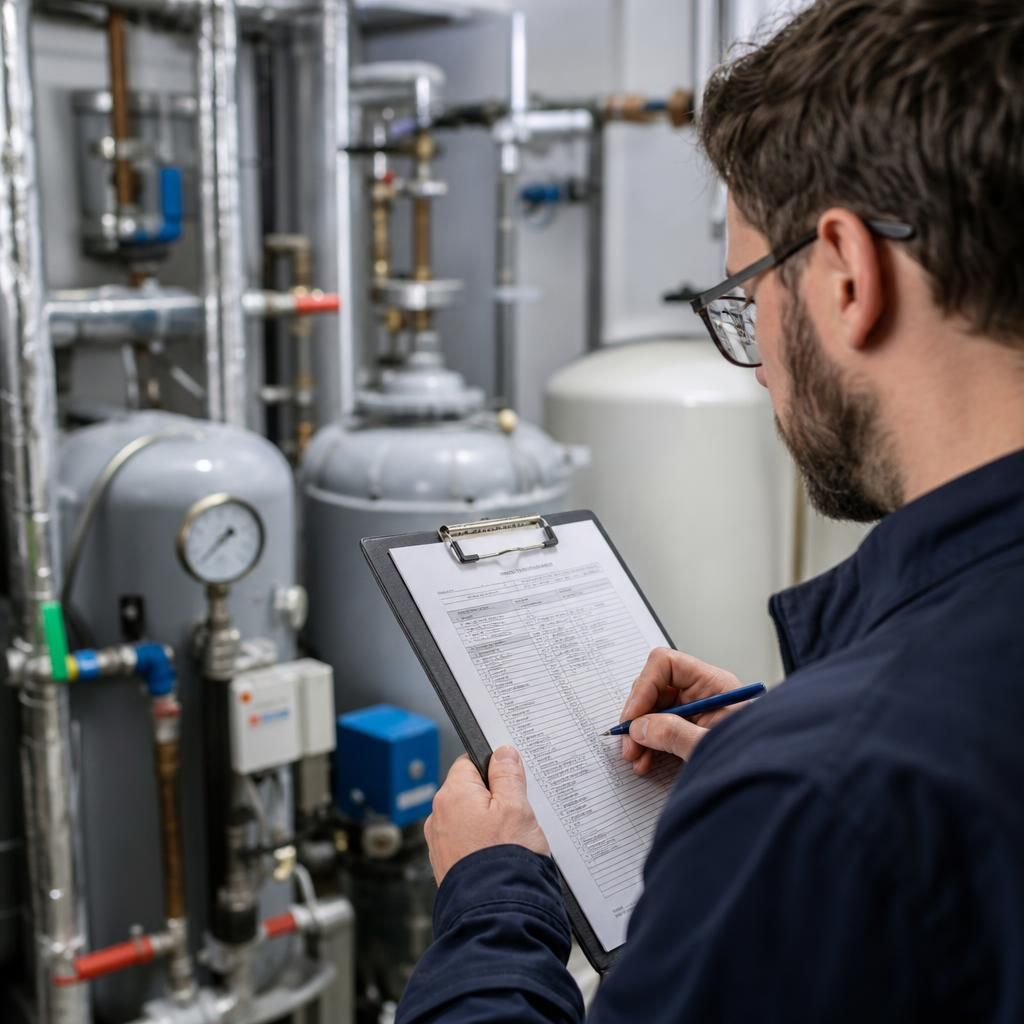
What a Completed HSG274 Review Should Evidence
A completed HSG274 review should provide a traceable record of what was examined, when, and which water-system areas were within scope. The report should identify the information considered, limitations encountered and evidence supporting its conclusions.
Technical findings should be specific rather than recording only that a system passed or failed. They may include measured temperatures, asset condition, sentinel outlets, sample locations, photographs and observations about access, use or configuration, where relevant.
A useful report separates confirmed controls from unresolved concerns and explains the significance of each finding. It should assign recommended actions to the appropriate responsible person, state further investigation needed and preserve supporting records so later monitoring can be compared with the original position.
Common Questions About HSG274 and L8 Guidance
Does HSG274 apply to every type of commercial water system?
Neither document replaces site-specific judgement: dutyholders must apply relevant principles to their systems, document why controls are suitable, and review arrangements when equipment, use or risks change significantly over time.
Read moreWhen should HSG274 control measures be reviewed?
Review HSG274 control measures following incidents, failed monitoring, remedial works or significant changes to plant, water use, occupancy or operating conditions, using the risk assessment to set planned review intervals.
Read moreWhat does L8 require from the responsible person?
L8 requires the responsible person to appoint competent assistance, understand water-system risks, implement written control measures, ensure monitoring and maintenance, investigate failures, and retain records demonstrating effective management of risks.
Read moreIs HSG274 legally binding for commercial premises?
HSG274 is technical guidance, not legislation. L8 is an Approved Code of Practice, so departures may require justification and evidence that alternative controls meet legal duties effectively in operational contexts.
Read moreWhat happens when HSG274 identifies a legionella control failure?
When a failure is identified, the responsible person should assess immediate risk, investigate the cause, implement corrective measures, verify effectiveness, document decisions, and update control arrangements where necessary as appropriate.
Read morePractical Expertise
Blue Fish delivers consistent, pragmatic legionella advice and dependable water safety support for varied commercial property types and operating requirements.
Discuss Your HSG274 and L8 Requirements
Discuss your HSG274 and L8 requirements with the Blue Fish team to clarify the relevant guidance, review your existing arrangements, define a proportionate scope of work and agree the next practical step for your organisation.