
Compliant Commercial Sewage Tank Cleaning
Sewage tank cleaning removes accumulated solids, sludge and deposits from contained wastewater systems, helping prevent capacity loss, blockages and hygiene risks. Blue Fish Water Management provides scheduled cleaning for commercial and domestic sites, supporting compliant wastewater management.
Compliance Checklist
Use sewage tank cleaning to identify maintenance needs, support safe water systems, meet UK responsibilities, and plan proportionate corrective action.
What Sewage Tank Cleaning Includes
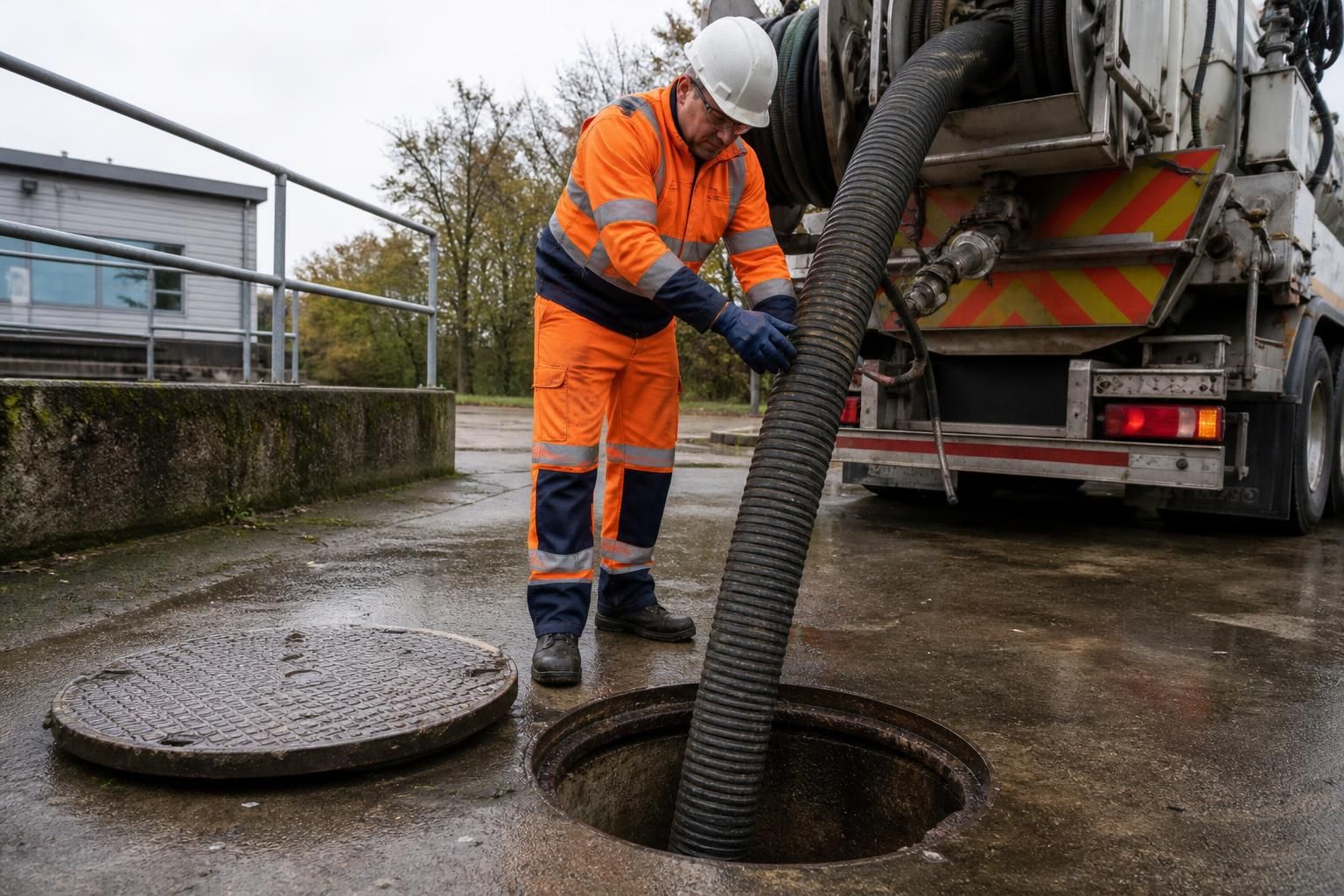
Sewage tank cleaning covers the controlled removal of accumulated contents, internal cleaning and checks for conditions that may affect safe operation. Planning considers tank access, construction and use, so the work is proportionate to the site rather than treated as a routine task.
It also highlights issues requiring attention, helping site managers coordinate follow-up work and maintain clear wastewater records.
Defined Cleaning Scope
The cleaning scope is set according to the tank’s construction, use and maintenance requirements, helping ensure the work addresses the relevant wastewater system rather than applying a generic approach.
Controlled Tank Cleaning
Accumulated wastewater contents are removed and the tank is cleaned in a controlled manner to address deposits that can interfere with normal operation.
Condition Checks
Checks during the engagement can highlight visible conditions that may require further investigation, maintenance or remedial attention.
Issues Requiring Action
Where cleaning identifies a concern, the findings can be used to plan proportionate corrective work and reduce the risk of an unresolved maintenance issue being overlooked.
Clear Wastewater Records
Documented cleaning activity gives site managers a clear record of the work completed and supports ongoing wastewater maintenance planning.
Sewage Tank Cleaning Deliverables
A sewage tank cleaning programme can include a documented scope, competent site assessment, safe work controls, waste documentation, photographic evidence and a clear completion report. These outputs help responsible persons demonstrate that maintenance was planned and recorded.
Defined Cleaning Scope
The work is set out against the tank type, access arrangements, operating use and known maintenance history, so cleaning requirements are understood before site activity begins.
Competent Site Assessment
A site assessment records relevant tank condition, access limitations and visible maintenance concerns, helping identify issues that may require further investigation or remedial planning.
Controlled Cleaning Process
Planned work controls address tank access, hygiene hazards, equipment use and surrounding site conditions, supporting a safe and properly managed cleaning operation.
Waste Documentation
Records relating to removed sludge and other waste provide an auditable account of material taken from the system and its onward handling.
Photographic Evidence
Suitable photographs can document the tank and associated areas before or after cleaning, giving the client supporting evidence of site condition and completed work.
Completion Reporting
The final report summarises the cleaning carried out, observations made and any recommended follow-up actions, helping inform future maintenance and compliance records.
Questions About Sewage Tank Cleaning
How often should commercial sewage tanks be cleaned?
Cleaning frequency should be based on tank capacity, inflow, solids accumulation, usage patterns and previous records. An assessment can establish intervals, with inspections identifying changes requiring earlier intervention when needed.
Read moreWhat does commercial sewage tank cleaning involve?
Commercial sewage tank cleaning involves assessing access, isolating relevant equipment, removing accumulated contents, inspecting the tank and associated pipework, then transporting waste for compliant disposal and recording findings in records.
Read moreWhat affects the cost of commercial sewage tank cleaning?
Costs depend on tank size, waste volume, access conditions, contamination, disposal requirements, equipment needs and reporting scope. A site assessment can identify these variables and produce a clear, proportionate quotation.
Read moreHow should you choose a sewage tank cleaning contractor?
Choose a contractor that can demonstrate relevant competence, suitable equipment, waste-transfer documentation, risk controls, insurance, clear reporting and experience with your tank type and site constraints before formally commissioning work.
Read moreWhat safety controls are needed during sewage tank cleaning?
Safety controls include site-specific risk assessments, confined-space precautions where applicable, gas monitoring, exclusion zones, suitable PPE, secure access, equipment isolation, emergency arrangements and competent personnel supervising cleaning activities on site.
Read moreWhat to Expect from the Cleaning Process
Before sewage tank cleaning, Blue Fish Water Management reviews the tank arrangement, access requirements, operating constraints and any relevant site information with the responsible person. The agreed approach can then account for isolation requirements, vehicle access, tank condition and the intended disposal route, rather than relying on a standard method for every site.
Any findings are explained in practical terms, with the condition observed separated from recommended follow-up work. Blue Fish Water Management can discuss restrictions, maintenance priorities and proportionate remedial options so that clients can make informed decisions without confusing cleaning activity with unrelated improvement work.
A defined scope before cleaning begins
The agreed scope should state which tank or tanks are included, what cleaning activity is required and what access arrangements apply. Where site information is incomplete or conditions differ from expectations, the scope can be reviewed with the responsible person before additional work is considered.
Following the visit, the responsible person can review the completion information against site records and maintenance arrangements. If the tank’s condition or operation indicates a need for further attention, the findings provide a clear basis for deciding what should happen next.
This keeps sewage tank cleaning as a defined maintenance activity, while any additional work is considered separately through its own assessment and approval. Blue Fish Water Management can help interpret the documented findings so future decisions remain proportionate to the site’s requirements.
Discuss Your Sewage Tank Cleaning Requirements
If you need to clarify tank access, cleaning frequency or documentation requirements, speak with Blue Fish Water Management. Its team can review the site context, confirm whether the service is suitable, and explain the next step.