
Water Safety Monitoring for Safer, Compliant Systems
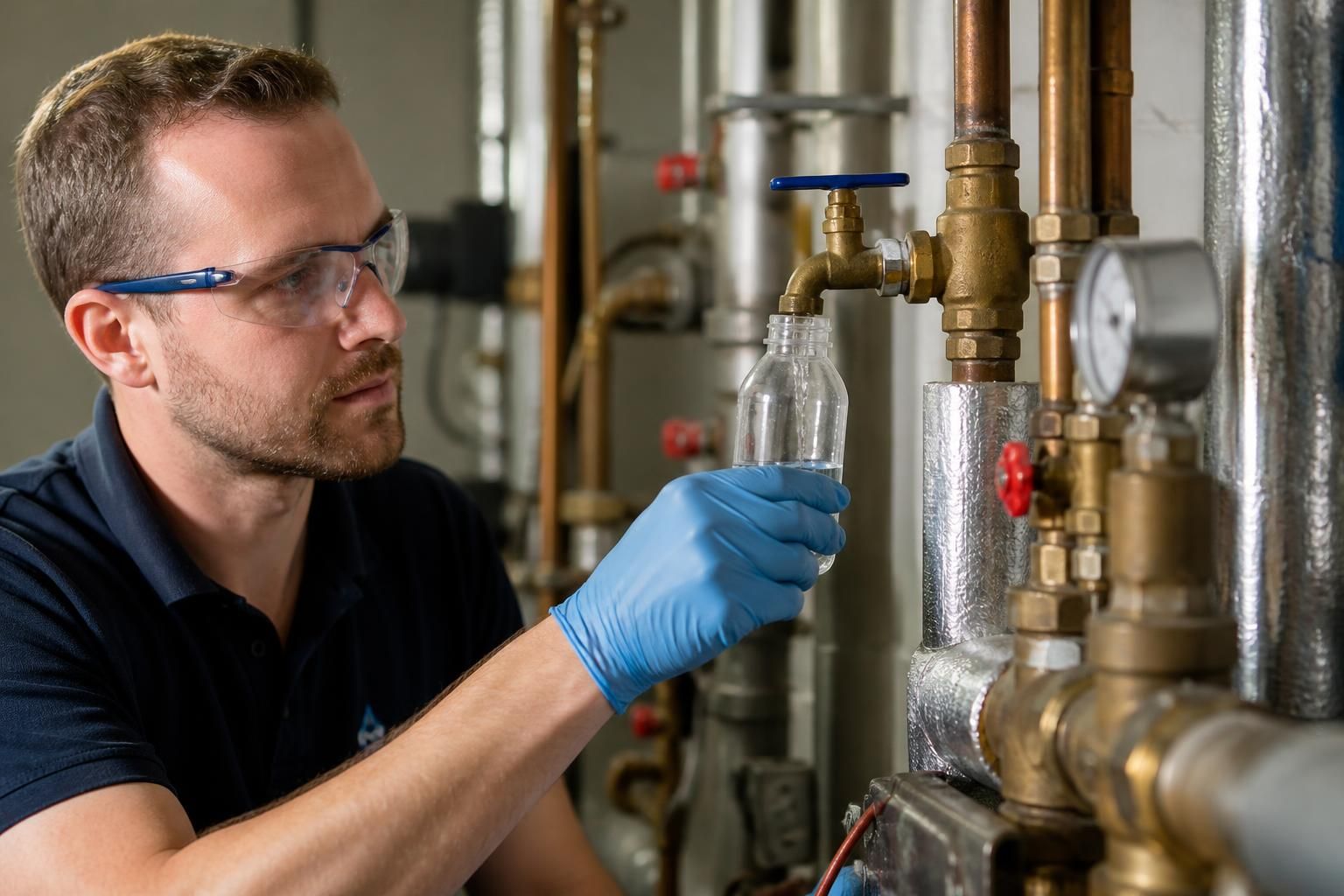
Water safety monitoring combines planned checks, sampling and review of building water systems for commercial, industrial and domestic organisations. It helps identify changes in water quality, support legionella control measures and maintain evidence for compliance.
Choosing the Right Water Safety Monitoring Approach
The appropriate approach depends on system complexity, building use and the level of assurance required. Options range from routine checks and scheduled sampling to structured programmes with trend review, documented actions and ongoing oversight for higher-risk environments.
Routine Operational Checks
Suitable for straightforward water systems where regular observation is the main requirement. Checks may cover temperatures, outlet condition, usage patterns and visible changes, helping staff identify issues that require investigation.
Scheduled Water Sampling
Appropriate when microbiological evidence is needed alongside operational checks. Planned samples can provide information about water quality at selected outlets or system points and support decisions about further assessment or remedial action.
Targeted Monitoring for Higher-Risk Areas
Designed for buildings or water systems with greater complexity, changing use or identified legionella control concerns. Monitoring focuses attention on relevant outlets, assets and control measures rather than applying the same checks across every part of the system.
Structured Monitoring Programme
Provides a more involved approach for organisations that need defined responsibilities, consistent records and review of changing results. The intended outcome is a clear evidence base for water safety decisions, compliance management and follow-up actions.
What Water Safety Monitoring Includes
A well-defined monitoring programme sets out who checks which indicators matter and how findings are recorded and escalated. This creates a consistent basis for water safety decisions and supports documented evidence under UK compliance requirements.
Planned Monitoring Schedule
Monitoring frequencies are defined for relevant outlets, tanks, calorifiers and other system components. The schedule helps responsible people complete checks consistently and identify missed activities.
Temperature Checks
Hot and cold water temperatures are measured at appropriate points to identify conditions that may support legionella growth. Readings are compared with the control parameters set for the system.
Sampling and Water Testing
Where required, water samples are taken from selected points and submitted for appropriate analysis. Results provide additional evidence when investigating water quality or reviewing legionella controls.
System Condition Checks
Monitoring can include observations of outlets, storage vessels, pipework, usage patterns and signs of stagnation. These checks help identify physical or operational changes affecting water safety.
Clear Record Keeping
Findings, measurements, sample details and completed actions are recorded in an organised format. Accurate records support trend review, demonstrate how controls are managed and provide evidence for compliance audits.
Review and Escalation
Results outside defined parameters are highlighted for assessment. The monitoring process records the issue, relevant context and any recommended follow-up so that corrective action can be considered promptly and proportionately.
Questions About Water Safety Monitoring
What type of water safety monitoring support does your system need?
Support should match system complexity, responsible person duties and identified hazards. A structured review can clarify monitoring points, sampling needs, record requirements and escalation arrangements before remedial decisions are made.
Read moreWhen should water safety monitoring arrangements be reviewed?
Review arrangements after system alterations, when monitoring results show unexpected changes, or when responsibilities change. Routine review also confirms that sampling locations, frequencies and escalation criteria remain appropriate for current water risks.
Read moreWhat should water safety monitoring records include?
Records should identify monitoring points, dates, observations, results, responsible personnel, actions and review outcomes. Clear entries link findings to decisions, demonstrate control and support traceability during compliance checks and audits.
Read moreHow are water monitoring results interpreted?
Interpret results against established control limits, baseline trends and system context. Isolated deviations may require verification, while persistent or significant changes should trigger documented investigation, corrective action and escalation procedures.
Read moreWhat is the difference between routine and investigative water monitoring?
Routine monitoring follows the planned schedule for established control checks. Investigative monitoring is targeted and additional, used to examine abnormal findings, suspected failures, complaints, incidents or system changes in detail.
Read moreWhat to Confirm Before Starting Water Safety Monitoring
Before proceeding, confirm which parts of the water system are included, which parameters and sampling points will be monitored, and how often checks are required. Ask who will carry out the work, what competence is expected, and whether the methods are suitable for the system’s risks and usage.
Clarify how results, anomalies and corrective actions will be recorded and reported, including who receives urgent findings and when reports will be issued. Establish the timescales for initial monitoring, follow-up checks and review, together with the responsibilities for maintaining records, arranging remedial work and updating the monitoring programme.
Which assets and outlets are included?
Ask whether the programme covers hot and cold water services, storage tanks, calorifiers, sentinel outlets, infrequently used outlets and any higher-risk areas. Confirm how temporary exclusions, alterations and newly identified assets will be added to the system register, and how the monitoring approach reflects the system design and its use.
Once the monitoring approach has been agreed, establish a baseline for the system and use the findings to confirm whether existing control measures remain appropriate. Results should be interpreted alongside changes in occupancy, usage, temperature control and maintenance, rather than viewed in isolation.
Where monitoring identifies an adverse trend or result, the next step is a documented review and proportionate corrective action. Blue Fish can provide practical guidance on interpreting findings and linking them to wider legionella control and water hygiene arrangements.
Discuss Your Water Safety Monitoring Requirements
Discuss your water safety monitoring requirements with Blue Fish to clarify the appropriate checks, sampling arrangements and reporting structure for your systems. Receive practical advice on the next suitable step, informed by your operational needs and compliance responsibilities.