
What Should a Commercial Water Softener Maintenance Plan Include?
A commercial water softener maintenance plan should set out scheduled servicing, salt and brine checks, inspection of control settings and valves, hygiene controls, performance monitoring, record-keeping and corrective action. It should also define responsibilities and review intervals so the system remains reliable, efficient and appropriately managed.
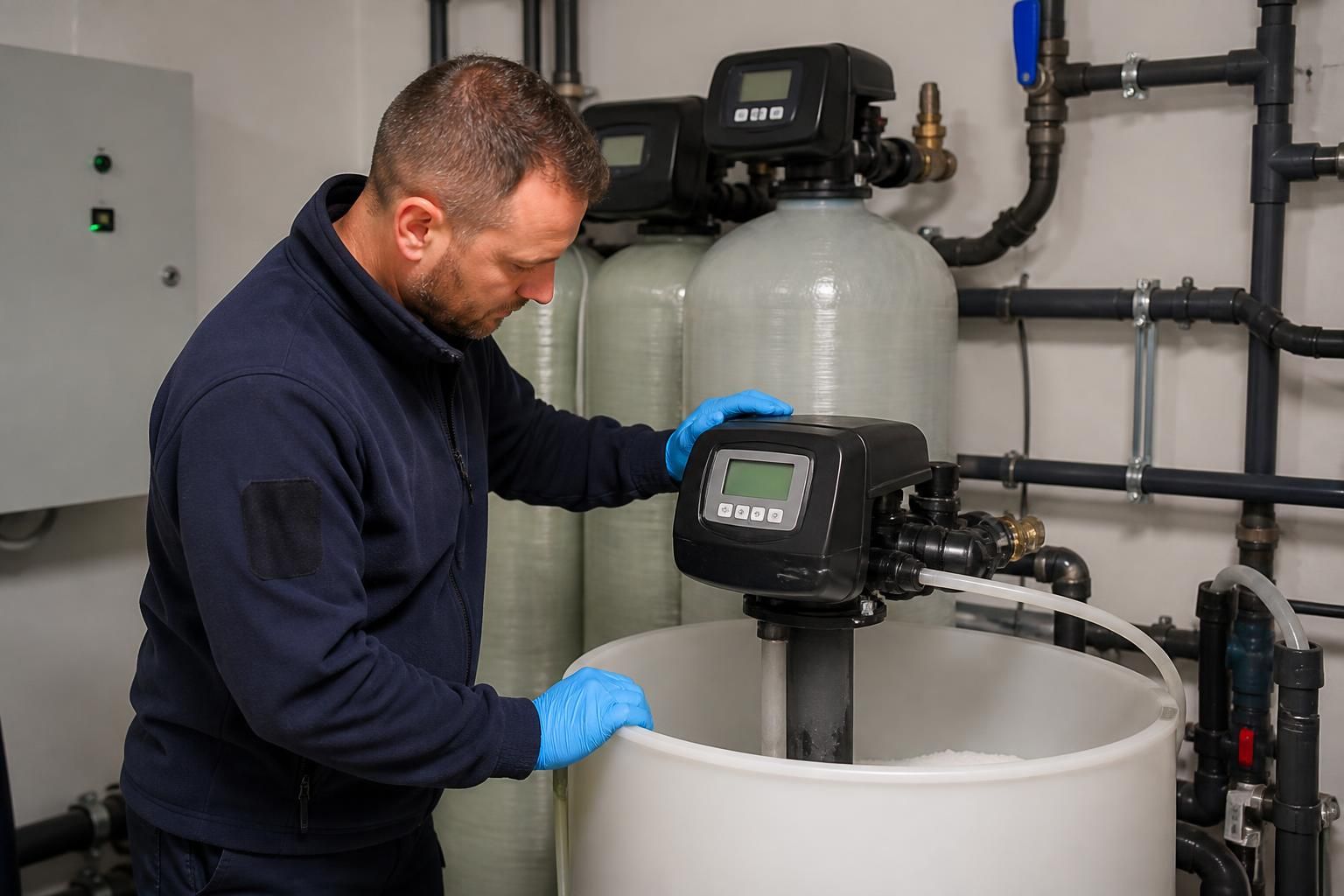
A commercial water softener maintenance plan is a site-specific management document that explains how the equipment will be kept safe, correctly adjusted and suitable for the water system it serves. It should connect the softener’s operating requirements with the building’s water hygiene arrangements, responsible personnel, service evidence and procedures for dealing with faults.
The plan should begin with an accurate description of the installation. This includes the softener’s location, the outlets or processes it supplies, the incoming and treated-water arrangements, any storage vessels, bypasses and associated equipment. The document should identify whether the softener supports domestic hot and cold water, process water, boilers or other commercial applications, because the consequences of poor treatment and the appropriate checks may differ between uses.
It should also explain why the softener is installed. In some premises, softened water is used to control scaling; in others, it protects equipment or supports a defined process. The maintenance approach should not compromise drinking-water arrangements or create an unsuitable connection between treated and untreated supplies. Where the system forms part of a wider hot and cold water installation, its management should be considered alongside the site’s water hygiene risk assessment.
- Defined responsibilities: name the duty holder, site contact, competent maintenance person and any contractor involved. Clarify who checks the equipment between planned visits, who authorises isolation or adjustment, and who reviews outstanding defects.
- Task instructions: describe the checks in enough detail for the assigned person to carry them out consistently. The plan should distinguish routine operator observations from work requiring technical competence, such as dismantling components, altering settings or investigating abnormal operation.
- Consumable controls: specify the acceptable type and condition of salt or other treatment materials, how contamination or deterioration is identified, and how supplies are stored. The plan should prevent unsuitable materials being added to the system.
- Hygiene arrangements: state how internal surfaces, tanks, lids, injectors and other accessible parts are assessed and cleaned where required. Any cleaning or disinfection procedure should identify the responsible person, precautions, isolation requirements and evidence to retain.
- Water quality checks: define what is measured, where samples or readings are taken, and what prompts further investigation. Depending on the installation, this may include hardness, signs of salt carryover, unusual taste or appearance, leakage, flow restriction or a change in treated-water performance.
- Equipment condition: include inspection of connections, hoses, drains, overflow arrangements, electrical components, valves and surrounding surfaces. The plan should make clear how leaks, blocked drains, corrosion, damaged covers or poor access are reported and controlled.
Maintenance intervals should be based on the equipment, water usage, operating conditions, manufacturer’s instructions and the consequences of failure, rather than applied as an arbitrary calendar exercise. A heavily used installation may need more frequent attention than a lightly used one. The plan should identify routine, periodic and condition-led work, while allowing the interval to be revised when inspection findings or operating data show that the original arrangement is unsuitable.
A useful plan includes defined acceptance criteria. These might relate to the expected hardness of treated water, regeneration behaviour, salt consumption, alarm status, pressure or the condition of the brine system. Criteria should be specific enough to distinguish normal variation from a defect, without encouraging staff to make adjustments outside their competence. Where results fall outside the agreed range, the document should state whether the response is observation, adjustment, isolation, specialist attendance or escalation to the person responsible for water safety.
Fault management deserves its own section. It should cover loss of power, failure to regenerate, salt bridging, blocked brine lines, valve malfunction, excessive water use, leaks and an inability to confirm that treatment is working. The plan should explain how affected outlets or equipment are identified, what temporary arrangement is used if appropriate, and how the system is returned to service after corrective work. If a fault could affect water quality or a wider water hygiene control, it should be referred through the site’s existing escalation process rather than treated as an isolated mechanical issue.
Records should provide an auditable account of what happened, not simply confirm that a visit took place. Each entry should identify the date, equipment, person carrying out the work, observations, readings, parts or materials used, defects found and actions still open. Service reports, test results, cleaning evidence, photographs and certificates should be retained in a way that allows the responsible person to trace the history of the installation.
The plan should include a review process. Review it after alterations to the building or water system, a change in occupancy or use, repeated faults, poor test results, a hygiene incident, or any change that affects the softener’s duty. A formal review should confirm that the equipment description, responsibilities, task frequencies, competence requirements and escalation arrangements remain accurate.
For larger or higher-risk premises, the maintenance plan should sit within the wider water management system rather than operate as a standalone engineering document. Coordination with legionella risk controls, contractor management, permit arrangements and compliance audits helps ensure that maintenance activity supports the site’s overall water safety responsibilities. A competent water hygiene specialist can assess whether the proposed arrangements are proportionate to the installation and identify gaps that routine servicing alone may not reveal.
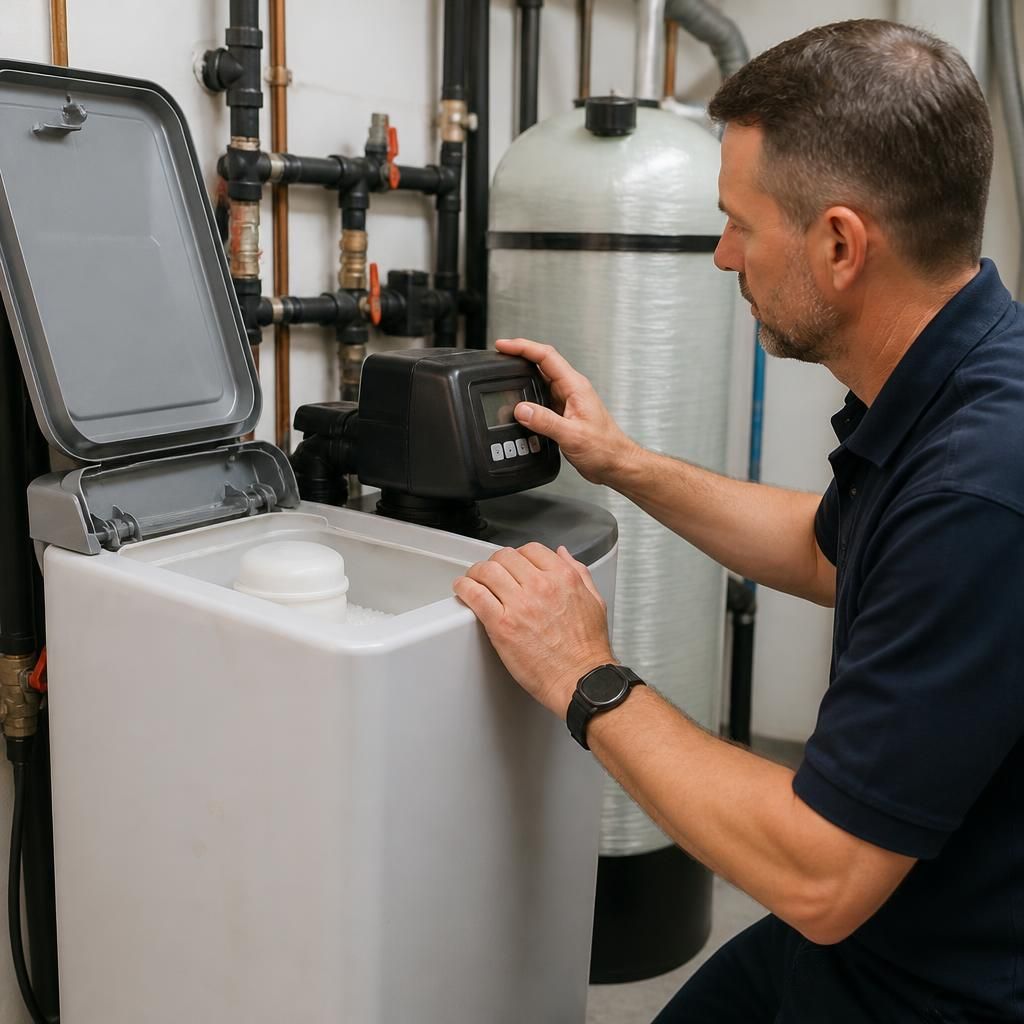
A commercial water softener maintenance plan should also explain how planned work is coordinated with the building’s operations. Before an isolation, the responsible person should identify the outlets, appliances or processes that may be affected and confirm whether an alternative supply or temporary operating arrangement is needed.
The plan should set out how users are notified, how access and work areas are controlled, and what checks are required before the treated supply is returned to normal use. This is particularly important where the softener serves commercial equipment or a busy domestic hot and cold water system. Clear handover arrangements help confirm that the work is complete, any restrictions have been removed and outstanding actions have been passed to the appropriate person.
Review Your Commercial Water Softener Maintenance Plan
If you need to confirm that your commercial water softener maintenance arrangements are suitable for the installation, discuss the plan with Blue Fish Water Management Ltd. A review can help identify gaps in responsibilities, inspection requirements and escalation procedures.