
Does Your Commercial Water Softener Need Testing?
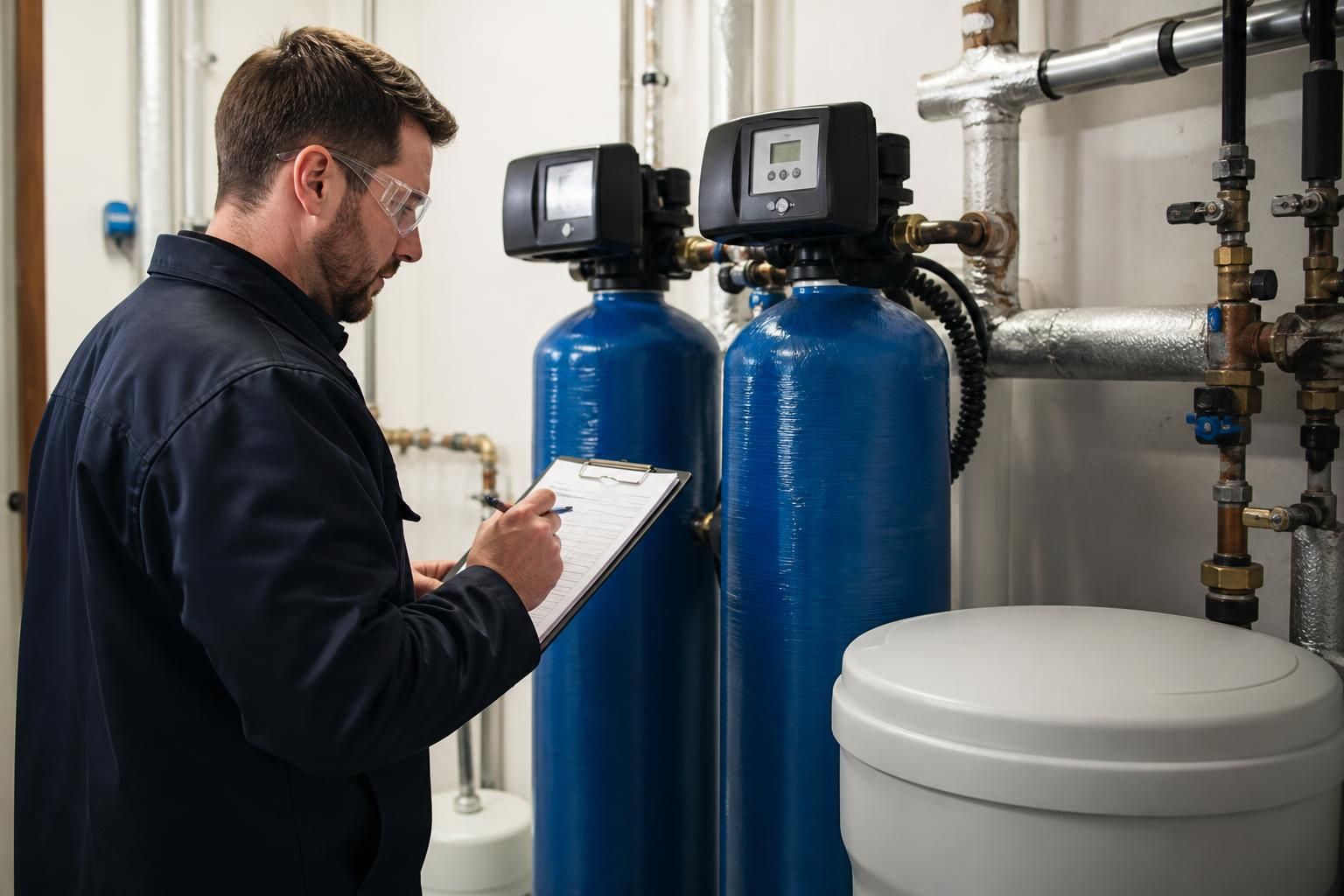
Commercial water softener testing is appropriate when the unit could affect water quality, the operation of hot and cold water systems, or the organisation’s Legionella control measures. It is not simply a test of whether the resin is removing hardness: a suitable assessment considers the softener’s design, installation, maintenance, water uses and impact on the wider water system.
What should be tested? The scope depends on the system and the risks identified. Testing may include:
- Hardness performance: confirming that the treated water is within the intended specification and that the softener is regenerating correctly.
- Water quality parameters: checking factors such as conductivity or other indicators where these are relevant to the equipment, process or supply arrangement.
- Microbiological quality: taking samples where contamination is suspected, where the risk assessment identifies a need, or where the softener forms part of a higher-risk water system.
- Legionella sampling: considering samples from appropriate points in the connected system where there is a foreseeable risk of growth and exposure. The softener itself is not automatically the correct sampling point.
- Installation and control checks: verifying that bypasses, blending arrangements, backflow protection, drains, salt storage and regeneration controls are operating as intended.
A water softener can create conditions that require attention if it is poorly maintained, incorrectly sized, allowed to stagnate, or connected to a system with inadequate temperature and circulation control. Salt and brine residues, standing water, ineffective regeneration and faults affecting flow can all indicate that further investigation is needed. Softening does not disinfect water, so a satisfactory hardness result does not by itself demonstrate that the water is microbiologically safe.
When is testing normally considered? Testing may be appropriate during commissioning, following installation or alteration, after significant maintenance, when a control failure is found, or when results from routine monitoring change. It may also be needed when water is used for drinking, food preparation, healthcare-related activities, process operations or other purposes with specific quality requirements. Complaints about taste, odour, appearance or fluctuating water quality should be investigated rather than treated as proof that the softener is at fault.
Testing should also be reviewed when the building’s use changes, occupancy patterns alter, outlets are added or removed, or a water safety risk assessment identifies stagnation or low-use areas. A change to the softener can affect downstream pipework, hot water equipment and points of use, so testing only the appliance may provide an incomplete picture.
How often should it be carried out? There is no universal testing interval that applies to every commercial softener. The appropriate frequency should be set through the water safety risk assessment, taking account of the type of softener, incoming water, connected systems, usage, maintenance history and previous results. Routine checks by site personnel may be supported by periodic technical inspections and laboratory testing where the risk warrants it.
Routine monitoring and formal testing have different purposes. Staff may record salt levels, regeneration activity, visible leaks, alarms, bypass positions and basic operating conditions. A competent water hygiene professional or suitably qualified contractor can assess whether those checks are adequate and decide whether samples or specialist analysis are required. Where laboratory analysis is used, an appropriately accredited laboratory and suitable sampling method help ensure that results are meaningful and defensible.
What do the results mean? Results should be interpreted against the intended use of the water and the system’s documented control limits. A hardness result outside specification may indicate exhausted resin, incorrect settings, insufficient salt, a valve fault, blending through the bypass or a sampling error. A microbiological result requires context, including the sample location, recent system conditions, temperature control, stagnation and any remedial work already undertaken.
A positive Legionella result should not be addressed by replacing or cleaning the softener alone. The wider system should be reviewed for conditions that support bacterial growth, including inadequate temperatures, poor circulation, infrequently used outlets, dead legs, storage issues and ineffective cleaning or disinfection. Remedial action should be proportionate to the risk and followed by appropriate verification.
Commercial operators should retain the risk assessment, test results, sampling details, maintenance records, faults, corrective actions and follow-up findings. These records help demonstrate that the softener is being managed as part of the building’s water system rather than as an isolated item of plant. They also allow recurring faults or deteriorating water quality to be identified before they become a wider compliance concern.
Blue Fish Water Management Ltd can provide advice on commercial water hygiene, Legionella risk and water quality testing, including the assessment of systems where a softener may influence water safety. The correct approach is to test what the risk assessment requires, interpret the findings in the context of the complete water system and act on any underlying control failure.
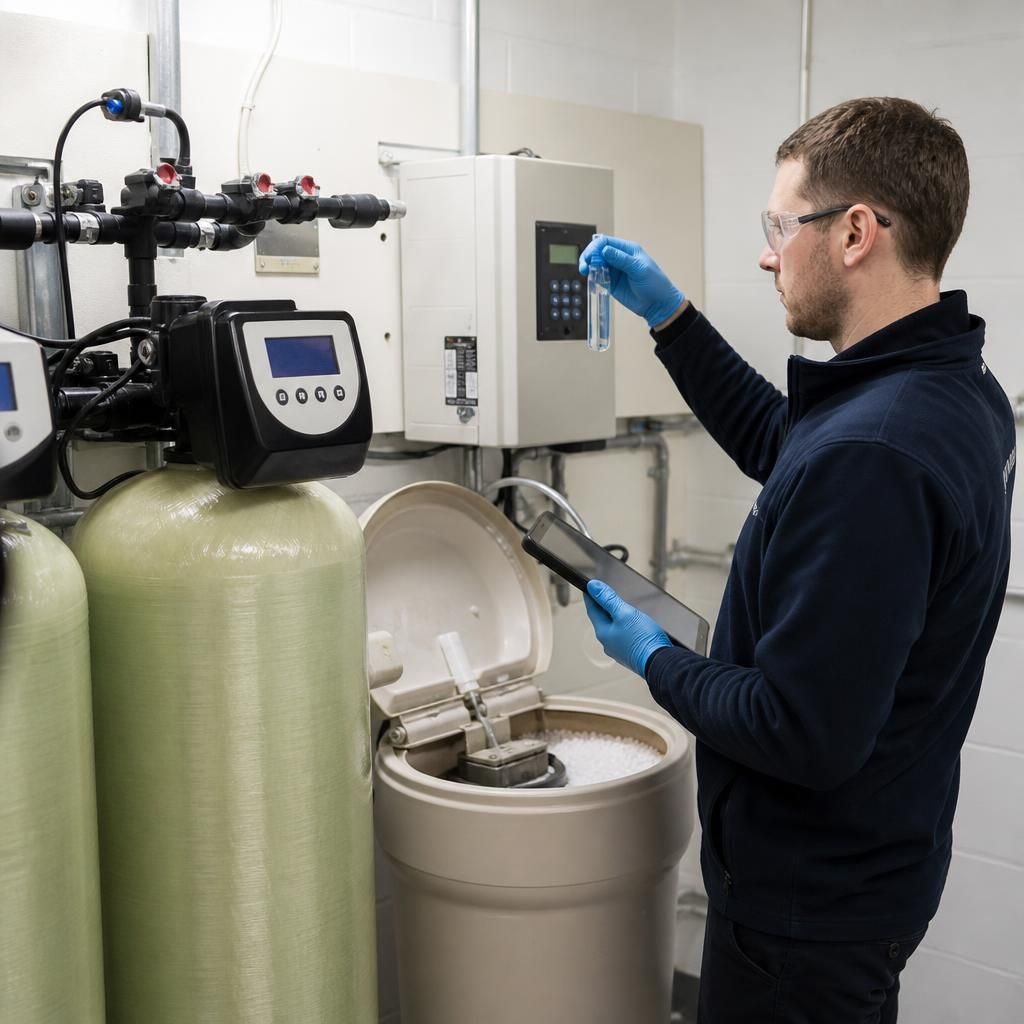
Testing can also verify that the softener is supplying the correct outlets. Commercial systems may provide different water qualities for different uses, and a fault in blending, bypasses or pipework can send softened water where another specification is required, or untreated water where softened water is expected. Comparing the outlet arrangement with the system schematic and operating requirements can identify whether representative points need to be sampled. This checks the distribution of treated water, not just the performance of the appliance itself.
Discuss Your Commercial Water Softener Testing Requirements
Contact Blue Fish Water Management Ltd to discuss whether your commercial water softener requires testing and how its results should inform your wider water safety arrangements.