
Who Is Responsible for Managing a Commercial Water Softener?
Responsibility for managing a commercial water softener normally rests with the business or person in control of the premises, delegated to a competent facilities, estates or water hygiene manager. A specialist contractor may inspect, service and advise on the system, but the duty holder remains responsible for ensuring maintenance, records, water quality controls and corrective actions are managed appropriately.
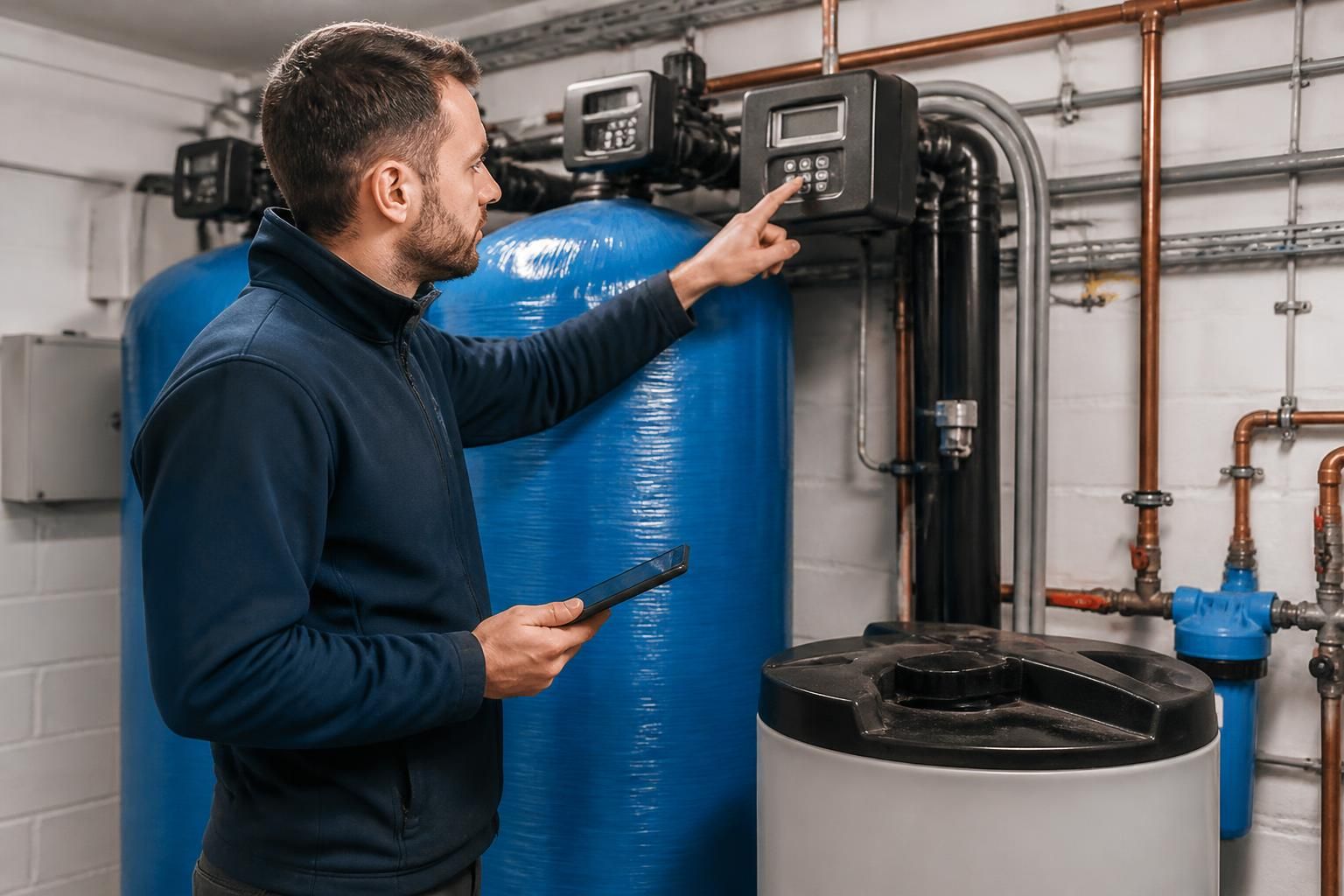
Commercial water softener management is a shared operational task, but accountability should be clearly assigned to the organisation controlling the premises. The responsible person should define who checks the equipment, who arranges specialist work, who reviews findings and who authorises corrective action. Without this allocation, routine tasks can be missed between a facilities team, water hygiene contractor, landlord and tenant.
The duty holder’s responsibilities
The duty holder should understand how the softener connects to the wider wholesome and hot water systems, and how its operation may affect water quality, compliance and business activities. Their responsibilities commonly include:
- ensuring the system is suitable for its intended use and installed in accordance with relevant requirements;
- identifying the equipment within site water system documentation and asset registers;
- making sure operating, cleaning, servicing and inspection arrangements are documented;
- providing competent people with access, information and authority to carry out their duties;
- reviewing defects, service reports and water quality findings rather than filing them without action;
- ensuring corrective work is prioritised where the softener, its fittings or connected pipework could compromise water safety; and
- retaining records that demonstrate what was checked, by whom, when and what was done as a result.
Where a premises is leased, the contract may divide practical duties between landlord and tenant. That contractual arrangement does not remove the need for clear control at site level. Both parties should establish who owns the equipment, who controls the incoming water system, who pays for servicing, and who must be informed about defects or changes to the installation.
What a facilities or estates team normally manages
A facilities or estates manager often coordinates the day-to-day arrangements. This may include checking that the softener remains in service, confirming that salt or other consumables are replenished appropriately, monitoring alarms or fault indicators, keeping access clear and arranging planned maintenance. They may also need to confirm that any bypass or isolation valves are returned to the correct position after work.
These tasks should be based on the equipment manufacturer’s instructions and the site’s water safety procedures. A visual check is not a substitute for competent servicing. Internal condition, settings, regeneration performance, brine components, valves and connections may require technical assessment.
The role of a water hygiene or compliance manager
A water hygiene or compliance manager should consider the softener as part of the complete water system, not as an isolated appliance. The review should establish whether the installation introduces stagnation, warm conditions, inappropriate materials, cross-connection or backflow risks. It should also consider whether treatment has changed the characteristics of water supplied to outlets or equipment downstream.
Where the softener forms part of a system covered by a legionella control plan, its inspection and maintenance arrangements should align with that plan. The manager should ensure that relevant findings are communicated to the person responsible for overall water safety and incorporated into risk assessments or written control schemes where necessary.
When a specialist contractor is involved
A contractor may be appointed to service the softener, inspect associated components, assess water quality, undertake remedial work or provide technical advice. The contractor’s scope should be written clearly. It should state which equipment is included, the checks to be completed, the records to be supplied, the standard for reporting defects and the process for escalating urgent concerns.
Appointing a contractor does not mean the business can disregard the system. The person in control should check that the contractor is competent for the work, understands the site’s water arrangements and provides reports that can be acted upon. A service visit is only effective if identified faults are reviewed and resolved, or formally accepted with a documented reason and suitable control measures.
Competence and delegation
Responsibility can be delegated, but it should not be delegated informally. A written allocation of duties should identify named roles rather than relying on general references to “maintenance” or “the contractor”. It should cover routine checks, planned servicing, water quality concerns, emergency isolation, record keeping and management review.
The level of competence required depends on the installation and the consequences of failure. Staff carrying out simple visual checks need suitable instruction, while anyone adjusting, dismantling, disinfecting or repairing the equipment should have the relevant technical knowledge and training. Where the work could affect legionella control or wholesome water quality, specialist advice may be required.
Records that support accountability
Useful records should allow the business to reconstruct how the softener has been managed. Depending on the system, they may include:
- the asset identity, location, purpose and connection details;
- manufacturer instructions and commissioning information;
- planned maintenance schedules and completed service reports;
- inspection findings, fault reports and evidence of remedial action;
- records of relevant water quality checks or sampling;
- details of changes, isolation, bypass operation or recommissioning; and
- training or competency records for people undertaking assigned tasks.
Records should be accurate, dated and accessible to the people who manage the site. They should distinguish between a check being completed and a system being confirmed as satisfactory; those are not always the same thing.
How responsibility should work in practice
- Identify the person or organisation with control of the premises and confirm the relevant contractual responsibilities.
- Map the softener and its connections within the wider water system.
- Assess the risks associated with operation, maintenance, stagnation, backflow and water quality.
- Set out routine checks and planned servicing based on the equipment and site-specific risks.
- Assign each task to a competent person and define how exceptions will be reported.
- Review contractor reports and close out defects through a documented action process.
- Reassess the arrangements after alterations, recurring faults, changes in occupancy or changes to water use.
The clearest arrangement is one in which the duty holder retains oversight, an identified manager coordinates the controls, trained staff complete routine tasks and a suitably competent specialist is used where technical assessment or remedial work is needed. This creates an auditable chain from ownership of the risk to the action taken to manage it.
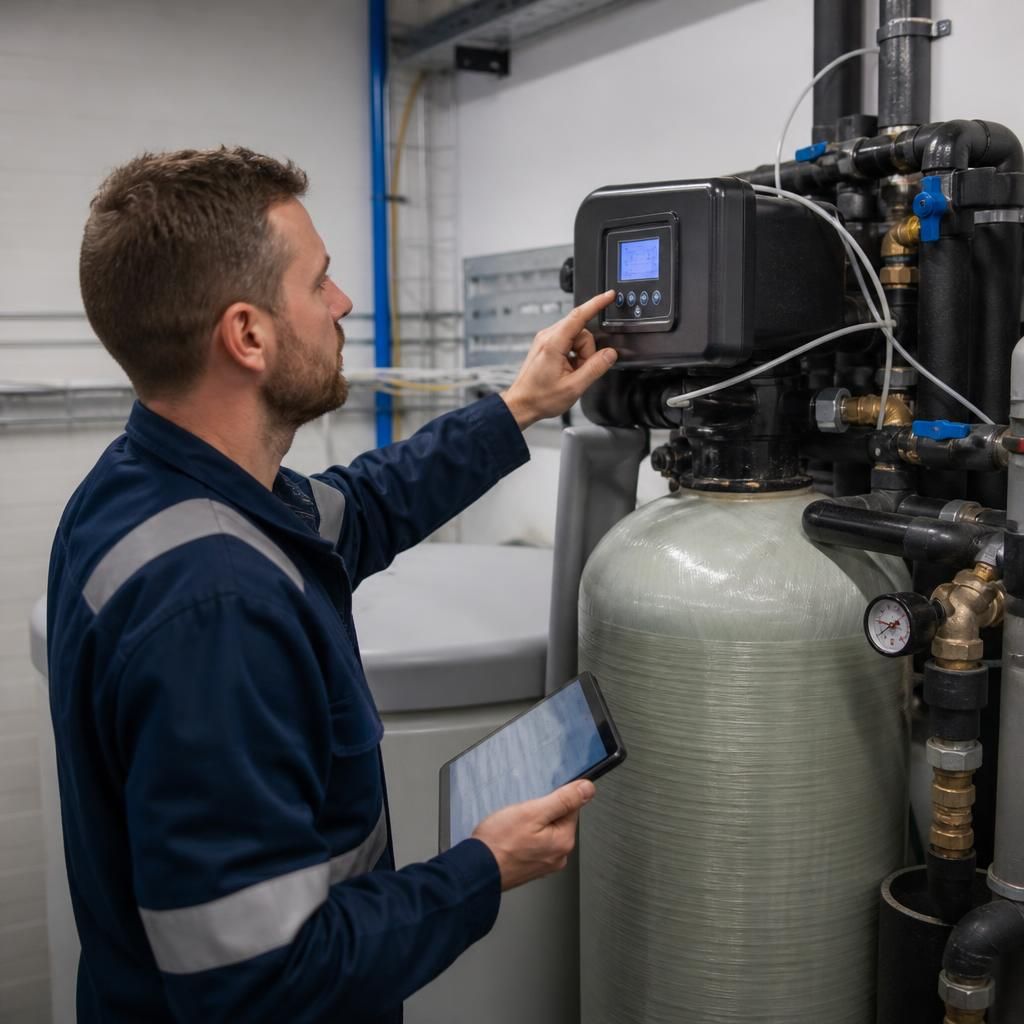
Responsibility should follow the softener’s position within the water system, not simply the job title of the person who operates it. If treated water supplies staff facilities, healthcare areas, accommodation or other wholesome water outlets, the person overseeing water safety must understand the softener’s effect on that supply. If it serves process equipment only, the relevant engineering or production manager may control its operation, while still coordinating with the site’s water safety arrangements where connections or shared pipework are involved.
The site should define this boundary clearly. The responsible manager needs to know which outlets and equipment depend on the softener, who can alter its settings or bypass it, and who must be consulted before changes are made. This avoids a gap in accountability where an engineering team manages the appliance but a separate water hygiene team remains unaware of changes that could affect water quality or legionella controls.
Review Your Commercial Water Softener Management Arrangements
If your business is uncertain whether commercial water softener responsibilities are clearly assigned, contact Blue Fish Water Management to discuss a practical review of the system and its management arrangements.