
When Does a Business Need Commercial Water Conditioning?
A business needs commercial water conditioning when the quality or hardness of its water could affect water safety, system performance, equipment, or compliance. The appropriate approach depends on the building’s water systems, how they are used, and the risks identified through a professional assessment.
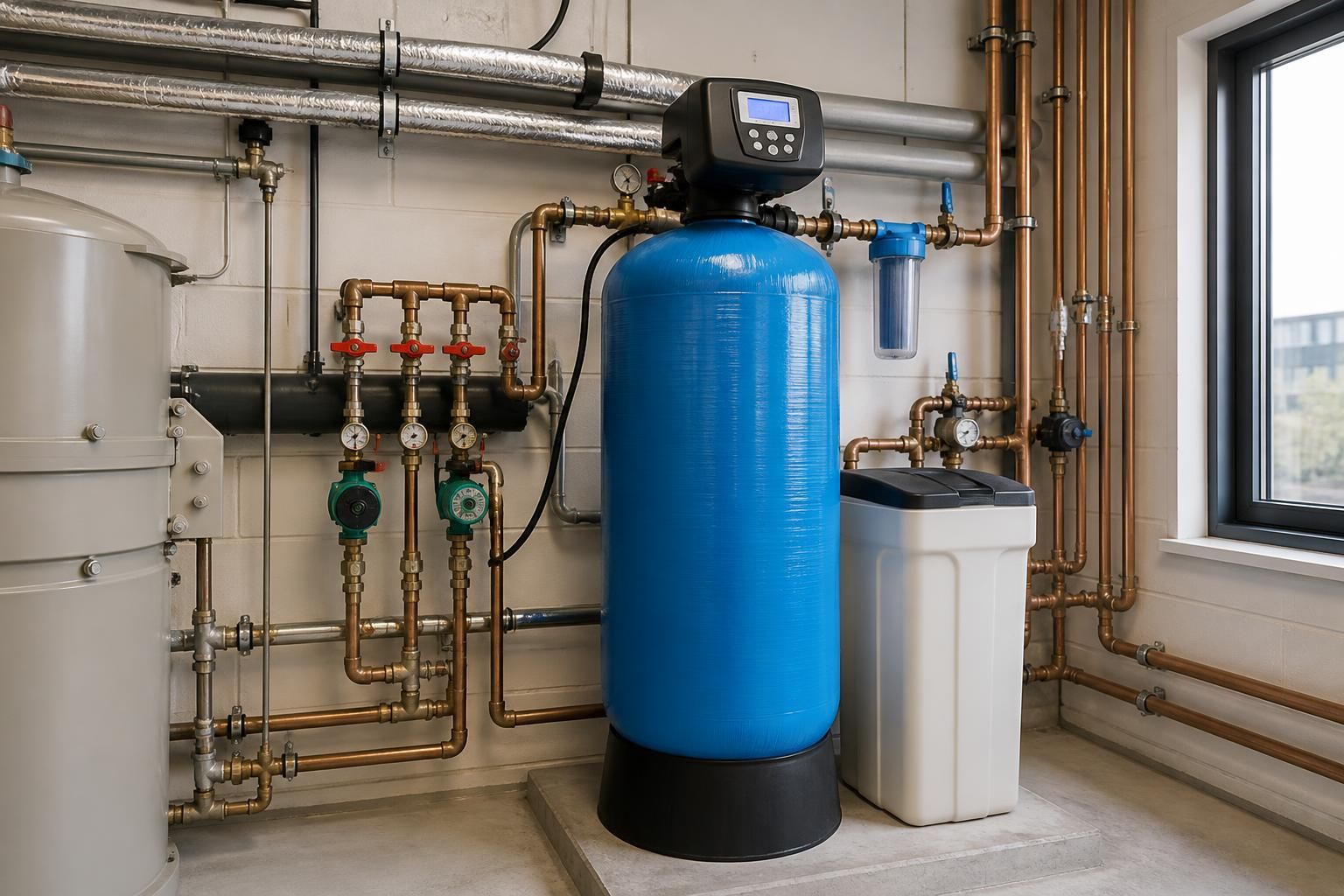
Commercial water conditioning is needed when the hardness, mineral content or chemical quality of incoming water could impair equipment, disrupt a process, increase maintenance requirements or contribute to a water safety risk. The decision should follow an assessment of the water supply, the building’s systems, how those systems are operated and any relevant compliance duties, rather than being based on water hardness alone.
Hard water and scale formation
Hard water contains calcium and magnesium salts. When heated, these minerals can form scale on heat-transfer surfaces, inside pipework and within components such as valves, injectors and heat exchangers. A business may need commercial water softening or another form of conditioning where scale could:
- reduce the efficiency of boilers, calorifiers, hot-water generators or process equipment;
- restrict flow through pipework, outlets or control components;
- increase cleaning, descaling and maintenance requirements;
- shorten the useful service life of equipment; or
- affect the consistency of a manufacturing, catering, laundry or cleaning process.
The likelihood and effect of scaling depend on water hardness, temperature, flow, equipment design and usage. A site with a relatively modest water demand may still need treatment if water is repeatedly heated or used in equipment with narrow passages and sensitive components.
When water quality affects a business process
Conditioning may be appropriate where untreated water affects the quality or repeatability of an operation. Examples can include commercial kitchens, laundries, healthcare premises, food and drink production, laboratories, manufacturing sites and buildings with specialist plant. In these settings, hardness, suspended solids, dissolved minerals, acidity or corrosion potential may influence cleaning results, product quality, equipment reliability or the suitability of water for a particular use.
The required treatment is not always a softener. Depending on the assessment, a business may require filtration, scale control, corrosion management, chemical dosing or a combination of measures. Treatment should be selected for the actual water chemistry and intended use. Installing equipment designed for a different problem can leave the original issue unresolved or create new operational and water quality concerns.
When hot-water systems are vulnerable
Buildings with substantial hot-water generation often warrant closer consideration of conditioning because heating accelerates scale deposition. This is particularly relevant where there are calorifiers, storage vessels, boilers, plate heat exchangers, showers, washrooms or other outlets supplied by a shared system. Scale can reduce heat transfer and create rough or restricted surfaces, making inspection and cleaning more difficult.
Water conditioning must, however, be considered alongside the management of hot- and cold-water systems. A softener does not replace temperature control, circulation, cleaning, monitoring, risk assessment or other measures required to manage legionella and general water hygiene. Poorly selected or maintained treatment equipment can itself affect water quality, so its operation and condition should form part of the site’s water management arrangements.
When corrosion or deposits are a concern
Not all water-related problems are caused by hardness. Corrosive water, unsuitable chemical dosing, mixed-metal systems, sediment and changes in water chemistry can contribute to pinhole leaks, discolouration, deposits and premature component failure. If a business is experiencing recurring leaks, blocked strainers, unusual water appearance or unexplained deterioration of plant, water testing and system investigation can help establish whether conditioning is relevant.
Conditioning should not be used to mask a defective system. Existing contamination, dead legs, stagnation, poor circulation or damaged components require appropriate remedial action. The treatment choice should address the identified cause and should not compromise drinking-water quality or the safe operation of the wider system.
When compliance and risk management require it
A business may need conditioning where its water risk assessment, equipment manufacturer’s requirements, process controls, lease obligations or internal compliance standards identify untreated water as a risk. Commercial premises remain responsible for managing water systems in a way that protects users and supports applicable water safety arrangements. Where legionella control is relevant, conditioning forms only one part of a wider control strategy and should be documented within the system’s management plan.
Businesses should also consider whether treatment equipment introduces additional control requirements. A commercial softener, for example, needs suitable installation, correct settings, replenishment of consumables where applicable, cleaning, servicing and checks on the treated water. Bypass arrangements and any connection to drinking-water outlets should be understood and managed. Records should show what the equipment treats, how it is maintained and what action is taken when results fall outside the expected range.
Signs that an assessment is justified
- Visible scale appears on taps, showerheads, heating elements or plant.
- Boilers, heat exchangers or hot-water equipment require frequent descaling.
- Water flow has reduced or components are repeatedly blocked.
- Energy use, heating performance or process consistency has changed without an obvious mechanical explanation.
- There are recurring leaks, corrosion, deposits or discolouration.
- A new building, extension, process or item of plant is being commissioned.
- The incoming water source or supply arrangement has changed.
- Existing conditioning equipment is poorly maintained, incorrectly sized or no longer matched to the building’s use.
- Water testing, a compliance audit or a legionella risk review identifies a need for further investigation.
These signs do not automatically prove that a water softener is required. They indicate that the water chemistry, system design and operating conditions should be reviewed before treatment is specified.
How to decide what is needed
- Define the affected uses. Identify drinking-water outlets, hot-water services, heating plant, process systems and any equipment that has particular water quality requirements.
- Review the system design and operation. Consider storage, temperatures, flow rates, recirculation, usage patterns, materials, maintenance history and areas where water may stagnate.
- Obtain appropriate water information. Supplier data can provide an initial indication of hardness, but targeted testing may be needed where corrosion, contamination, process quality or unusual deposits are involved.
- Assess the consequences of treatment. Check that the proposed method is suitable for the intended outlets and does not conflict with water safety, operational or regulatory requirements.
- Set a management plan. Specify monitoring, servicing, cleaning, testing, record keeping and responsibilities for responding to faults or abnormal results.
Professional water hygiene advice can help a business distinguish between a genuine need for commercial water conditioning and a mechanical, operational or water safety problem requiring a different remedy. An assessment may include a review of the water systems, relevant test results, existing control measures and the condition and management of any treatment equipment. The outcome should be a proportionate recommendation that supports reliable operation, water safety and demonstrable compliance.
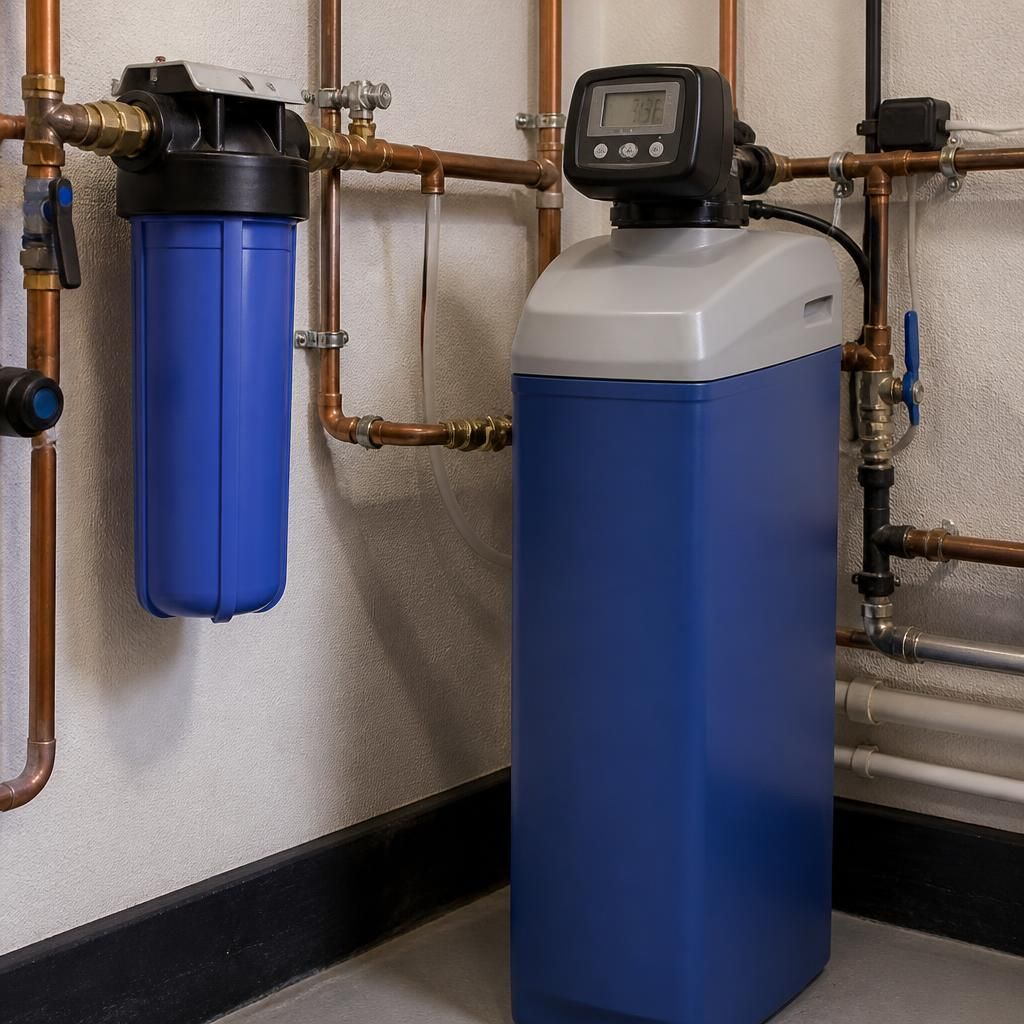
A business should consider commercial water conditioning where water hardness, demand and equipment sensitivity make untreated water likely to cause operational problems. The treatment unit must then be specified for the actual site rather than selected solely by the incoming pipe size.
Sizing should take account of peak and average water use, hardness, flow requirements, the number of outlets and whether water is used in heating or process equipment. An undersized unit may allow hard water through during periods of high demand, while an unsuitable control setting can result in ineffective treatment or unnecessary regeneration. These factors are particularly relevant to premises with multiple washrooms, catering facilities, laundries or central hot-water services.
The assessment should also establish which outlets require conditioned water and which should remain untreated. This helps prevent unnecessary treatment and ensures that the chosen arrangement is compatible with the building’s water safety procedures. Where demand, water chemistry or equipment requirements have changed, the existing unit should be reviewed rather than assumed to remain suitable.
Assess Your Need for Commercial Water Conditioning
If you are unsure whether your site needs commercial water conditioning, arrange a professional review of the water chemistry, system demands and equipment requirements. Blue Fish Water Management Ltd can help identify a proportionate approach that supports safe, compliant water system management.