
When should water test chemistry form part of a monitoring plan?
Water test chemistry should form part of a monitoring plan when chemical conditions could influence microbial growth, indicate a loss of control or confirm that treatment is working. The risk assessment should determine which parameters to test, how often to test them and when additional testing is needed after system changes, abnormal results or remedial work.
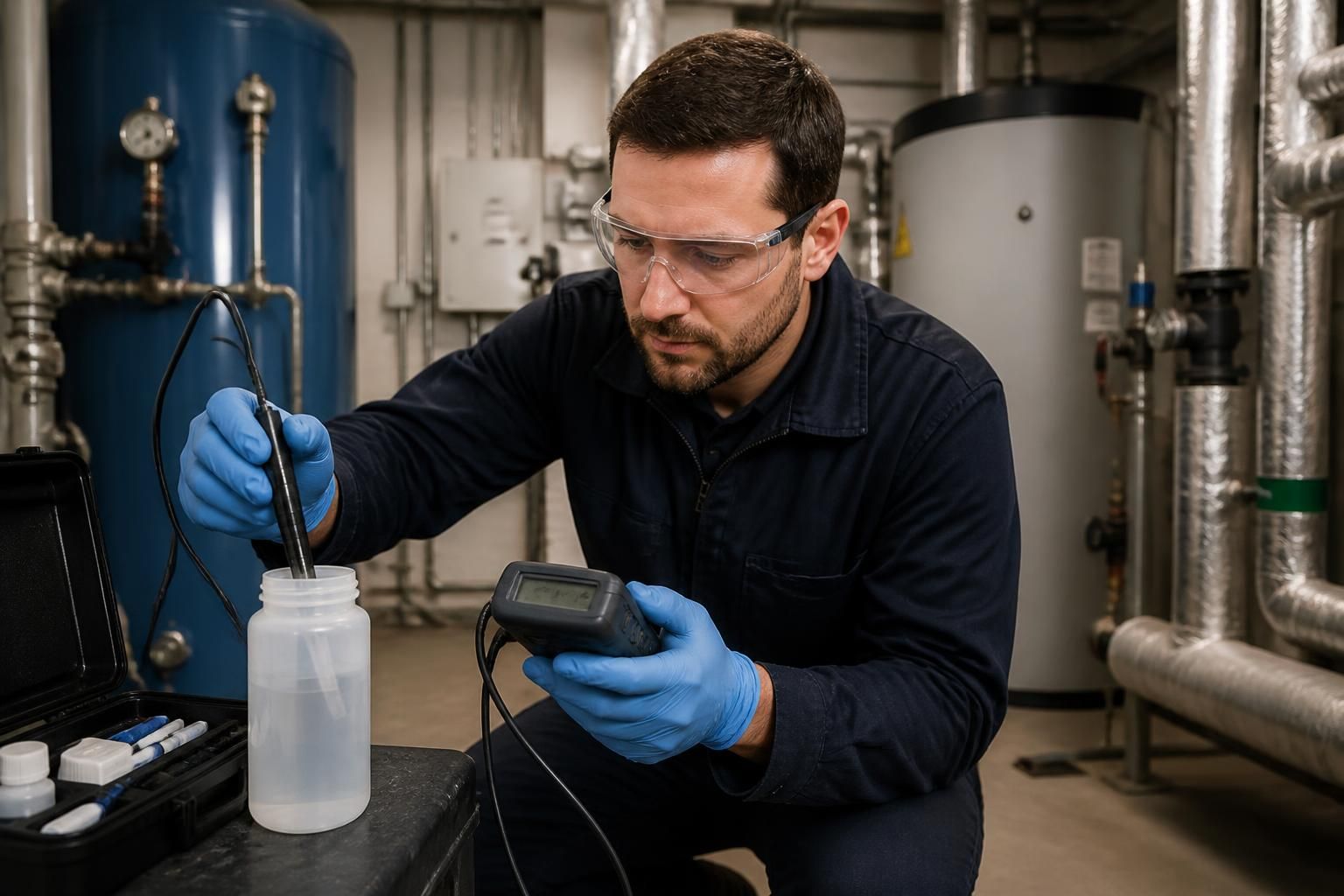
Water test chemistry forms part of a monitoring plan when chemical measurements are needed to demonstrate that a water system remains within defined control conditions. It is most useful where parameters such as pH, disinfectant residual, conductivity, alkalinity, hardness, corrosion indicators or treatment-product concentration can affect system performance, water quality or the reliability of other control measures.
The decision should be based on the system’s risk assessment and written control scheme rather than on a standard list of tests applied to every installation. A simple domestic hot and cold water system may need a different chemistry schedule from a cooling tower, process-water system, spa pool or installation using continuous chemical treatment. The monitoring plan should identify which measurements are relevant, where samples are taken, the method used, the person responsible and the result that requires investigation.
Routine chemistry monitoring is particularly appropriate in the following circumstances:
- Water is chemically treated. Where a biocide, inhibitor, scale-control product or other treatment is used, testing can show whether the treatment is present at the intended concentration and whether the system conditions allow it to work effectively.
- pH affects treatment performance. Some disinfectants are more effective within a particular pH range. A pH result can therefore help explain an unexpected residual, support dosing decisions and identify a change in the source water or system condition.
- Scale or corrosion is a recognised risk. Hardness, alkalinity, conductivity and related measurements may help identify conditions that contribute to deposits, blocked components, loss of heat transfer or corrosion. Corrosion can also create deposits and areas of stagnation that complicate water hygiene control.
- The system is subject to changing demand or make-up water. Industrial and commercial systems may receive variable volumes of fresh water, experience changing occupancy or operate at different loads. Chemistry results can establish whether those changes are affecting concentration, treatment stability or overall control.
- There is a cooling or evaporative process. Cooling systems commonly require monitoring of treatment chemistry and concentration because evaporation, bleed-off and make-up water can change the balance within the system. The relevant schedule should reflect the equipment, treatment regime and risk assessment.
- Results from other monitoring need explanation. Chemistry can provide useful context when temperatures, microbiological results, visual condition or operational observations indicate that a system may not be behaving as expected. It should support investigation rather than replace it.
Not every parameter needs to be measured at every visit. Unnecessary testing can produce data without improving control, while too little testing may allow a developing problem to go unnoticed. A proportionate plan links each test to a decision: for example, whether to continue normal operation, check dosing equipment, investigate a change in source water, increase inspection or arrange corrective work. The plan should also distinguish between routine readings and tests used only during commissioning, fault-finding or verification.
Sampling locations matter as much as the choice of parameter. A result from the incoming supply may describe the source water but not the conditions within a storage tank, calorifier, distribution loop or cooling circuit. Samples should be taken from locations that represent the part of the system being assessed and should be consistent enough for results to be compared over time. Where different areas have different operating conditions, one sample point may not represent the whole installation.
The monitoring plan should state how each measurement is obtained and how the result is recorded. Field readings may be suitable for parameters that need to be checked during operation, provided the equipment is appropriate, maintained and used correctly. Laboratory analysis may be more suitable where a greater degree of analytical control is needed, where results are disputed or where a parameter cannot be assessed reliably on site. The method selected should match the purpose of the test, the expected concentration and the action that will follow from the result.
Action limits should be defined before results are reviewed. A control limit indicates the expected operating range; an alert level prompts closer review or a check of the measurement; and an action level requires a documented response. The response might include repeating the test, checking the sampling process, inspecting dosing or circulation, reviewing recent maintenance, adjusting treatment under competent direction or carrying out further investigation. A single result should be interpreted alongside previous readings, system operation and any recent changes.
Good records make chemistry monitoring useful. Each entry should identify the date, location, parameter, result, unit, test method and person carrying out the check. Records should also note unusual conditions, such as an isolated outlet, maintenance activity, a change in dosing or a fault affecting circulation. Trends are often more informative than an isolated result: a gradual shift may indicate deteriorating control even when an individual reading has not yet crossed an action level.
Additional chemistry testing may be justified when the system is commissioned, altered, recommissioned or returned to service after being shut down. It can also be appropriate when treatment equipment is replaced, the water source changes, control readings become inconsistent, contamination is suspected or remedial work has been completed. In each case, the purpose of the extra testing should be recorded, along with the evidence required before normal monitoring resumes.
Water test chemistry should therefore be treated as part of a wider control cycle rather than as a collection of isolated measurements. The results need to be reviewed by someone who understands the system, compared with the defined operating conditions and connected to clear actions. A competent water hygiene provider can help translate the risk assessment into a practical schedule, select suitable tests and review whether the monitoring evidence supports continued control.
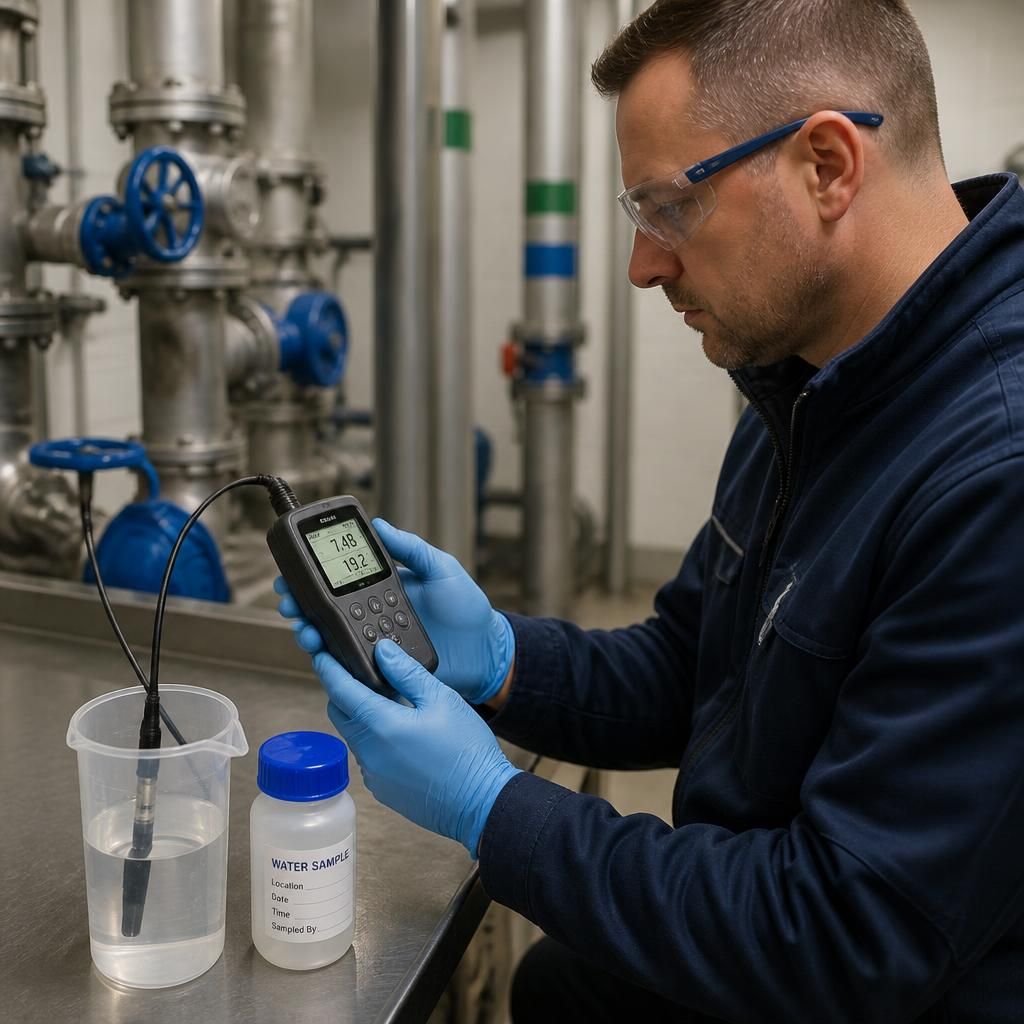
Water test chemistry is a control check, not a direct test for legionella. A satisfactory pH, disinfectant residual or treatment-product result shows that a defined chemical condition is present at the time of sampling, but it does not by itself confirm that every part of the system is microbiologically controlled.
For that reason, chemistry should be scheduled alongside the other evidence required by the water safety plan, such as temperature checks, inspection findings and microbiological analysis where appropriate. This avoids treating one favourable chemistry result as proof of overall control, particularly in systems with dead legs, variable circulation or separate treatment zones.
Review your water test chemistry monitoring plan
If you need an independent review of whether your water test chemistry monitoring plan is proportionate and properly documented, Blue Fish Water Management Ltd can provide practical advice through its water hygiene and compliance services.