
How should water test chemistry equipment be checked before sampling?
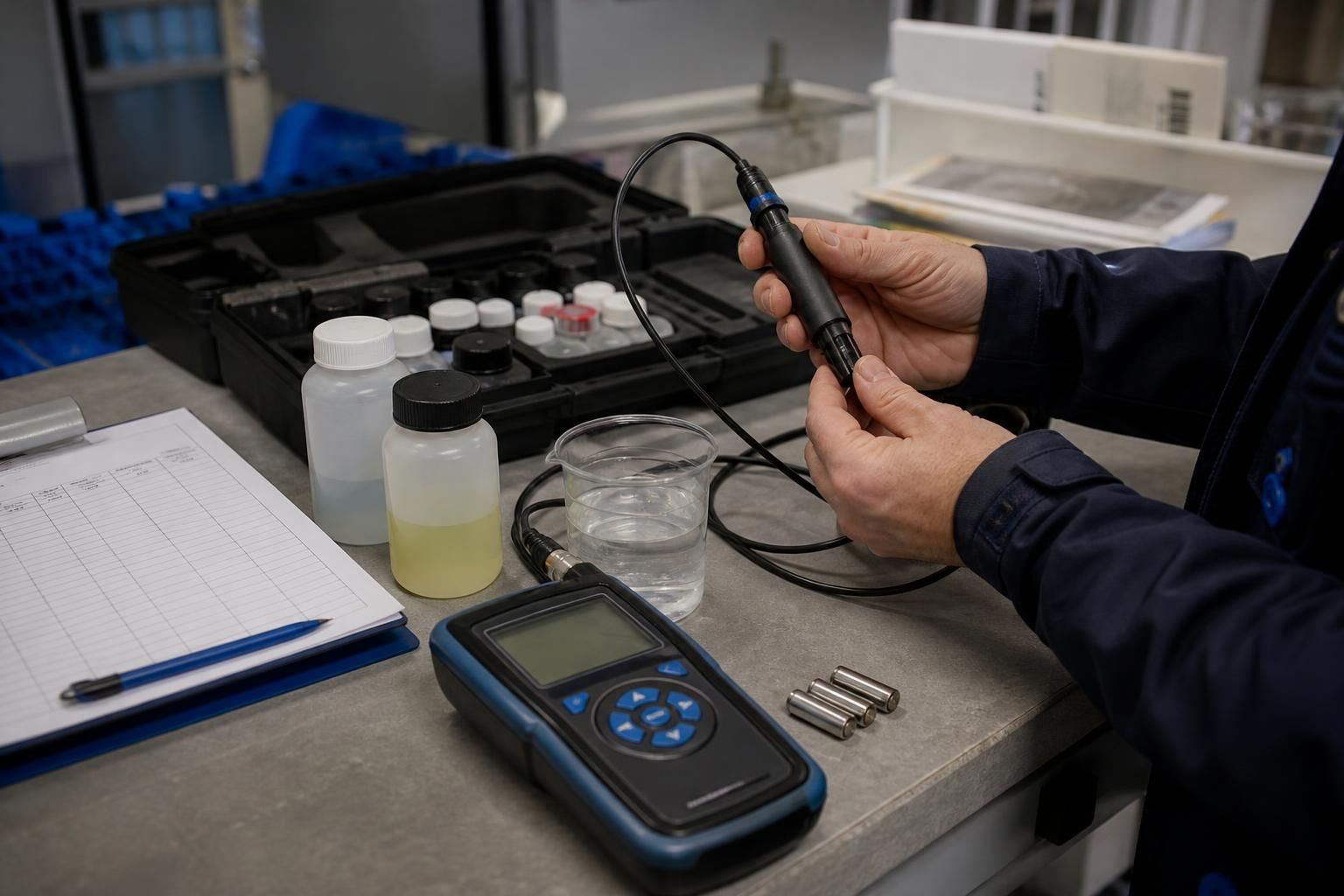
Water test chemistry equipment should be checked as a complete measuring system before sampling, not just as an individual instrument. The check should confirm that the selected test method, accessories, sample containers, operating conditions and data-recording process are all suitable for the water being examined and the result that needs to be reported.
Confirm the method and measurement range. Review the written test method before preparing the equipment. Check the determinand being measured, the required measurement range, the resolution of the instrument and any limits on the method. A test kit or meter may produce a reading, but that does not necessarily mean it is appropriate for every concentration, water type or compliance decision. Where a result could fall outside the method range, identify the approved dilution or alternative procedure before sampling rather than improvising at the point of use.
Check that the instrument configuration matches the method. This can include the selected parameter, measurement units, wavelength or programme, electrode type, titration endpoint and temperature setting. On multi-parameter equipment, an incorrect programme or unit can create a plausible-looking result that is nevertheless unsuitable for the intended assessment.
Inspect the parts that contact the sample. Examine probes, electrodes, cuvettes, cells, tubing, sample chambers, syringes, pipettes and stirring components for residue, staining, clouding, cracks or deterioration. Contact surfaces should be appropriate for the determinand and free from material that could carry over from a previous test. Cuvettes and optical cells need particular attention because fingerprints, droplets, scratches and deposits can affect light transmission. Use the cleaning and handling procedure specified for the equipment; avoid introducing cleaning agents or rinse water that could alter the sample.
Check that seals, caps, connectors and covers close correctly and that removable parts are fitted in the required orientation. For flow-through systems, confirm that the flow path is secure and free from trapped air where the method does not permit it. For titration equipment, inspect the delivery system for leaks, blocked tips and air bubbles. For electrochemical measurements, ensure the probe is maintained in the condition required by its operating instructions before it is used.
Verify the sample interface. Sampling bottles, beakers and transfer vessels should be compatible with the analysis and prepared in accordance with the sampling method. Confirm that the container type, volume and preservative requirements match the test. Do not transfer a sample through a vessel, funnel or hose that could add the substance being measured or remove it from the sample. If several parameters are being tested, establish the order of testing where exposure to air, light, agitation or another reagent could change a subsequent result.
Check that any filtration, digestion, extraction, dilution or temperature-conditioning equipment required by the method is present and assembled correctly. These preparation stages are part of the measurement process. A correctly functioning meter cannot compensate for a filter, pipette or dilution step that has been selected or used incorrectly.
Assess environmental and operating conditions. Confirm that the sampling and test location is appropriate for the equipment. Excessive heat, cold, moisture, vibration, direct sunlight or unstable power can affect operation or the sample itself. Allow equipment and samples to reach the conditions required by the method, where applicable, and avoid placing an instrument on a wet or contaminated surface. If the test depends on temperature compensation, measure or control temperature using the procedure specified for that method rather than assuming that the surrounding air temperature represents the sample.
For field work, check that the case or transport arrangement protects instruments, cells, probes and reagents from movement and contamination. Separate clean items from used items, and provide a defined place for waste and samples awaiting analysis. This reduces the risk of transferring residue from one test to another during a series of measurements.
Check the measurement sequence and quality controls. Establish which checks must be completed before the first sample and which must be repeated during the work. Depending on the method, this may include a blank, a control solution, a duplicate, a matrix check or a comparison with a reference material. The purpose is to identify contamination, carry-over, drift or an unexpected interference before results are accepted. Quality-control requirements should come from the relevant method, laboratory procedure or monitoring plan, rather than being chosen solely for convenience.
Review the equipment's operating instructions and confirm that the operator can carry out the test consistently, including sample mixing, reaction time, reagent addition, endpoint recognition and result capture. Reaction timing is particularly important for colour and reagent-based tests: starting the reading too early or too late can change the reported concentration. Use a timer or instrument function where the method requires controlled timing.
Check interference risks before collecting the sample. Consider whether turbidity, colour, disinfectant residual, suspended solids, biofilm fragments or other constituents could affect the chosen chemistry. An interference does not always make a test unusable, but it may require a preparation step, a correction, a different method or interpretation by a competent person. Record relevant observations about the sample, such as unusual appearance or odour, so that they can be considered alongside the numerical result.
If any part of the check fails, do not proceed on the assumption that the result can be corrected later. Quarantine the affected item or sample, identify the cause, and follow the documented corrective procedure. Where the issue could affect a result already obtained, mark that result for review and retain enough information to explain what happened. A clear pre-sampling check therefore supports both analytical reliability and defensible records for water hygiene and legionella monitoring.
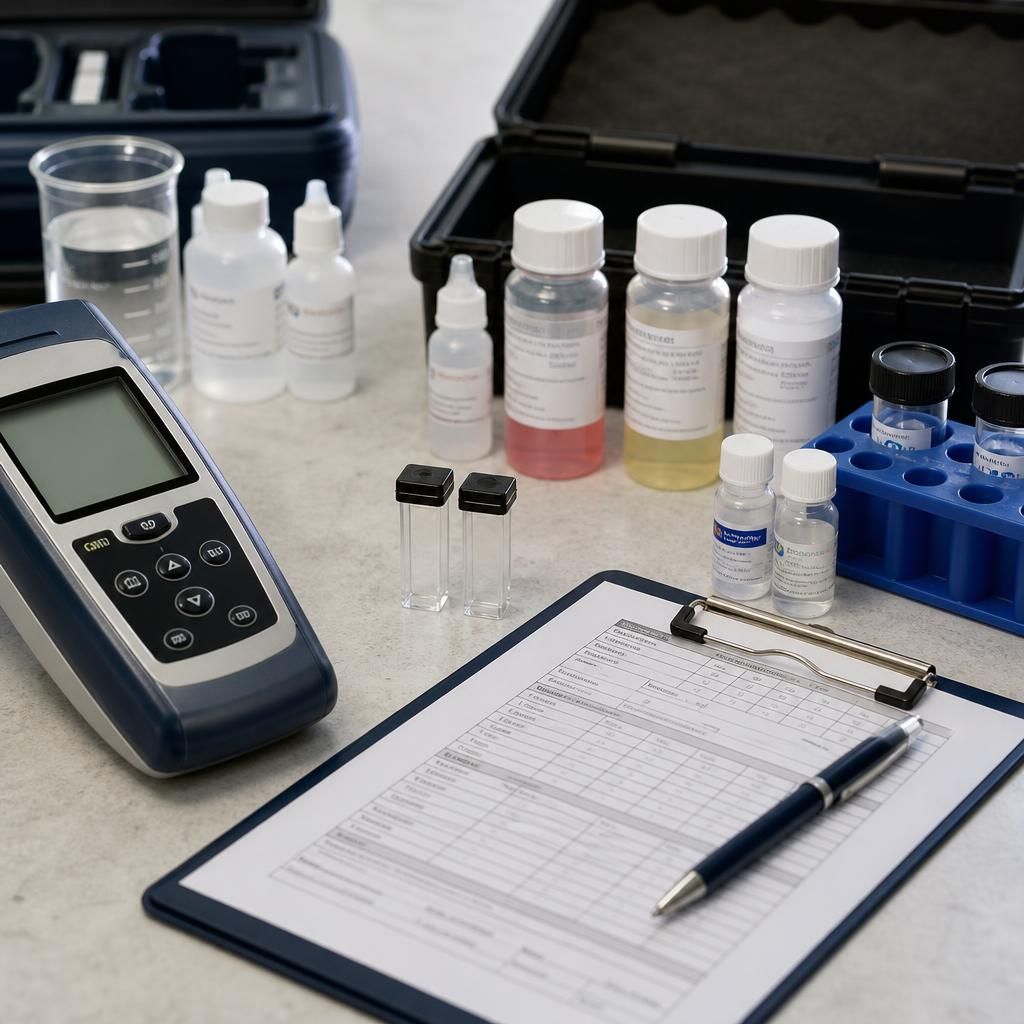
Reagent condition should be checked as carefully as the instrument. Confirm that each reagent is the one specified by the method, has been stored within the required conditions and remains suitable after opening or preparation. Inspect bottles for leakage, crystallisation, discolouration, damaged seals or contamination, and check that prepared solutions are labelled with their preparation and expiry details.
Do not use a reagent solely because its printed expiry date has not passed. Some methods impose a shorter usable period after opening or require protection from light, heat or moisture. If a reagent has been stored incorrectly, is inadequately identified or shows signs of deterioration, set it aside and follow the documented replacement procedure before sampling. This prevents a sound instrument from producing an unreliable result because the chemistry was compromised.
Need guidance on checking equipment before sampling?
If you need to review whether your sampling equipment and checking procedure are suitable for a water monitoring programme, speak to Blue Fish Water Management Ltd for practical guidance tailored to your system.