
When is laboratory water test chemistry more appropriate than field testing?
Laboratory water test chemistry is more appropriate than field testing when results require greater analytical sensitivity, independent quality control, or a formal report for compliance and investigation. It is particularly useful for complex samples, disputed results, trend analysis, and parameters that cannot be measured reliably with on-site equipment.
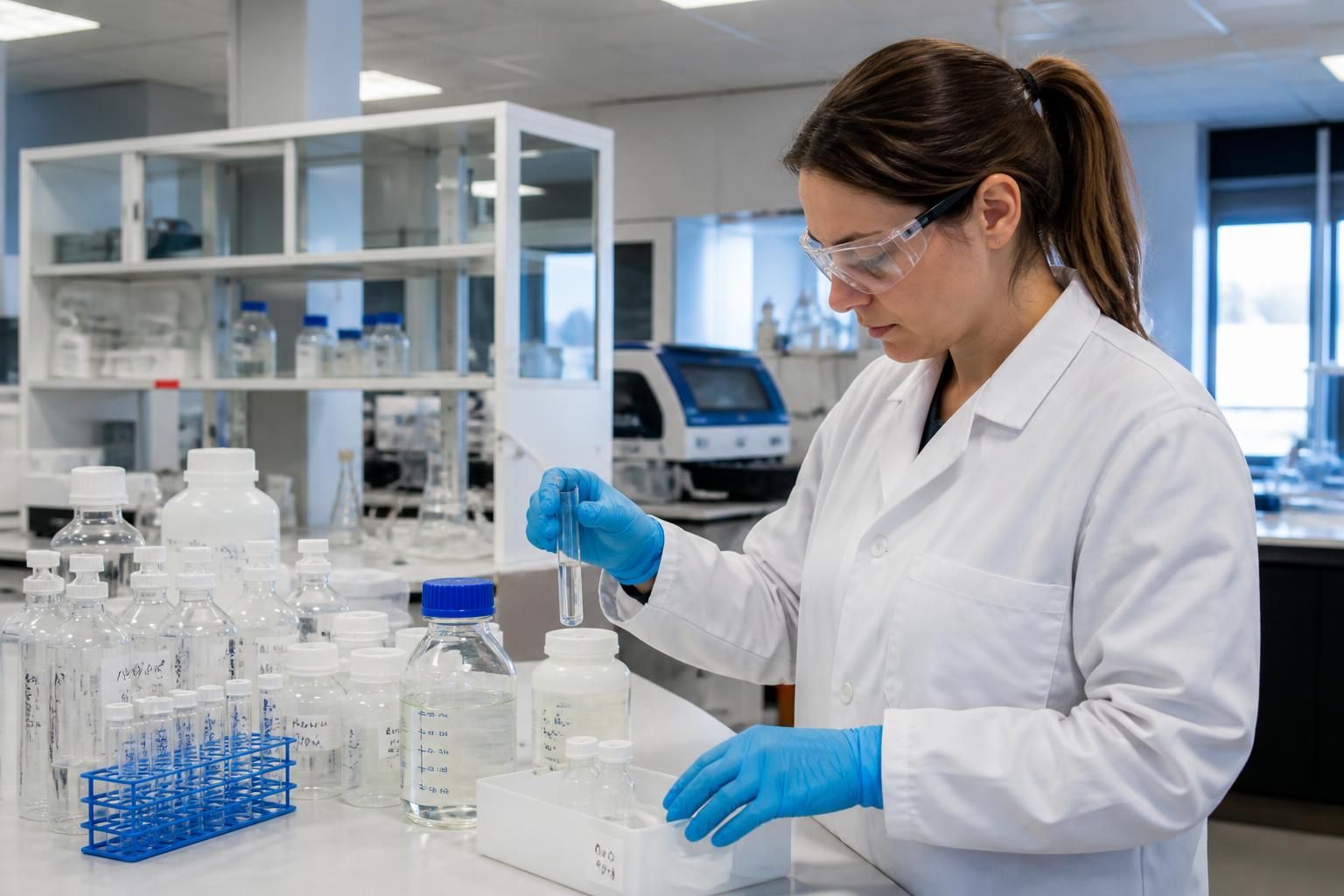
Laboratory water test chemistry is most appropriate when the decision depends on low-level measurement, a controlled analytical method, or evidence that must be reviewed independently. Field testing remains useful for immediate operational checks, but laboratory analysis is generally the stronger option where sample complexity, parameter stability, reporting requirements or result sensitivity could affect the conclusion.
The choice should be based on the purpose of the test rather than on whether laboratory or field testing is considered more sophisticated. A site team may need a rapid indication that a treatment process is operating correctly, while a compliance investigation may require a defensible result produced under documented laboratory procedures. These are different information requirements and may justify different testing methods.
- Use laboratory chemistry for trace or tightly controlled measurements. Some parameters require sensitivity or selectivity beyond that available from portable instruments or field kits. This can include metals, nutrients, specific chemical contaminants and other analytes where concentrations are close to a guideline, action level or reporting limit.
- Use laboratory analysis for complex or variable samples. Suspended solids, colour, disinfectant residuals, biological material, scale deposits or other substances can interfere with field reactions and readings. A laboratory method may include preparation, filtration, digestion or instrumental analysis designed to manage those effects.
- Use a laboratory when results need formal documentation. Investigation reports, compliance records, client assurance and decisions about remedial work may require a report showing the sample identity, method, result, units, reporting limit and any relevant qualifications. This is particularly important when results may be compared with a specification or reviewed by another party.
- Use laboratory testing when results will be compared over time. Trend analysis is more meaningful when samples are collected consistently and analysed using a defined method. Changes in equipment, reagent batches, operators or field conditions can make a series of field readings difficult to interpret unless the monitoring process is tightly controlled.
Field testing is often the better first choice for measurements that can be made reliably at the point of use and that change quickly after collection. Temperature, pH, conductivity, dissolved oxygen and some disinfectant measurements may be suitable for on-site assessment, depending on the system, instrument and required accuracy. Field results can show whether conditions are changing during a visit and can support immediate checks of dosing, circulation or treatment performance.
Laboratory testing becomes more appropriate where transport will not materially alter the result and the sample can be preserved correctly. Before sampling, check the laboratory's instructions for container type, volume, preservatives, storage temperature, maximum holding time and any requirements for filtration or separate containers. A technically advanced analysis cannot compensate for a sample that has been contaminated, exposed to unsuitable conditions or delivered outside the method's holding requirements.
The intended decision should also determine the sampling design. A single laboratory result may answer whether a particular outlet or storage vessel meets a defined criterion, but it may not explain why conditions vary across a system. Where the purpose is investigation, samples may need to be taken from the source, storage, distribution points, return circuits and representative outlets. Locations, dates, operating conditions and any treatment activity should be recorded so that the result can be interpreted in context.
For disputed or unexpected findings, consider repeating the sample through a controlled process rather than relying on one isolated result. Review the sampling technique, container, preservation, chain of custody, laboratory method, reporting limit and quality-control comments. If a field result and a laboratory result disagree, compare the sampling times and locations first. Differences may result from changes in the water between sampling and analysis, different measurement principles, or an instrument that was not checked or suitable for the concentration range.
A combined approach is often appropriate. Field measurements can provide immediate information during a site visit, while laboratory chemistry can provide confirmation or a more detailed assessment. For example, an operator may record temperature and disinfectant conditions on site, then submit selected samples for laboratory analysis of parameters that require greater sensitivity or more controlled preparation. The two datasets should be labelled clearly and interpreted according to the limitations of each method, rather than treated as interchangeable readings.
When selecting laboratory chemistry, confirm that the laboratory can analyse the required parameter using a method suitable for the water matrix and the decision being made. Check the method's reporting range, detection or reporting limit, sample preservation requirements, expected turnaround stated in the testing arrangement, and the way results are qualified. Also establish whether the result will be reported in the units required by the relevant specification or monitoring plan.
In practice, laboratory water test chemistry is the appropriate choice when the result must support a significant compliance, investigation or treatment decision and the required measurement cannot be demonstrated reliably in the field. Field testing is appropriate for controlled, immediate checks where the equipment, method and operator can achieve the necessary reliability. A written monitoring plan should state which parameters are measured on site, which are sent to a laboratory, the reason for the distinction and the action to take when results are outside the defined limits.

A laboratory result should be interpreted with its reporting limit and any qualification attached to it, rather than treated as an exact description of the whole water system. A result reported as below the reporting limit does not necessarily mean that the substance is absent; it means the laboratory has not measured it reliably above that method's defined threshold.
Review whether the report identifies an estimated result, a diluted sample, an analytical interference or another limitation. These comments can affect how confidently the result should be compared with an action level or specification. Also check whether the analysis represents the parameter required for the decision—for example, a result for dissolved material may not answer a question about total material.
This is one reason laboratory chemistry is more appropriate for significant decisions only when the report is read alongside the method information and the sampling context. Where a result appears close to a limit, its qualification and reporting basis may be as important as the numerical value itself.
Discuss Your Laboratory Water Testing Requirements
Discuss your laboratory water testing requirements with Blue Fish Water Management Ltd to identify an analytical approach that fits the parameter, sample type and decision involved.