
What should a water test chemistry equipment specification include?
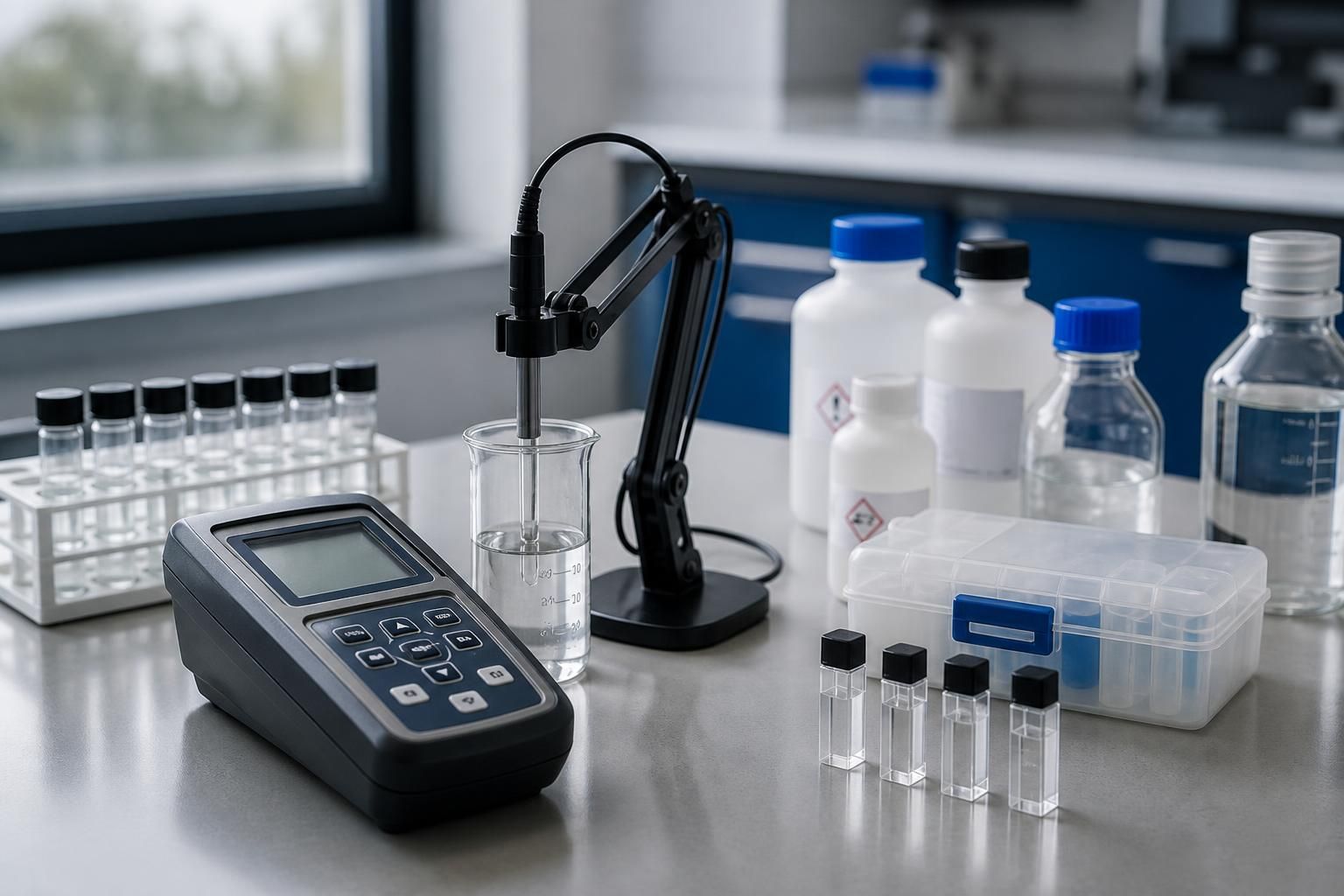
A water test chemistry equipment specification is a documented description of how the equipment will be used, which water matrices and chemical parameters it must handle, and what evidence is required to accept its results. A suitable specification links the testing process to the decisions that follow, such as investigating a change in water quality, confirming a treatment process or checking whether remedial work has been effective.
Define the intended application
Start by describing the water system, sampling locations and purpose of the testing. Equipment used for routine monitoring of a relatively consistent system may have different requirements from equipment used during fault investigation, commissioning or remedial verification. The specification should identify whether testing will be carried out at fixed sampling points, across multiple sites or in changing field conditions.
It should also state the expected sample types. Drinking water, process water, cooling-water systems, closed systems and wastewater can differ substantially in colour, turbidity, temperature, dissolved substances and chemical demand. Equipment that performs well with a clear sample may be unsuitable where suspended solids, heavy coloration or unusual chemistry affects the test reaction.
Describe the chemistry and method
For each parameter, specify the required analytical principle and method rather than naming only the equipment type. Possible approaches include reagent-based colour development, titration, electrochemical measurement or direct probe measurement. The selected method should be suitable for the concentrations expected and for the decisions made from the result.
Consider potential interferences explicitly. Oxidising agents, reducing agents, residual disinfectants, hardness, metals, colour and suspended material can alter some chemical reactions or sensor readings. The specification should identify any known interfering substances, the required pretreatment and whether a blank, correction or confirmation test is needed.
Where a method relies on reagents, state the required reagent format, shelf-life controls, storage conditions and compatibility with the instrument. Reagent systems should be sufficiently consistent for the intended monitoring process, with clear instructions for preparation, reaction time and disposal.
Set practical sample-handling requirements
The specification should explain how samples are collected and presented to the equipment. This includes the container type, minimum sample volume, mixing requirements, filtration or digestion, temperature considerations and the maximum time between collection and analysis. If the parameter can change rapidly after sampling, the process should define whether testing must occur at the sampling point or under controlled conditions.
For field use, include requirements for portability, protection from dust and moisture, readability in different lighting conditions, operation with gloved hands and safe transport between sampling locations. For laboratory or plant-room use, consider bench space, mains or battery power, drainage, ventilation and segregation from chemicals or contaminated equipment.
Include usability and workflow requirements
Equipment should fit the competence of the people carrying out the tests. The specification can require clear operating instructions, unambiguous result units, error messages, method selection safeguards and a defined process for invalid or unexpected results. If several operators or locations are involved, consistent workflows are particularly important.
Consider how many tests are likely to be completed in a session, how long each procedure takes, whether the equipment can be cleaned efficiently between samples and how easily consumables can be replenished. A technically capable instrument may be unsuitable if its preparation steps create avoidable contamination risks or make routine monitoring impractical.
Specify quality-control arrangements
A robust specification should require a documented way to identify drift, contamination, reagent deterioration and operator error. This may involve blanks, control materials, duplicate tests, independent checks or comparison with a suitable reference method. The controls selected should reflect the consequences of an incorrect result and the chemistry of the parameter being tested.
Define what happens when a control fails or a result is inconsistent with the condition of the system. The procedure may require the sample to be retested, the equipment to be examined, the reagents to be checked or the result to be referred for further investigation. This prevents a single unexplained reading from being treated as conclusive.
Address maintenance and lifecycle needs
The specification should cover cleaning, storage, replacement parts, sensor care and routine inspection. For reusable cells, probes or cuvettes, state the cleaning method and any materials that could damage the measurement surface. For reagent-based systems, identify how expired or opened reagents are controlled.
Also consider the equipment's expected service life, repair arrangements, software or firmware dependencies and the availability of compatible consumables. A procurement decision should account for the whole testing process, not just the initial purchase price. Consumable waste, specialist maintenance, recalibration requirements and operator training can materially affect long-term suitability.
Make results fit the management process
Finally, specify how test results will be reviewed alongside sampling records, system observations and other water-management information. Units, rounding rules, comments on sample condition and reasons for repeat tests should be consistent. Results should be sufficiently clear for a competent reviewer to distinguish a genuine change in water chemistry from a problem with sampling, reagents or equipment.
Before approving the specification, test it against representative samples and realistic operating conditions. A practical evaluation should confirm that the method is suitable for the actual water, that users can follow it consistently and that abnormal results trigger an appropriate follow-up process. This provides a stronger basis for equipment selection than relying on a catalogue description alone.
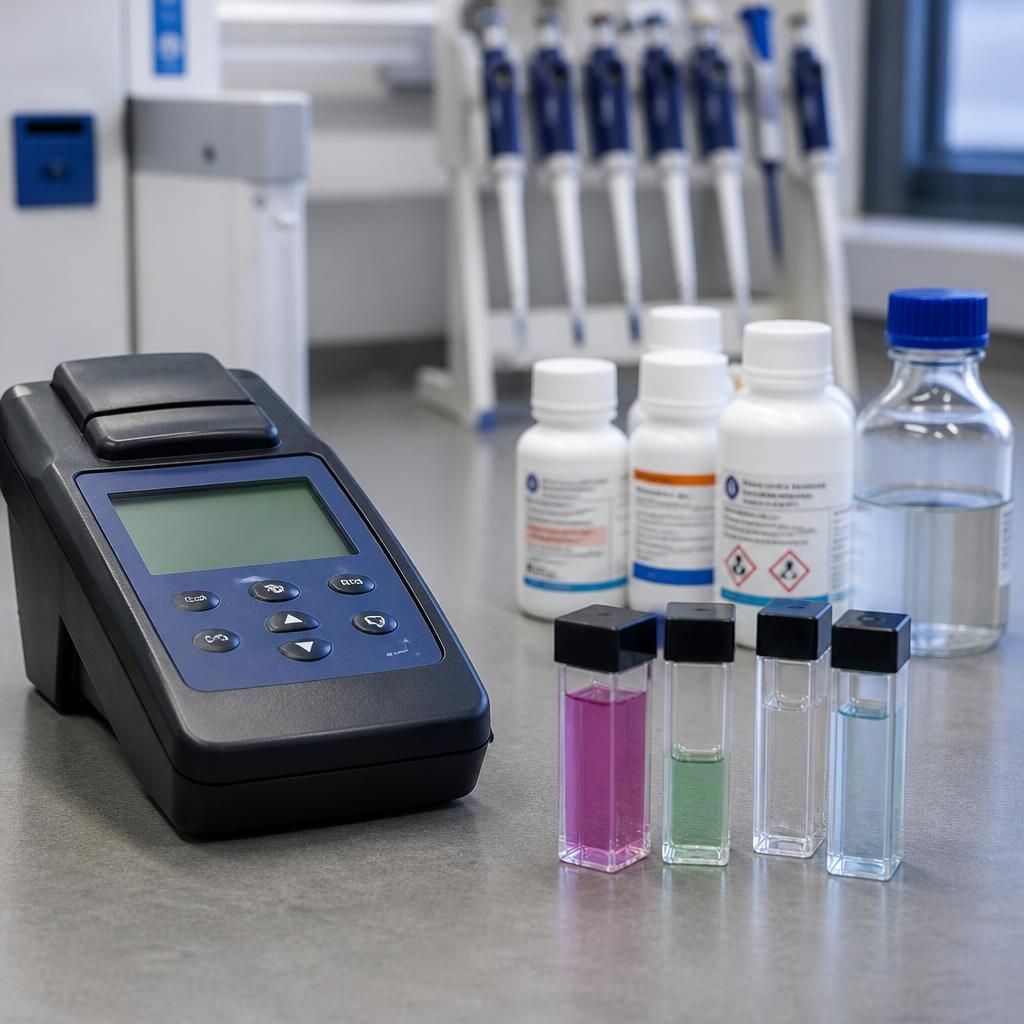
A specification should require evidence that the equipment’s stated performance applies to the intended water matrix and test method. Catalogue accuracy figures may be based on ideal solutions and may not represent results from coloured, turbid, treated or chemically complex samples.
Define the evidence needed before approval, such as method documentation, calibration certificates, validation data, reference-material results or comparison with an established procedure. The review should confirm that the claimed performance is relevant to the concentrations and decisions involved, rather than accepting a general manufacturer specification without examining its test conditions.
Discuss your water test chemistry equipment specification
If you are preparing a water test chemistry equipment specification, discuss the intended application and evidence requirements with Blue Fish Water Management Ltd. Their team can provide practical guidance on selecting an approach suited to your water-management process.