
When is UV treated water testing appropriate for a commercial water system?
UV treated water testing is appropriate where ultraviolet disinfection is used as part of a commercial water system’s control measures and the system’s performance needs to be verified. It is particularly relevant during commissioning, after servicing or remedial work, following suspected treatment failure, or where the water safety risk assessment identifies a need for additional monitoring.
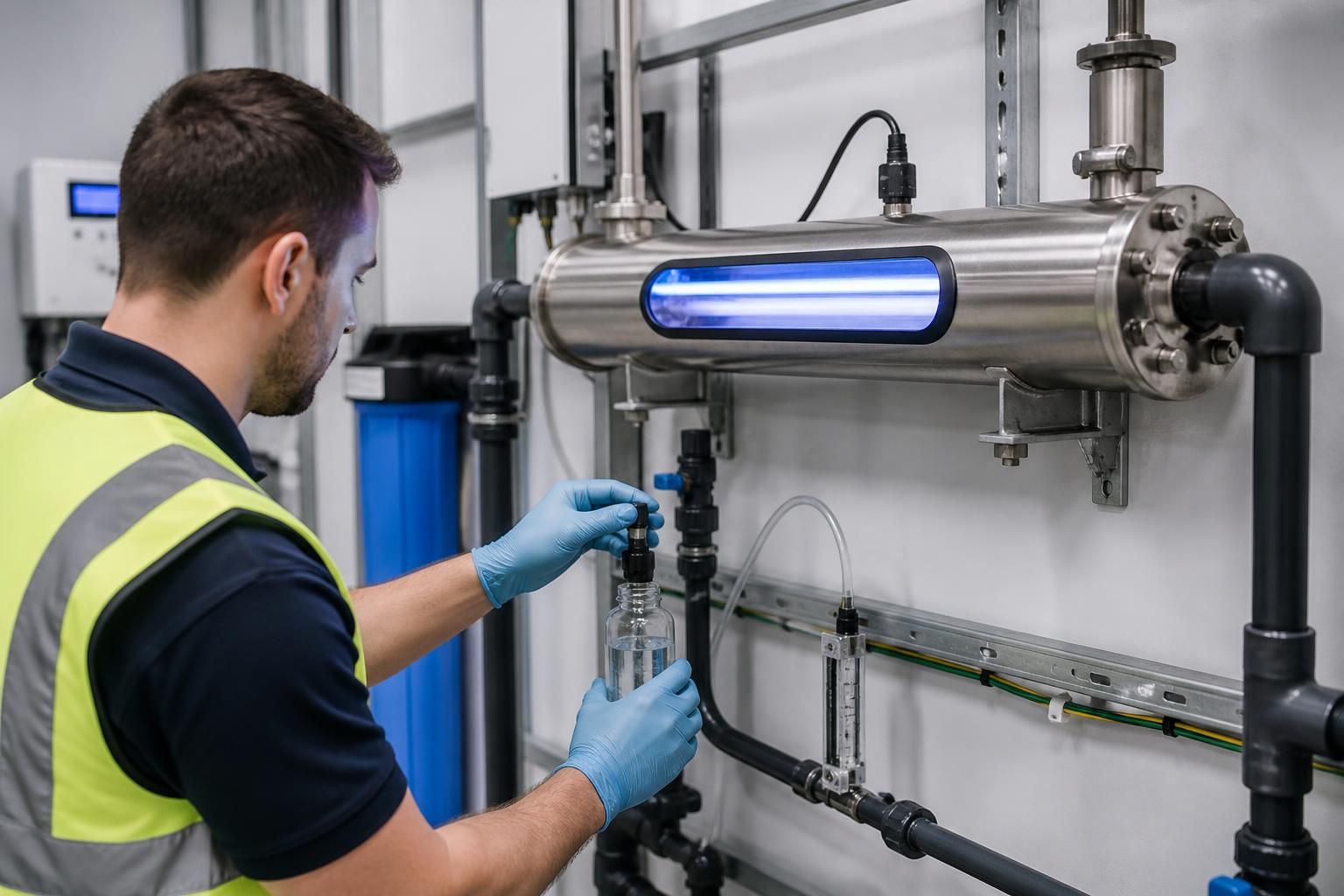
UV treated water testing is most appropriate for a commercial system where ultraviolet treatment is a defined microbiological barrier and the business needs evidence that the treated water remains suitable for its intended use. The decision should be based on the system’s water safety risk assessment, the quality of the incoming water, the sensitivity of users or processes, and the consequences of a loss of treatment.
It is particularly relevant where water is taken from a private or otherwise variable source, or where the supply is used in premises with heightened hygiene requirements. Examples may include healthcare-related environments, care settings, laboratories, food and drink operations, manufacturing processes, and facilities where water quality could affect vulnerable people or critical activities. The test programme should reflect the actual hazards rather than being applied as a routine exercise without a defined purpose.
Businesses should also consider UV treated water testing where the system operates at a point of use or serves a limited part of a larger supply. A result from the incoming supply may not demonstrate the condition of water at the outlet. Storage tanks, pipework, stagnation, temperature changes, dead legs and poorly maintained outlets can introduce risks after treatment. Sampling locations therefore need to show whether the UV barrier is effective and whether the distribution system is maintaining water quality.
The type of evidence required depends on what the business is trying to establish. Microbiological analysis can help assess whether organisms are present in the water, while operational checks may be needed to confirm that the UV unit is receiving suitable flow, has adequate lamp performance and is being used within its designed operating conditions. Water characteristics such as turbidity and ultraviolet transmittance can also affect treatment performance. A laboratory result should therefore be interpreted alongside information about the equipment and the wider water system.
- Source water: Is the incoming water quality consistent, and are there known microbiological or physical risks?
- Intended use: Could users, products, processes or equipment be harmed by inadequate microbiological control?
- System design: Is UV treatment positioned before storage, at a point of entry, or close to the final outlet?
- Distribution: Could the treated water become contaminated or deteriorate after passing through the UV unit?
- Monitoring arrangements: Are sampling points, test methods and action limits defined in the water safety plan?
- Maintenance history: Are lamp replacement, cleaning, sensor checks and servicing recorded and linked to the monitoring programme?
UV treated water testing is less informative when it is used as a substitute for understanding the system. Ultraviolet treatment does not normally remove particles, dissolved chemicals, metals, salts or other non-microbiological contaminants. It also does not provide a lasting disinfectant residual in downstream pipework. A satisfactory sample at the UV outlet cannot, by itself, demonstrate that storage and distribution are hygienically controlled.
Testing may therefore need to be combined with other controls, such as source-water assessment, tank inspection, temperature management, cleaning, flushing, maintenance and suitable sampling elsewhere in the system. The appropriate combination depends on the risk assessment and the purpose of the water. For example, a system supplying process water may require different evidence from one supplying outlets used for washing, drinking or other direct contact.
Results should be reviewed against the system’s documented criteria rather than considered in isolation. A single acceptable result does not remove the need for planned monitoring where the underlying risk remains. Conversely, an unexpected result should prompt a review of sampling technique, UV operating conditions, recent changes to the system and possible contamination in downstream pipework.
For a commercial premises, UV treated water testing is appropriate when it answers a clear water safety question and forms part of a controlled monitoring arrangement. The scope, sampling points and frequency should be set by a competent person who understands both ultraviolet treatment and the complete water system. Blue Fish Water Management can help businesses assess whether testing is proportionate, interpret results in context and connect the findings with wider water hygiene and compliance controls.
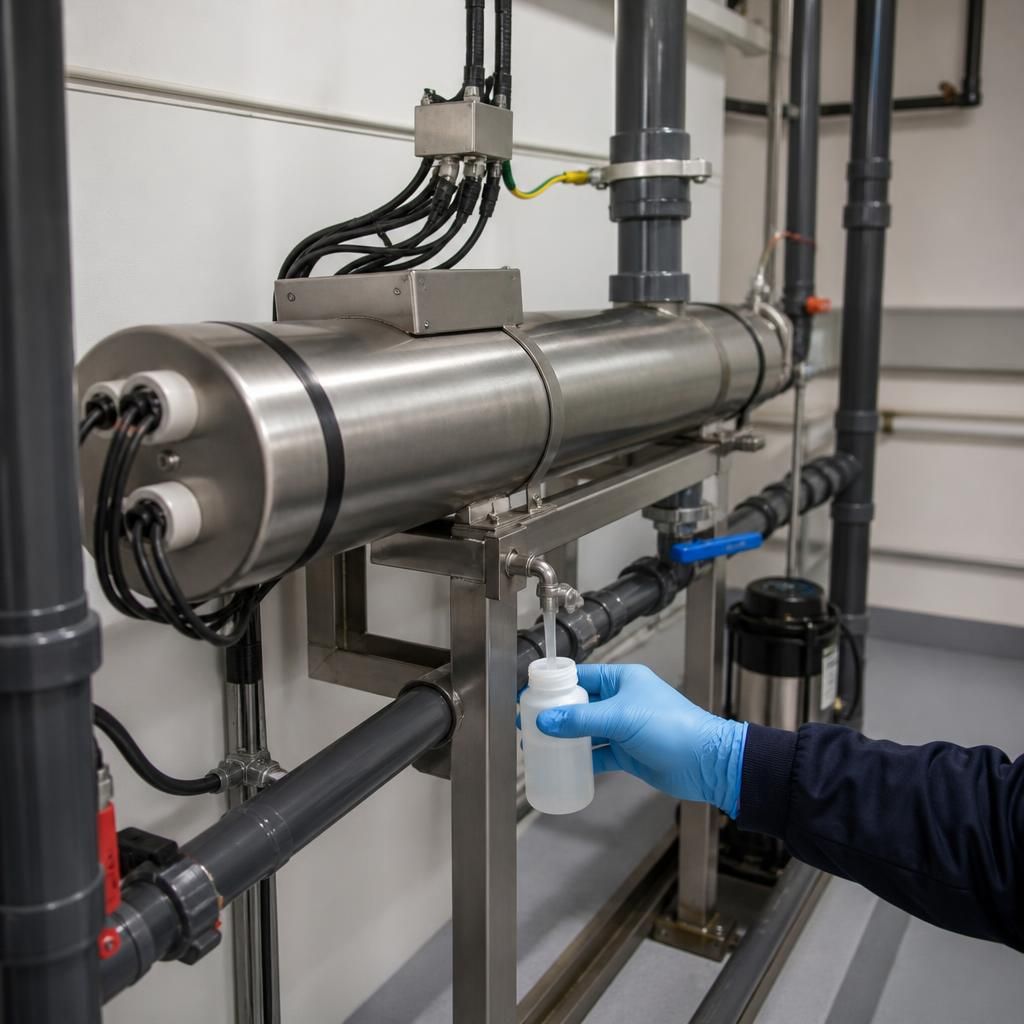
UV treated water testing is most useful when it is linked to a specific decision, rather than scheduled without reference to the system’s operation. A business may use a baseline sample to confirm performance when a UV unit is first brought into service, an event-based sample after a significant change or interruption, or an investigative sample when monitoring or operational records indicate that treatment may not have performed as expected.
The purpose of the sample should be recorded with the result. This helps the responsible person distinguish between evidence of normal operation and evidence gathered because a particular concern has arisen. The record should identify the relevant part of the system, the reason for sampling, the operating conditions at the time, and any action required if the result does not meet the business’s defined criteria.
Discuss whether UV treated water testing is appropriate for your commercial water system
If you are unsure whether your commercial water system requires UV treated water testing, discuss the system’s treatment objectives and monitoring needs with Blue Fish Water Management. Their specialists can help identify an appropriate next step based on the system’s documented water safety arrangements.