
What evidence should UV treated water testing provide?
UV treated water testing should provide documented evidence that the ultraviolet system is operating effectively, including relevant performance checks and results. It should also record water quality findings, sampling details and any interpretation needed to demonstrate whether the system is being managed in line with applicable water safety requirements.
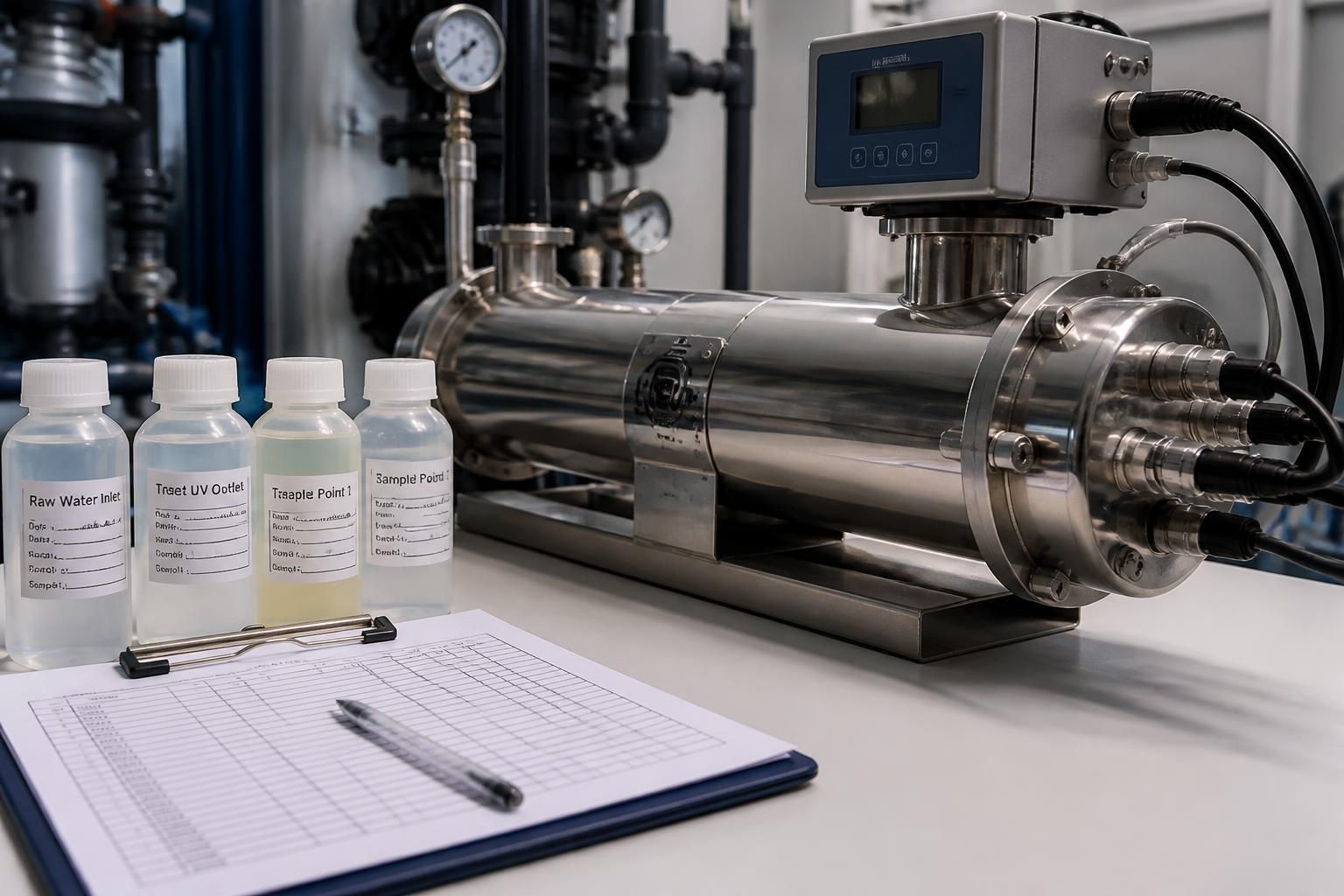
Evidence from UV treated water testing should show, in a traceable way, that the treatment system was operating under suitable conditions and that the water sampled met the relevant quality expectations. A useful evidence pack links system performance, sample results, operating records and any corrective action, rather than presenting an isolated laboratory result.
System performance evidence should identify the equipment tested and the conditions under which it was assessed. This may include:
- the system location, asset reference and intended point of use;
- the UV unit’s make, model and serial number, where available;
- the UV intensity or dose indication recorded during the check;
- flow rate, water temperature and UV transmittance where these affect treatment performance;
- lamp status, operating hours, sleeve condition and maintenance status;
- the operation of alarms, warning indicators, automatic shutdowns or bypass controls; and
- the date, time and identity of the person completing the inspection or test.
These details help establish whether the unit was being assessed in its normal operating state. A satisfactory result is less meaningful if the report does not show which equipment was tested or whether the system was running at its usual demand and flow conditions.
Where the UV system is critical to water safety, records should also demonstrate that it has been commissioned, validated or otherwise checked against the design requirements. This may include commissioning documentation, manufacturer operating parameters, calibration information for monitoring instruments and maintenance records. The evidence should make clear whether a reading represents a routine operational check, a periodic verification exercise or a formal validation activity, as these serve different purposes.
Water sample evidence should identify exactly where and how each sample was taken. A report would normally record the sample point, date and time, sampler, sample reference, sample type and any relevant conditions at the time of collection. For example, it may be important to distinguish between water entering the UV unit, water leaving it and water at a downstream outlet. This distinction allows the result to be considered in relation to the treatment process and the wider distribution system.
Laboratory documentation should state which tests were performed, the analytical method used, the result obtained and the applicable interpretation or reporting limit. Where microbiological examination is undertaken, the report should identify the organisms or indicators tested and explain whether the result is satisfactory against the criterion being applied. The report should also be attributable to the correct sample, with matching sample references and sufficient information about transport and receipt to support confidence in the result.
Results should not be considered separately from the operating record. A low or satisfactory microbiological result does not, by itself, prove that the UV unit will continue to provide effective treatment. Conversely, an unusual result should be investigated alongside UV intensity, lamp condition, flow, water quality entering the unit, recent maintenance and the possibility of contamination after treatment.
Operational records provide the continuity that individual tests cannot. Depending on the system and risk assessment, these may include routine UV monitor readings, alarm checks, lamp replacement records, cleaning of the quartz sleeve, pre-filtration maintenance, planned servicing and records of any bypass or shutdown. Entries should show when a deviation occurred, what was found and how it was dealt with. Missing or inconsistent entries can make it difficult to establish whether a test result represents normal control or a temporary condition.
The evidence should also show how results were reviewed. A competent review normally records whether the findings were acceptable, whether trends require attention and whether further sampling, maintenance or remedial work is needed. If a result is unsatisfactory, the associated record should document the decision taken, the responsible person, any restriction or isolation of the affected supply, the follow-up test and the basis for returning the system to normal operation. The exact response should reflect the risk assessment and the nature of the finding.
For a business, the final record should be organised so that it can be understood during internal review, contractor handover or a water safety compliance audit. A practical file may contain the system description, current risk assessment, commissioning or validation information, routine monitoring sheets, service records, laboratory reports, review notes and evidence of actions completed. Records should be retained in accordance with the organisation’s water safety management arrangements and be protected from alteration or loss.
It is also important to define the limits of the evidence. UV treatment can address microorganisms as water passes through the unit, but it does not normally provide a disinfectant residual throughout downstream pipework. A satisfactory UV test therefore does not remove the need to manage storage tanks, outlets, dead legs, temperature, cleanliness, stagnation and other sources of risk in the wider water system. The evidence is strongest when it demonstrates both effective treatment at the unit and suitable control of the system beyond it.
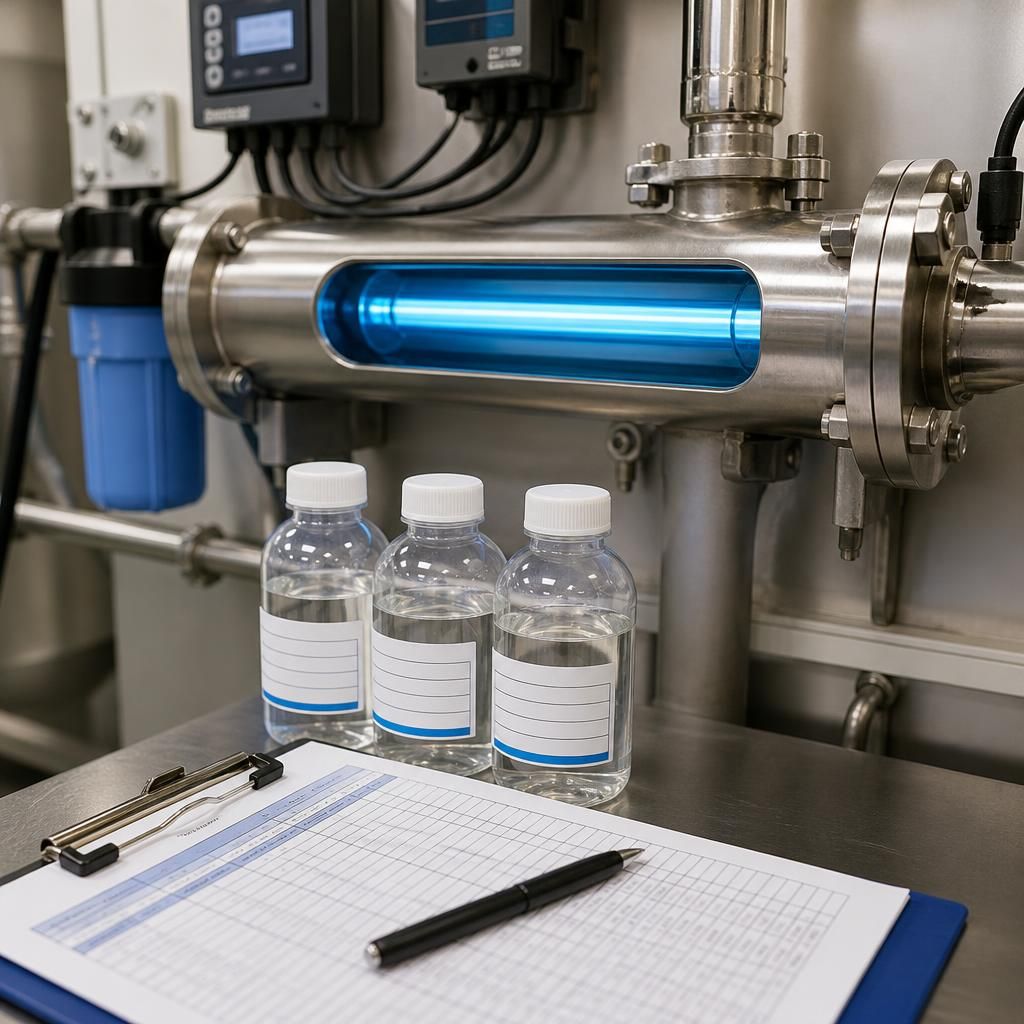
Evidence should also demonstrate that the testing was carried out by suitably competent people using methods appropriate to the water system and the question being investigated. For laboratory work, this means identifying the laboratory and confirming that any claimed UKAS accreditation covers the relevant examination method, rather than assuming that accreditation applies to every test it offers.
A robust record may therefore include:
- the laboratory’s name and accreditation status, where applicable;
- the method or standard used for each examination;
- the scope of any accreditation relevant to the reported test;
- the competence or authorisation of personnel carrying out sampling and interpretation; and
- any limitations that could affect how the result should be used.
This information helps a business distinguish independently supported evidence from an informal screening check. It also gives an auditor a basis for deciding whether the reported findings are sufficiently reliable for the system’s risk profile and intended use.
Need help reviewing your UV treated water testing evidence?
Contact Blue Fish Water Management Ltd to discuss whether your UV treated water testing arrangements provide the assurance your business requires.