
Can UV treated water testing support a water safety compliance audit?
Yes. UV treated water testing can support a water safety compliance audit by providing evidence that ultraviolet treatment is operating effectively and that treated water meets the required testing criteria. It should form part of wider documentation, including system monitoring, maintenance records and legionella control measures, rather than replace a complete audit.
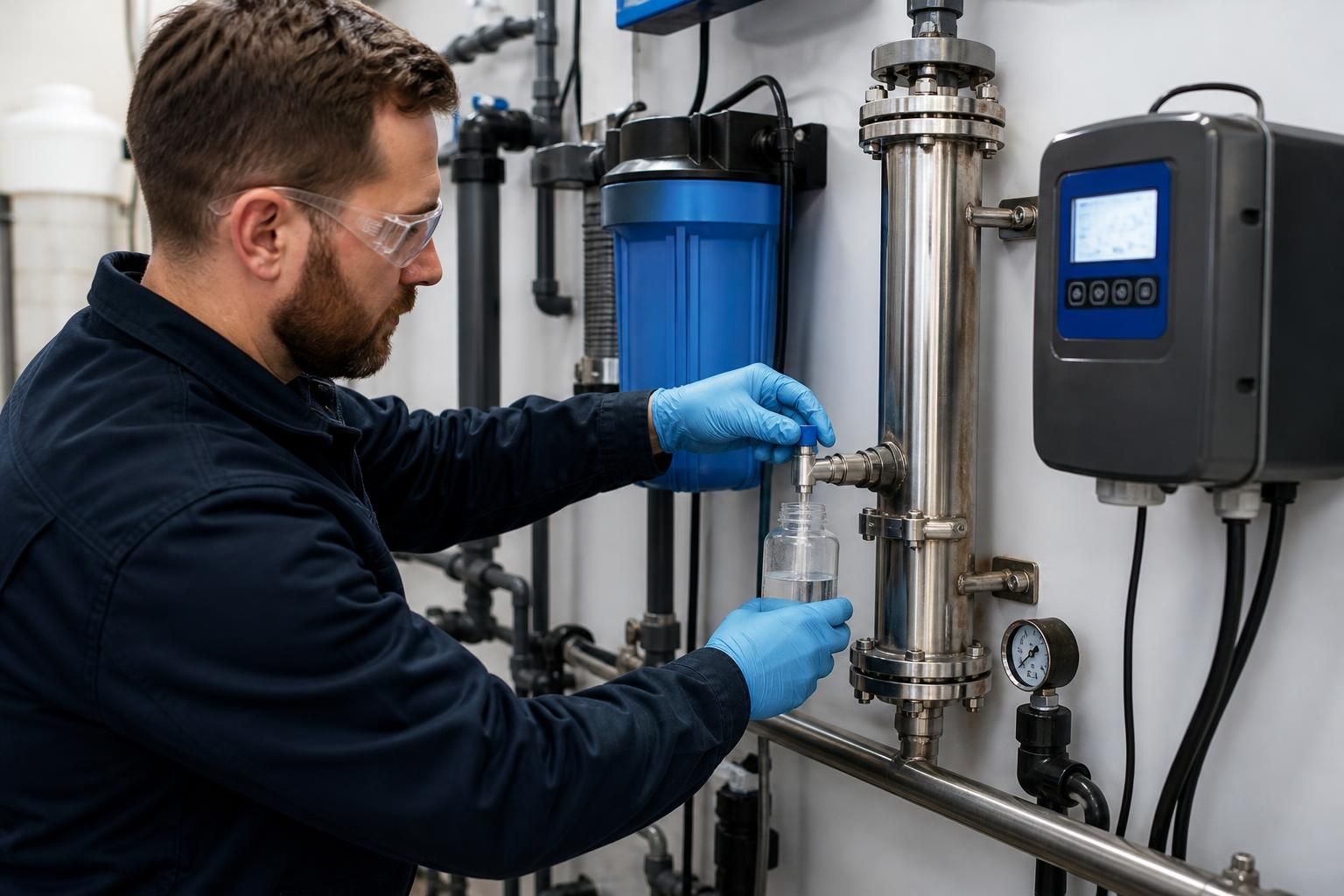
UV treated water testing can support a water safety compliance audit by showing whether ultraviolet disinfection is being managed, monitored and verified as part of the water system’s control strategy. It is useful audit evidence, but it does not by itself demonstrate that every part of a premises’ water system is safe or that the overall legionella control programme is effective.
What an auditor can establish from the testing
Results can help an auditor assess whether the UV unit is producing treated water that meets the applicable testing requirements at the time and location sampled. The value of the result depends on the quality of the supporting information. A report should be considered alongside the sampling date, sample point, system identity, test method, laboratory details, result interpretation and any relevant limitations.
Where samples are taken at more than one point, the results may help identify whether water quality changes between the UV unit and points of use. A satisfactory result immediately downstream of the treatment unit does not necessarily represent conditions elsewhere in the system. Storage tanks, pipework, dead legs, low-use outlets, temperature issues, biofilm and contamination introduced after treatment may still require investigation.
Records that strengthen the audit trail
- the UV system’s location, purpose and relationship to the wider water system;
- the sampling plan, including sample points, frequency and reasons for selecting them;
- laboratory reports and clear identification of the samples tested;
- UV intensity, dose or other operating information recorded by the system, where applicable;
- alarm records, fault notifications, bypass events and actions taken;
- lamp replacement, sleeve cleaning, servicing and calibration records;
- maintenance findings and evidence that defects were closed out; and
- reviews of results by the person responsible for water safety.
This documentation allows the auditor to compare test results with the intended operating requirements and determine whether monitoring is consistent rather than occasional or undocumented. It also helps establish whether an unsatisfactory result was isolated, repeated, linked to equipment performance or associated with another part of the distribution system.
How testing fits into a compliance audit
A water safety compliance audit normally examines governance, risk assessment, monitoring, maintenance, staff responsibilities, records and corrective action. UV testing contributes to the monitoring and verification elements. The auditor may compare the results with the system schematic, written control scheme, risk assessment and maintenance schedule to check that the testing programme reflects the actual risks and system configuration.
The audit should also consider whether the treatment is appropriate for the water being supplied and whether the equipment is correctly positioned and operated. Factors such as flow rate, UV transmittance, fouling, lamp age, sensor performance and unplanned bypasses can affect treatment performance. If these factors are not controlled or recorded, a satisfactory laboratory result may provide only limited assurance.
Important limitations
UV treatment does not normally provide a continuing disinfectant residual throughout downstream pipework. Consequently, UV treated water testing should not be used as a substitute for controlling water temperature, circulation, storage, stagnation, cleanliness, outlet condition or other relevant legionella risks. A compliance audit should assess how these controls work together and whether the people responsible understand the limitations of the UV system.
Test results also need to be interpreted in context. One result may not explain a recurring failure, a fluctuating operating condition or contamination that occurs between sampling events. Trends, repeat samples, operational records and site observations can provide a more reliable basis for deciding whether the control is working as intended.
Using an unsatisfactory result constructively
An unsatisfactory result should lead to a documented review rather than simply being filed. The review should consider the sampling process, UV operating data, recent maintenance, alarm history, changes in flow or demand, possible bypasses and conditions at downstream outlets. The responsible person can then record the immediate control measures, further investigation, remedial work, repeat testing and the decision to close the action.
For audit purposes, the strongest evidence is not a collection of isolated certificates but a traceable record showing what was tested, what the result meant, how it was reviewed and what happened afterwards. UV treated water testing therefore supports compliance most effectively when it is integrated into the site’s documented water safety management system and overseen by a competent person.
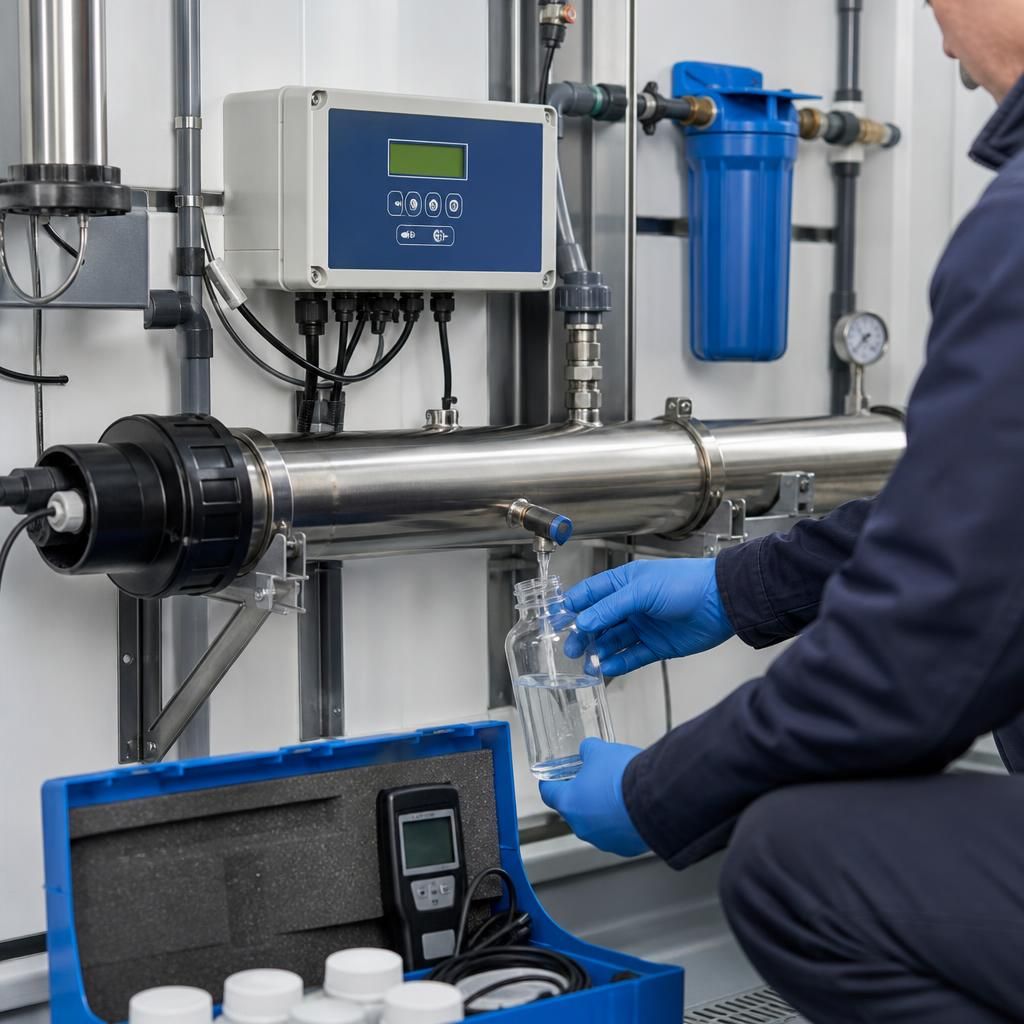
UV treated water testing supports an audit most effectively when it distinguishes validation from routine verification. Validation considers whether the treatment arrangement is suitable for the intended flow, water quality and installation conditions. Verification then checks whether that arrangement continues to perform as required during normal operation.
This distinction helps an auditor determine whether evidence relates to the original system design or to its current condition. A business should therefore retain the relevant commissioning or validation information alongside later test results, so changes in usage, equipment condition or operating parameters can be assessed against the basis on which the UV control was accepted.
Discuss Your UV Treated Water Testing Requirements
Discuss your UV treated water testing requirements with Blue Fish Water Management Ltd to clarify the evidence needed for your compliance audit. We can help you identify an appropriate testing scope and documentation approach for your water system.