
What should businesses do after unsatisfactory UV treated water test results?
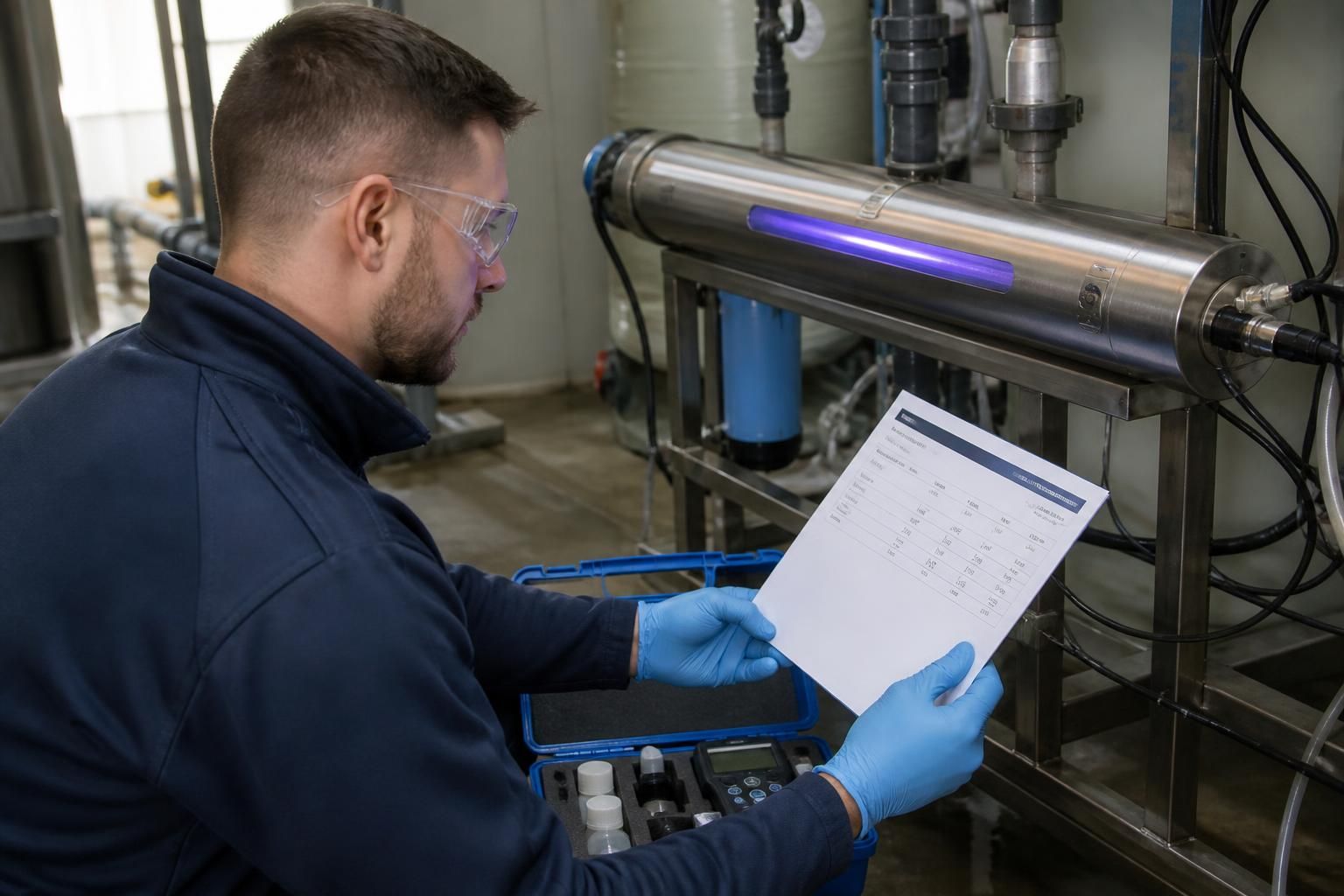
An unsatisfactory result from UV-treated water should be treated as evidence that the water cannot yet be relied upon for its intended use. The business should restrict any higher-risk use where appropriate, establish whether the result reflects contamination, inadequate treatment or a sampling problem, correct the underlying cause, and obtain documented satisfactory follow-up evidence before normal reliance on the supply is restored.
Interpret the result in context. The word “unsatisfactory” does not by itself identify the cause or the level of risk. The responsible person should review the organism detected, the reported concentration, the sampling point, the intended use of the water and any applicable specification or control standard. A result from a drinking-water outlet may require a different response from one taken upstream of treatment, from a storage tank or from a process-water outlet. Results should also be considered alongside previous trends, complaints, changes in source quality and any recent work on the installation.
Microbiological results should be discussed with the laboratory or competent water hygiene professional where their meaning is unclear. The review should establish whether the sample was collected into a suitable sterile container, identified correctly, transported within the required conditions and taken from a representative location. A sampling error must not be assumed simply because the result is unexpected, but sample integrity is an important part of deciding whether repeat sampling is valid.
Protect people and preserve evidence. Until the significance of the result is understood, the business should consider proportionate restrictions on drinking, food preparation, personal washing, clinical use or other activities involving direct contact or ingestion. The appropriate measure depends on the result and the users exposed. For example, a site may need to isolate an outlet, provide an alternative supply or introduce a temporary prohibition notice while the investigation takes place. Any restriction should be communicated to affected employees, contractors, visitors and responsible managers in terms they can follow.
Do not discard or alter relevant evidence before the cause has been examined. Retain the laboratory report, chain-of-custody details, sampling records, UV operating information, maintenance history, alarm records, source-water results and details of any recent changes. These records help distinguish an isolated sample finding from a recurring control failure.
Check the complete treatment arrangement. A UV unit only disinfects water that passes through it under suitable operating conditions. The investigation should therefore examine more than whether the lamp is illuminated. Relevant checks may include:
- lamp age, operating hours and replacement records;
- quartz sleeve cleanliness and signs of fouling or damage;
- UV intensity readings, alarms, interlocks and calibration records;
- flow rate and whether the unit has been exposed to flow above its designed capacity;
- pre-filtration, turbidity and conditions that could shield microorganisms from UV exposure;
- power interruptions, bypass arrangements, valves and automatic shut-off functions;
- storage tanks, pipework, dead legs and outlets downstream of the UV unit; and
- the source itself, including recent environmental contamination, maintenance or changes in abstraction or supply conditions.
Contamination may therefore occur before treatment, because treatment performance has fallen, or after treatment through storage and distribution. Replacing a lamp without examining downstream hygiene can leave the underlying problem unresolved. Conversely, cleaning pipework without checking UV dose, flow and alarm functions may allow the problem to recur.
Apply corrective action based on the findings. Actions may include servicing or cleaning the unit, replacing consumable components, repairing alarms or interlocks, correcting excessive flow, improving filtration, cleaning and disinfecting storage or distribution components, removing stagnation points, or addressing a defect in the source. Any chemical disinfection or remedial work should be planned and controlled by a competent person, with attention to chemical safety, compatibility, flushing and the effect on users and equipment.
The business should also review whether its operating instructions are adequate. Staff responsible for the system should know what an alarm means, when the supply must be isolated, who can authorise its return to use and what records must be completed. Maintenance intervals should be based on the equipment requirements, water conditions, operating pattern and the findings of the investigation rather than on an assumption that the UV unit is self-managing.
Verify before returning the supply to normal use. Follow-up samples should be taken from locations capable of demonstrating that the corrective action has worked. Depending on the investigation, this may involve testing the treated outlet, source water, storage and representative downstream points. The sampling plan should be proportionate to the original finding and agreed with the laboratory or competent adviser. One satisfactory result may not fully demonstrate control where contamination was widespread, repeated or associated with a continuing system defect.
Return-to-use decisions should be made by the person responsible for water safety, using the investigation record, completed remedial actions and follow-up results. If results remain unsatisfactory, the business should maintain the relevant restrictions, escalate the investigation and review whether the treatment method, system design or source is suitable for the intended application.
Finally, update the water safety records and risk assessment to reflect what happened, why the result occurred, which controls were changed and how effectiveness will be checked. A competent water hygiene provider can support laboratory testing, system investigation, compliance review and remedial planning where the business does not have the necessary expertise in-house.
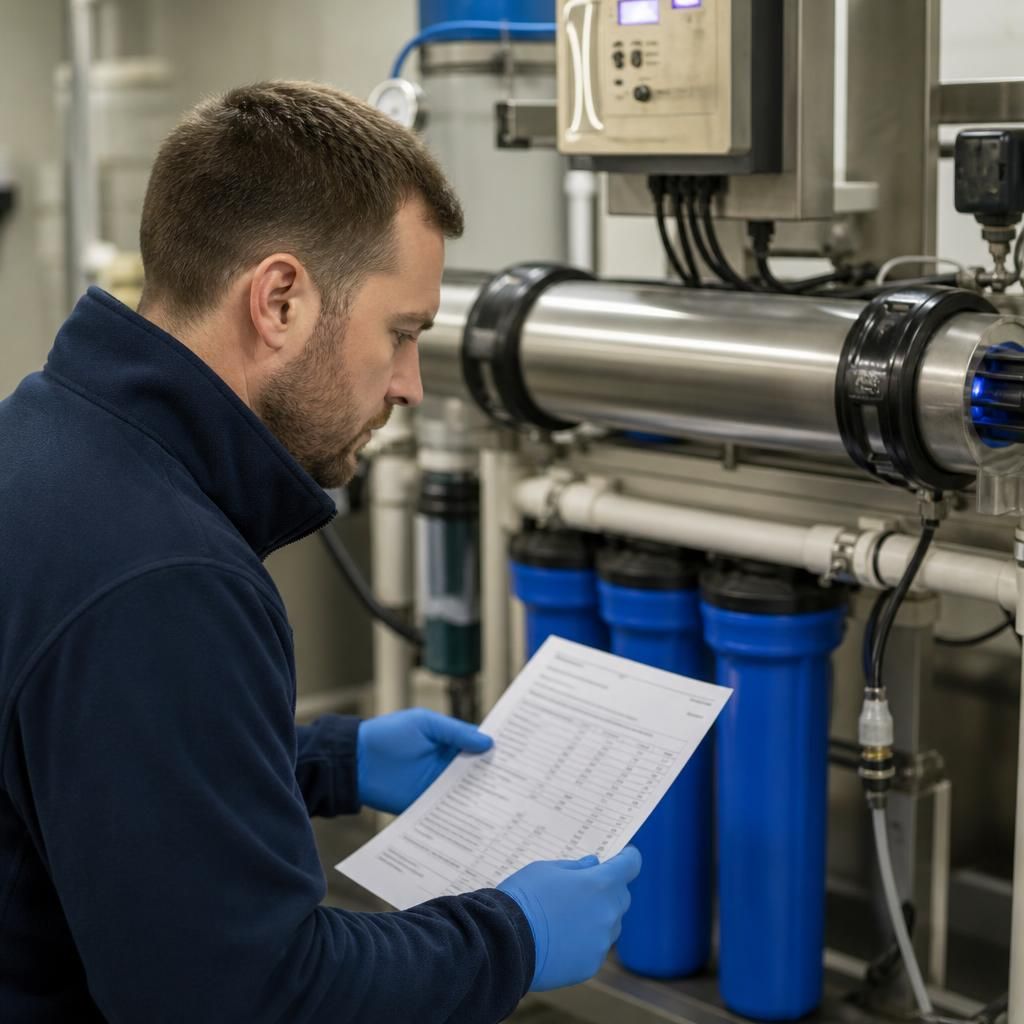
Return to normal use should be treated as a documented decision, not an automatic consequence of receiving one satisfactory follow-up result. The responsible person should confirm that the original finding has been investigated, the relevant corrective work is complete and the evidence relates to the outlets and conditions that matter to users.
A useful close-out record should identify:
- the original result and the potential exposure it represented;
- the cause identified, or the remaining uncertainty where no single cause was confirmed;
- the corrective actions completed and any controls that were changed;
- the follow-up samples reviewed and why their locations were appropriate; and
- the person who authorised normal use and the monitoring arrangements that will continue.
This creates a clear audit trail and prevents an isolated satisfactory result from masking an unresolved weakness in the water system. Where the investigation identifies a recurring or structural problem, the record should remain open until the business has decided whether further remediation, system modification or a different water treatment approach is required.
Discuss your unsatisfactory UV-treated water test results
Discuss your unsatisfactory UV-treated water test results with Blue Fish Water Management Ltd for expert advice on investigation, follow-up testing and any required remedial work.