
Who should oversee UV treated water testing in a business?
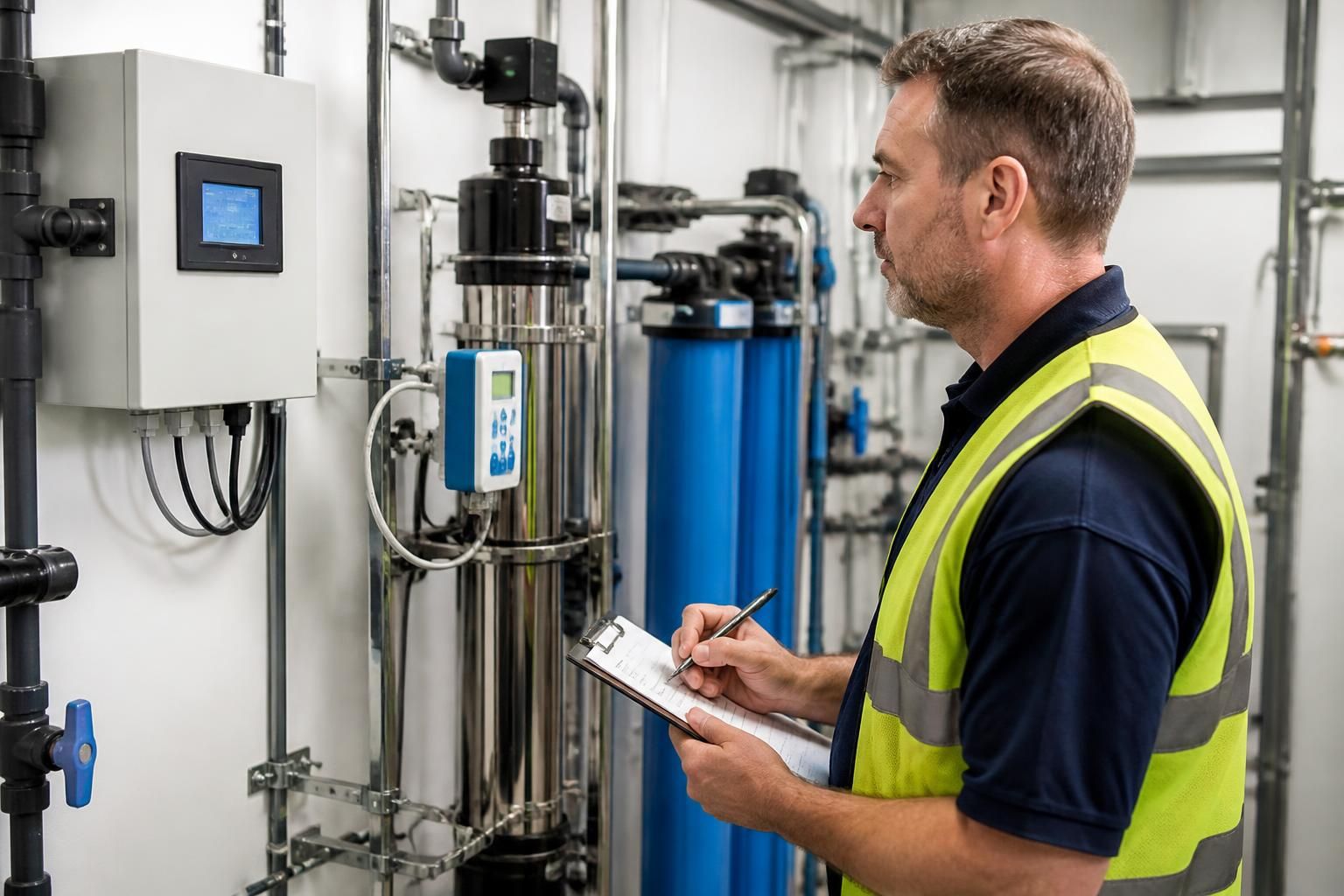
Responsibility for UV treated water testing should sit with the business’s water safety governance arrangements, led by a suitably competent Responsible Person or water safety lead. Their role is to make sure testing is proportionate to the system’s risks, carried out by competent people, interpreted in context and linked to documented action where results or UV system performance are unsatisfactory.
The Responsible Person does not need to collect every sample or perform the laboratory analysis personally. They do, however, need sufficient authority to approve the testing arrangements, access relevant records and require corrective work. Delegating practical tasks does not remove the need for clear accountability. The written scheme or water safety plan should identify:
- who has overall responsibility for the water system;
- who manages the UV treatment equipment and associated distribution system;
- who selects sampling locations and testing intervals;
- which competent contractor or laboratory undertakes sampling and analysis;
- who reviews reports and authorises remedial action; and
- how unresolved issues are escalated to senior management.
In a larger organisation, these responsibilities may be shared between a water safety group, estates or facilities management, engineering personnel, infection prevention specialists and operational managers. The group should distinguish between technical advice and management accountability. A consultant or testing provider can recommend a sampling programme and explain findings, but the business still needs an internal person who accepts the findings, decides what action is required and confirms that action has been completed.
The person overseeing the programme should understand both the UV installation and the wider water system. UV treatment can reduce microbiological contamination only when the equipment receives the intended flow and UV dose. Oversight should therefore include relevant operational information such as:
- the system’s design purpose and treated outlets;
- flow rates and any conditions that could reduce UV exposure;
- lamp operating status, alarm indications and maintenance records;
- filter condition and the clarity of water entering the UV unit;
- sampling points before and after treatment, where appropriate; and
- changes to the source, plumbing configuration, occupancy or water use.
These checks help the Responsible Person assess whether a test result reflects the performance of the UV unit, a problem elsewhere in the system, a sampling issue or a combination of factors. A laboratory report should not be treated as a standalone pass-or-fail certificate without considering the sampling method, sample location, test scope and operating conditions at the time of collection.
Sampling and analysis should be assigned to people with suitable training, experience and equipment. Where an independent laboratory is used, the business should verify that the laboratory’s scope covers the relevant water tests and that sampling is performed in accordance with the agreed procedure. For regulated or formal compliance purposes, using an appropriately UKAS-accredited testing service may be necessary, but accreditation alone does not replace good site management or competent interpretation.
The facilities or engineering team will usually provide important operational evidence. They may record lamp changes, alarm events, cleaning, filter replacement, flow changes and faults. Those records should be available to whoever reviews the test results. If the UV unit has been isolated, bypassed or operated outside its specified conditions, that information should accompany the samples and be considered when assessing their significance.
Senior management also has a defined part to play. It should provide the authority and resources needed to maintain the system, arrange competent testing and address defects. This is particularly important where corrective action affects production, tenant operations, healthcare activities or access to water outlets. Operational convenience should not result in test results being filed without a documented decision.
After each testing cycle, the reviewer should record the result, the interpretation, any comparison with previous findings and the action owner. If further investigation or remedial work is required, the record should state what will be done, who will do it and how completion will be verified. Follow-up testing may be appropriate where an intervention changes the condition of the treated water or the operation of the UV system.
For a small business, one competent person may perform several of these functions, provided the arrangement is realistic and documented. For a complex site or multi-site estate, separate operational, technical and governance roles may be more appropriate. The key requirement is not a particular job title; it is a clearly defined chain of responsibility in which competent people generate reliable evidence and an authorised person ensures that the evidence leads to effective water safety decisions.
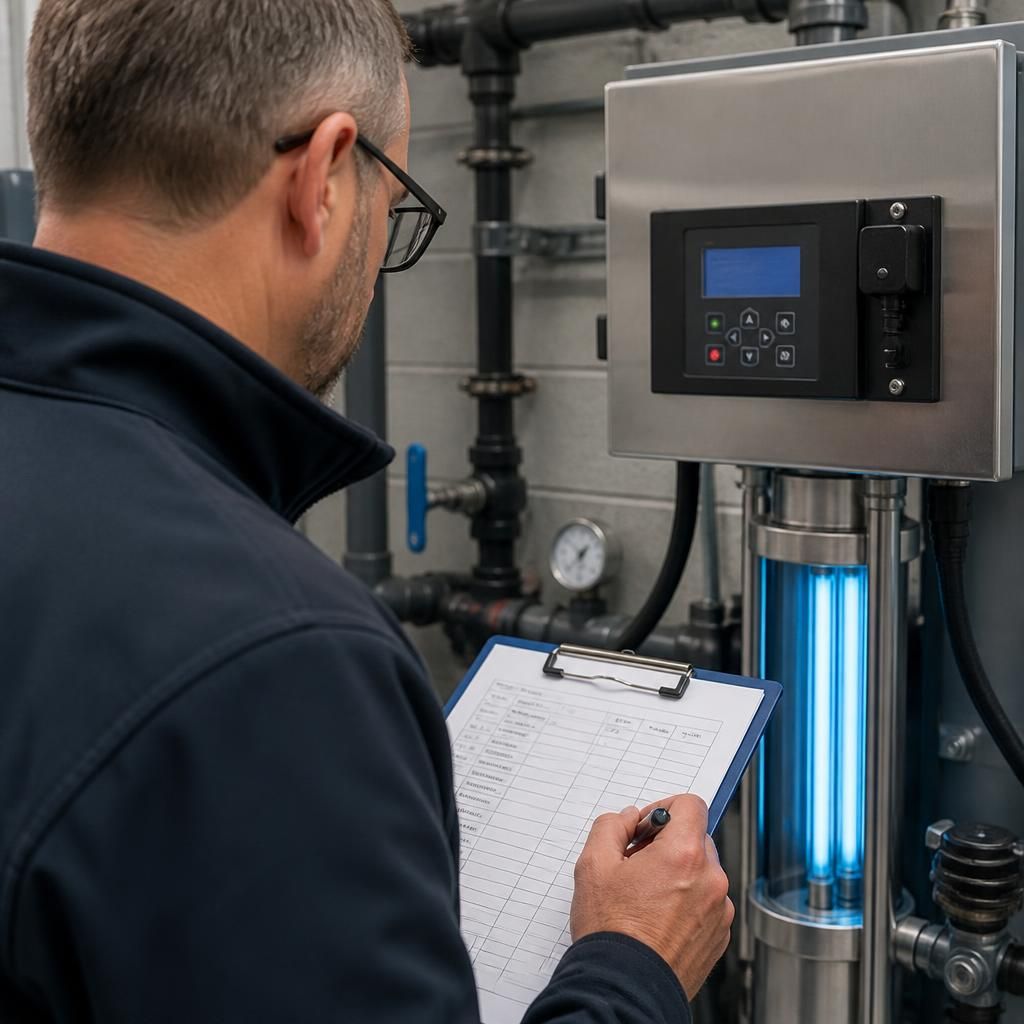
In a shared or outsourced premises, UV treated water testing should be overseen by the organisation that controls the relevant water system, or by a clearly appointed party acting on its behalf. The person responsible should be identified in writing rather than assumed to be the facilities contractor, landlord, tenant or testing provider.
Where responsibilities are divided, the arrangement should define which party controls the UV unit, maintains the distribution system, arranges testing and receives the results. It should also specify who can authorise access to outlets, request repairs and require follow-up evidence. This prevents important findings being passed between organisations without a decision being made.
Tenants and managing agents should therefore confirm the boundaries of responsibility before testing begins. A testing provider may report on the samples it collects, but the party overseeing the water system must retain access to the wider maintenance and operational information needed to assess the result. Clear contractual and site-level arrangements make it easier to identify the correct decision-maker when a result requires investigation or action.
Discuss who should oversee your UV treated water testing
If you need to clarify who should oversee UV treated water testing within your organisation, discuss your current responsibilities, records and testing arrangements with Blue Fish Water Management.