
What should reverse osmosis and UV treated water testing measure?
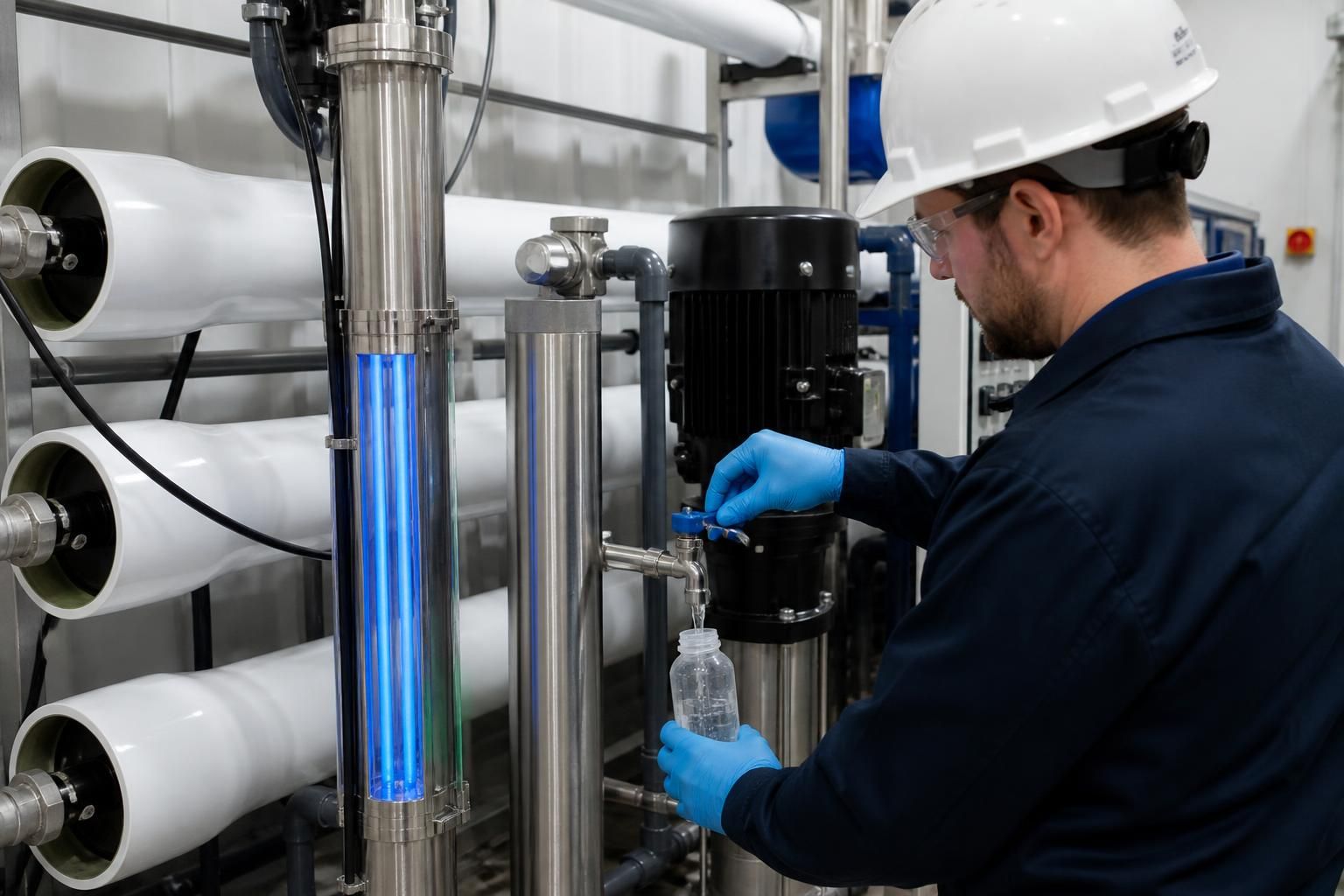
The testing programme should measure four things: the condition of the incoming water, the effectiveness of each treatment stage, the quality of water at the point of use, and the controls that support reliable operation. The exact parameters depend on the source, the equipment design, the end use and the applicable water safety requirements; there is no single test panel suitable for every reverse osmosis or ultraviolet system.
Reverse osmosis testing
RO performance is often checked by comparing feed-water and permeate results. Conductivity and total dissolved solids indicate how effectively the membrane is removing dissolved material, but they do not identify every contaminant. A suitable programme may also assess:
- hardness, alkalinity and pH, which can influence scaling and membrane performance;
- chloride, sulphate, nitrate and other dissolved ions relevant to the source water or intended application;
- metals such as iron, manganese, lead or copper where the supply, pipework or process creates a potential risk;
- silica where deposits could affect downstream equipment;
- organic matter or total organic carbon where product quality or process control requires it; and
- chemicals associated with site activities, industrial inputs or a known source-water concern.
Results should be interpreted alongside recovery, flow, pressure, temperature and the condition of pre-treatment. A change in conductivity may indicate membrane damage, poor sealing, fouling or altered operating conditions, while an increased pressure differential can point towards blockage or scaling. Trend data is more informative than an isolated result because it can show gradual deterioration before the treated water falls outside its required specification.
Where the RO unit supplies a storage tank or distribution loop, testing should not stop at the membrane outlet. Water can be affected by tank cleanliness, stagnant sections, dead legs, pipework materials, insufficient circulation or contamination introduced during maintenance. Samples from the outlet and representative downstream points help distinguish a treatment fault from a distribution problem.
UV system testing
UV treatment does not remove dissolved chemicals, particles or general mineral content. Its effectiveness depends on delivering sufficient germicidal exposure to the water, so the physical operating conditions are important as well as the laboratory result. Checks may include:
- UV intensity or the output recorded by the system sensor;
- flow rate, because excessive flow can reduce exposure time;
- UV transmittance, which indicates how readily the water allows UV light to pass through it;
- turbidity and suspended solids, which can shield microorganisms from the UV light;
- lamp status, lamp age, sleeve cleanliness and alarm operation; and
- microbiological results from suitable samples before and after treatment.
UV transmittance can be reduced by colour, dissolved organic matter, iron, manganese or suspended material. These factors may require separate treatment or investigation rather than relying on a higher lamp output. The system's design specification should therefore be checked against actual flow and water quality, rather than treating a powered lamp as proof that disinfection is effective.
Microbiological parameters
Microbiological testing should be selected according to the water's use and the risk assessment. Common indicator organisms include total coliforms and E. coli, with other organisms or colony counts considered where the system, source or application warrants them. A result should be linked to the sample location and collection method: a positive finding at the feed, post-treatment outlet and point of use can have different implications.
Where an RO or UV system forms part of a larger water installation, the assessment may also need to consider organisms associated with stagnant water, biofilm or aerosol-generating equipment. This is not determined by the treatment label alone. The responsible person should identify relevant hazards through the site's water safety assessment and define which microbiological tests, sample points and follow-up actions are appropriate.
Sampling and supporting checks
A defensible testing plan records the sample point, date, operating condition, recent maintenance and any treatment chemicals or cleaning processes used. Samples should be taken using suitable containers and methods, transported and examined in accordance with the laboratory's requirements. Poor sampling technique can produce a misleading result, particularly where contamination is introduced at a tap or where a rarely used outlet is sampled without an agreed flushing procedure.
Compliance checks should review more than laboratory certificates. They should confirm that the testing frequency, methods, laboratory competence, acceptance criteria and corrective-action process match the system's risk assessment and intended use. Operating records should also show alarms, filter or membrane changes, UV lamp and sleeve maintenance, tank inspections, cleaning, calibration and any deviations from normal conditions.
For a commercial system, the final report should make clear which results demonstrate treatment performance, which describe water quality, and which relate to the wider installation. If a result is outside the required specification, the appropriate response may involve repeat sampling, isolating a supply, inspecting equipment, cleaning or replacing components, reviewing pre-treatment, or reassessing the sampling plan. The action should be based on the nature of the result and the potential exposure, not on a generic pass-or-fail assumption.
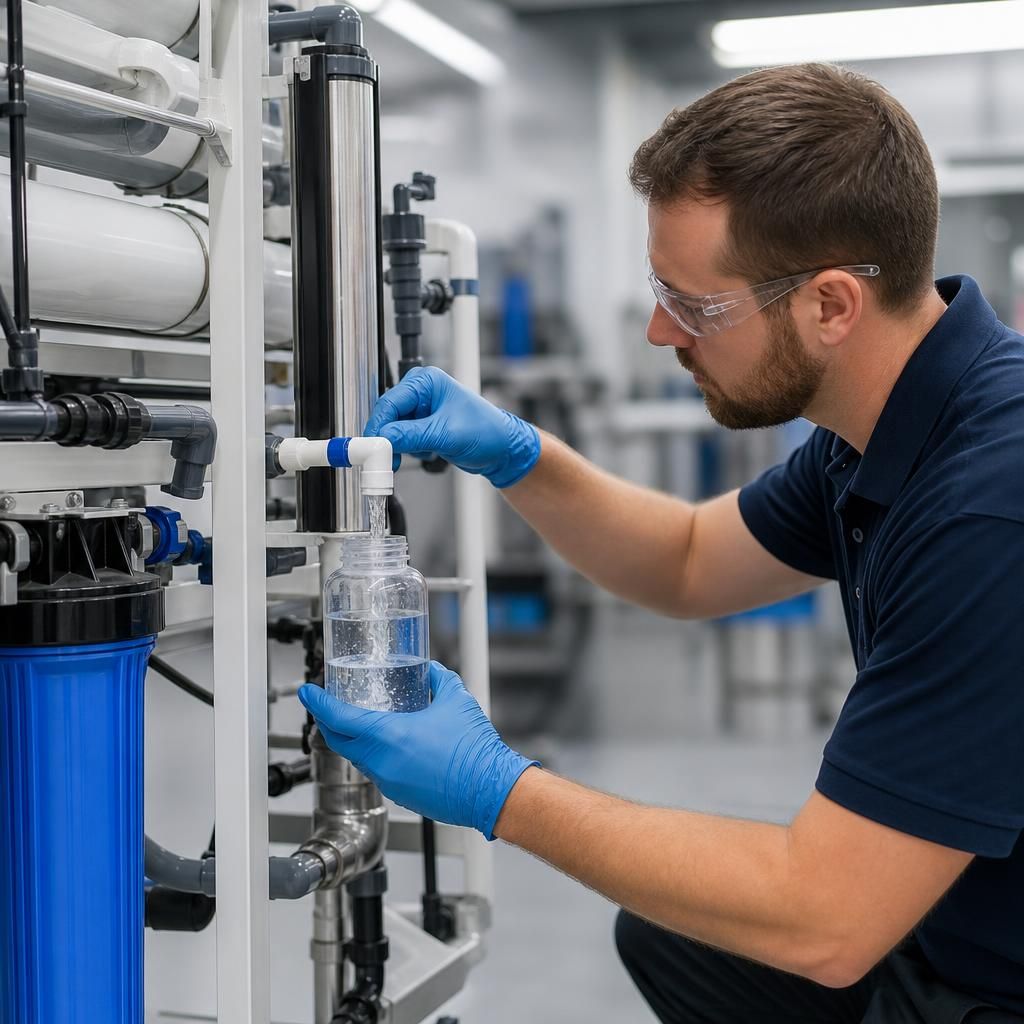
Results from reverse osmosis and UV treated water testing must be interpreted with the laboratory method, units and reporting limit in view. A result reported as “not detected” means the substance or organism was below the method’s reporting limit; it does not prove absolute absence. Chemical results should be compared using consistent units, while microbiological results should be reviewed alongside the sample volume and test method.
The report should also identify the analytical method used and any relevant limitations. This prevents businesses from comparing results produced by different methods as though they were directly equivalent. Where a result is close to an acceptance limit, the responsible person may need to consider the method’s precision, repeat the sample or obtain technical interpretation before deciding whether the treatment system requires corrective action.
Discuss your reverse osmosis and UV water testing requirements
Discuss your reverse osmosis and UV water testing requirements with Blue Fish Water Management Ltd to identify a testing scope suited to your system, water use and compliance responsibilities.