
How should businesses compare reverse osmosis and UV testing options?
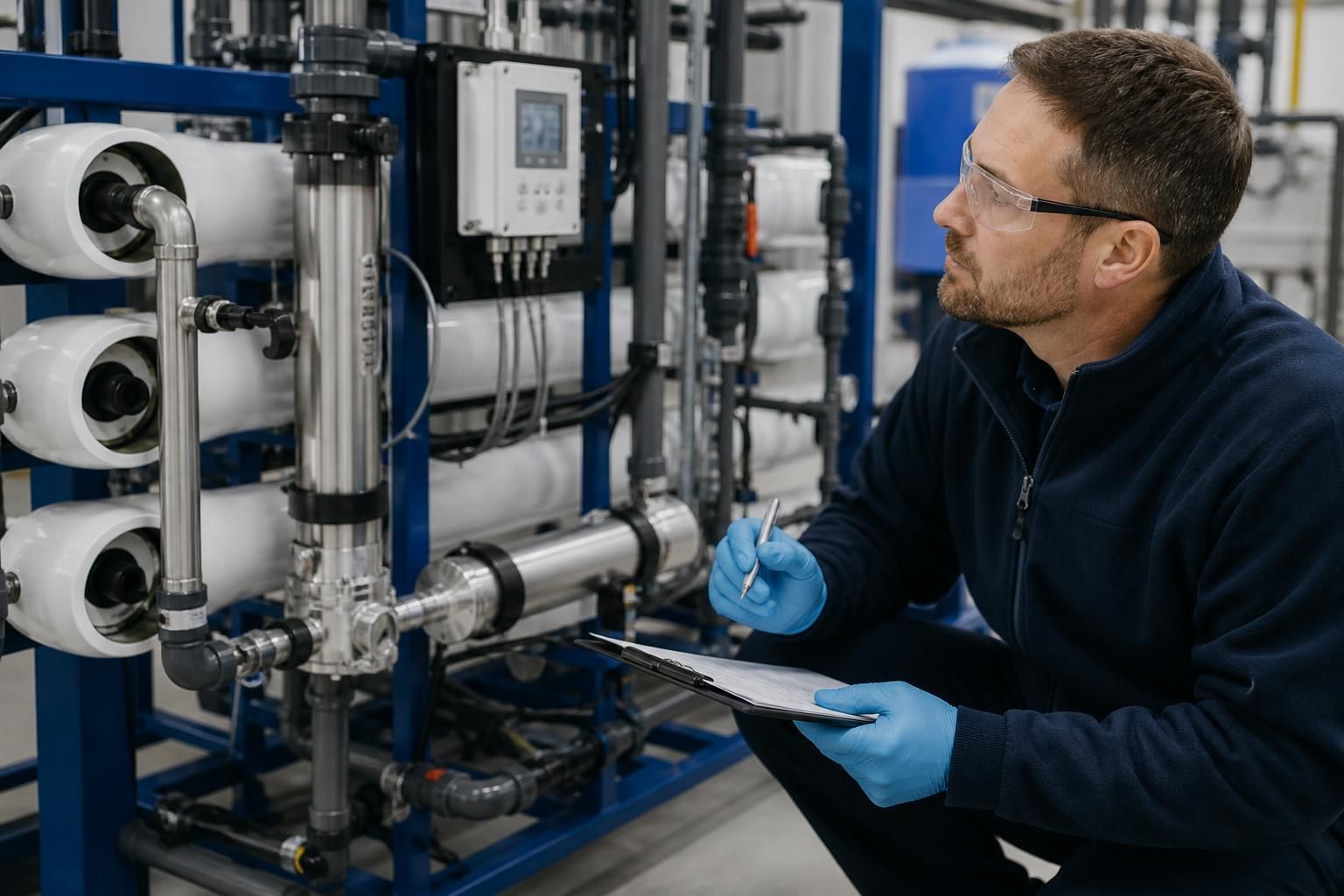
The most suitable comparison is not simply between two laboratory tests. Businesses should assess which treatment system is installed, what the water is used for, the consequences of a failure, and what evidence their risk assessment or compliance arrangements require. Reverse osmosis (RO) and ultraviolet (UV) testing produce different types of assurance, so the options should be judged against the performance questions the business needs to answer.
Start with the treatment objective. RO is a physical separation process used to reduce dissolved substances and other contaminants from a water stream. UV is an inactivation process designed to control microorganisms as water passes through ultraviolet light. If the concern is treated-water composition, membrane integrity or changes in feed-water quality, an RO-focused testing programme is appropriate. If the concern is whether a disinfection barrier is operating effectively, the programme should examine the UV installation, operating controls and microbiological condition of the water.
Compare the evidence each option can provide. RO assessment commonly involves reviewing operating pressures, flows, conductivity or other relevant water-quality indicators, together with laboratory analysis selected for the system and its intended use. Results can help identify reduced membrane performance, fouling, scaling, damage or inadequate pretreatment. UV assessment may involve checking lamp operation, dose-related controls, alarm functions, sleeve condition and flow conditions, supported by microbiological sampling where appropriate. A satisfactory result from one type of assessment should not be treated as proof that the other treatment barrier is effective.
Match the testing plan to the risk assessment. The location and purpose of the system should determine sampling points and test selection. Sampling may need to represent water before treatment, immediately after treatment and at relevant outlets or points of use. For an RO system, this can help distinguish a feed-water issue from a membrane or distribution issue. For a UV system, samples taken only at the source may not explain conditions further along a storage or distribution system. The sampling plan should also consider stagnation, storage, recirculation, blending and any points where treated water can become recontaminated.
Consider how failure would be detected. RO systems can show gradual deterioration through changing operational readings or water-quality results. UV systems may have alarms and monitoring devices that identify equipment faults, but these controls need to be checked and maintained rather than assumed to be reliable. A comparison should therefore include both laboratory testing and review of the available monitoring records. Where a system has limited instrumentation, periodic independent testing may be particularly important for confirming that recorded conditions reflect actual performance.
Include maintenance and system condition in the decision. Testing alone cannot correct a blocked pre-filter, damaged membrane, fouled UV sleeve, failed sensor or unsuitable flow rate. Before selecting a programme, review maintenance history, cleaning and replacement arrangements, alarm records, recent alterations and any known defects. A technically appropriate test can still give an incomplete picture if the sample is taken after temporary corrective work or if the equipment is not operating under normal conditions.
Compare cost on a whole-system basis. The cost of testing is only one part of the comparison. Businesses should consider sample collection, laboratory analysis, equipment inspection, calibration, consumables, planned servicing, remedial work and the effect of taking the system out of service. RO may require attention to pretreatment and membrane condition, while UV may require ongoing attention to lamps, sleeves, sensors and control equipment. The cheapest individual test is not necessarily the most useful option if it fails to identify the cause of poor performance or does not generate suitable compliance records.
Check that the reporting format meets the intended use. A useful report should identify the system and sampling locations, state the tests undertaken, record relevant operating conditions, explain any limitations and distinguish observations from laboratory findings. Results should be interpreted against the applicable specification, risk assessment or operational requirement, rather than presented as isolated pass-or-fail statements. Where results are unsatisfactory, the report should support a proportionate action plan, such as further investigation, maintenance, resampling or remedial work.
For systems that use RO and UV together, compare them as separate treatment barriers within one control strategy. The assessment should establish what each stage is intended to achieve, whether the sequence is suitable, and whether a failure at one stage could affect the next. Testing one component does not validate the complete treatment train. Records should show which stage was examined and how the findings relate to the overall water safety arrangements.
A practical comparison can therefore be made using these questions:
- What treatment process is installed, and what is it intended to control?
- Which points need to be sampled or inspected to represent the system accurately?
- What operational data, laboratory results and maintenance records are available?
- What level of independent evidence is required by the business's risk assessment, client or regulator?
- How will an adverse result be investigated, corrected and verified?
- Does the proposed programme cover the treatment equipment as well as the water at the point of use?
For businesses that need impartial evidence, testing should be planned by a competent water hygiene provider and, where laboratory analysis is required, carried out through a UKAS-accredited laboratory appropriate to the tests requested. Blue Fish Water Management Ltd can help businesses define a proportionate RO or UV testing programme, interpret findings and identify any further compliance or remedial action needed.
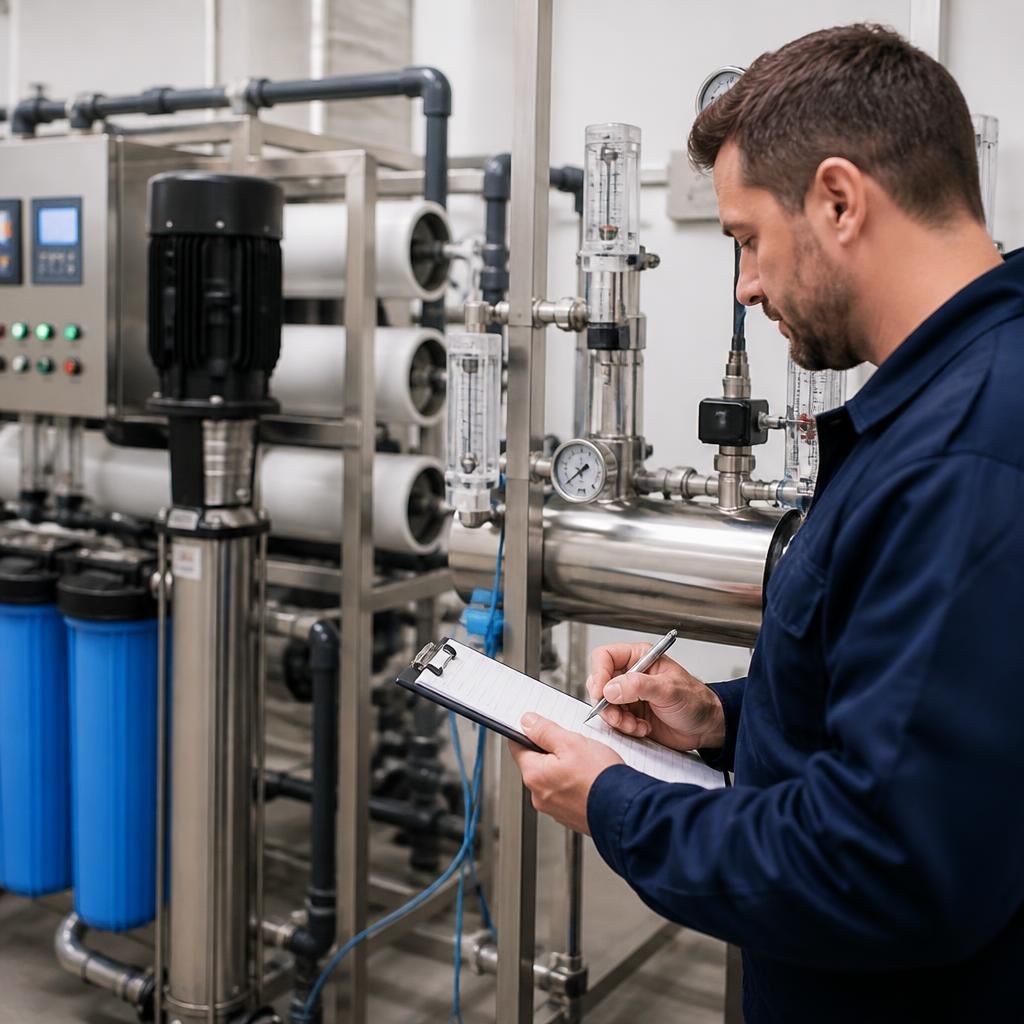
Reverse osmosis and UV results should not be treated as interchangeable when findings appear inconsistent. Each test describes a different control point, so a satisfactory result from one process cannot compensate for a problem identified in the other.
For example, acceptable RO conductivity results may show that the membrane is reducing dissolved substances as intended, while a microbiological result may still indicate contamination in storage or distribution. Conversely, a UV unit may show correct lamp operation and alarm status while water quality remains unsatisfactory because of excessive flow, a fouled sleeve, ineffective sampling controls or contamination downstream of the treatment stage.
Interpretation should therefore consider:
- which treatment barrier the result relates to;
- whether the sample was taken before or after that barrier;
- whether the result reflects equipment performance or conditions elsewhere in the system; and
- what follow-up examination can separate treatment failure from downstream contamination.
This approach prevents businesses from selecting the test with the more favourable result and overlooking a separate water safety issue. It also makes the comparison more useful when deciding whether further sampling, equipment inspection or corrective work is justified.
Discuss your reverse osmosis and UV testing options
Discuss your proposed RO or UV testing programme with Blue Fish Water Management Ltd to identify the evidence needed for your site and intended use. Our team can help you plan the next stage of assessment based on your existing water safety records.