
How does system condition influence reverse osmosis and UV testing choice?
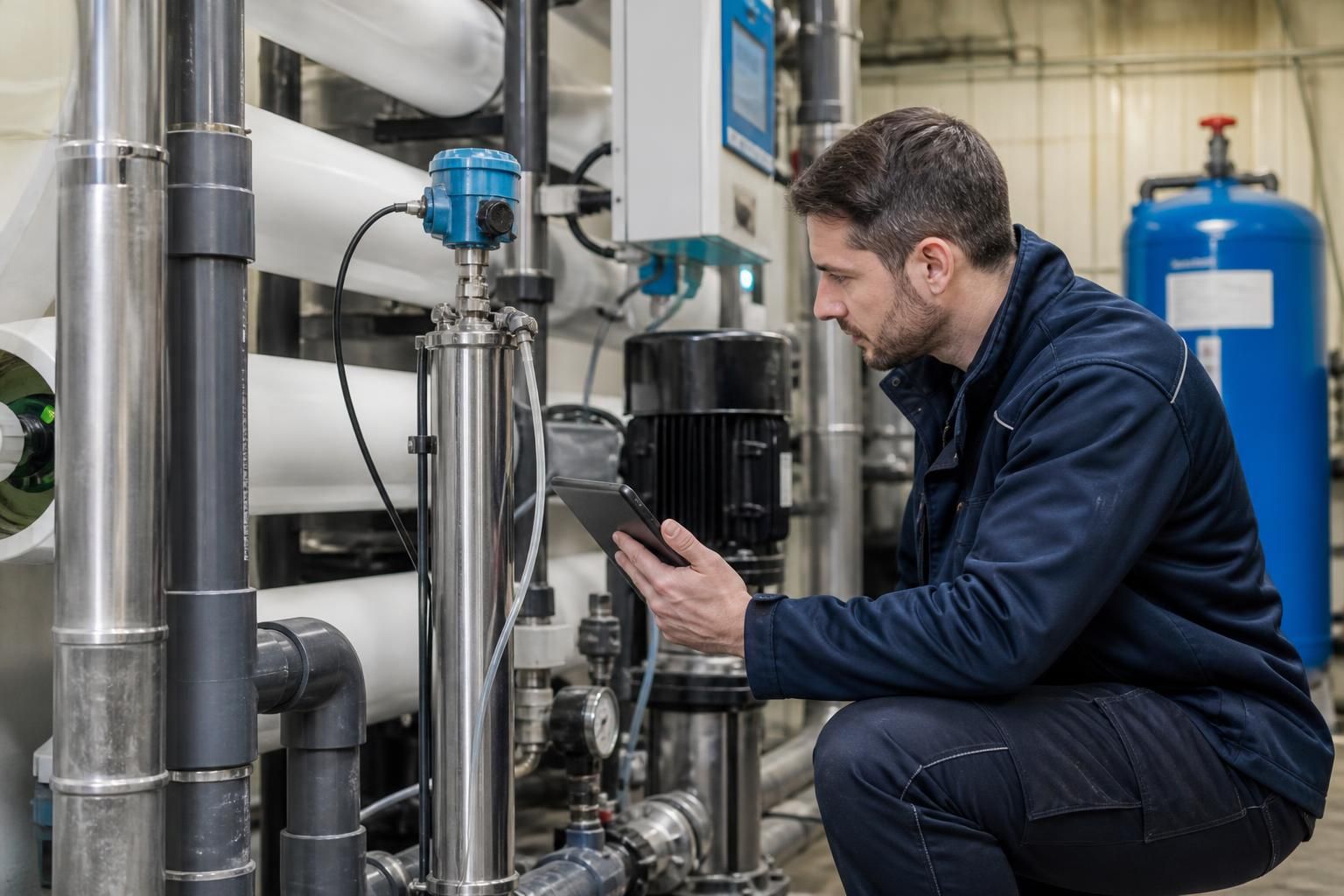
System condition should determine both the type and extent of reverse osmosis (RO) and ultraviolet (UV) testing. A well-maintained system with reliable operating records may need routine performance verification, while an altered, poorly documented or suspect system may require diagnostic testing, wider sampling and checks that establish whether treatment is controlling the relevant risks.
The first step is to assess the system as a treatment process rather than selecting a test in isolation. This includes reviewing the system design, intended use, incoming water quality, treatment stages, storage arrangements, distribution pipework, maintenance records, alarm history and previous test results. Changes such as component replacement, altered demand, extended shutdowns or modifications to pipework can affect the appropriate testing approach even where the treatment equipment itself appears operational.
- Stable condition: testing can concentrate on confirming that established control measures continue to perform within their defined operating limits.
- Uncertain condition: testing should generate enough information to locate the source of a performance or water-quality concern.
- Adverse or recently altered condition: testing may need to combine operational measurements, targeted water samples and follow-up verification after corrective work.
For an RO system, condition affects whether testing should focus on membrane separation, upstream protection or the quality of water after treatment. Useful checks may include feedwater and treated-water conductivity, flow and pressure, rejection performance, operating trends and the condition of pre-treatment stages. Microbiological sampling may also be appropriate where the system includes storage tanks, extended pipe runs or points of use that could support contamination independently of the membrane process.
Results should be interpreted in relation to the system's design and normal operating profile. A treated-water result that differs from the usual pattern may indicate a treatment issue, an unsuitable sampling point, a change in feedwater or a problem further along the distribution system. Comparing samples from the feed, permeate, storage and point-of-use locations can help distinguish these possibilities. Testing only the final outlet may confirm that a concern exists without showing where it developed.
UV system condition creates a different testing emphasis. UV treatment depends on the equipment delivering an adequate dose under the conditions for which it was designed. Assessment may therefore include lamp operating status, intensity or dose indication, quartz sleeve condition, flow through the unit, water clarity and the performance of associated pre-treatment. Where the system has no dependable operating record or its monitoring devices are unreliable, a water sample alone may not demonstrate that the disinfection process is consistently effective.
The condition of the water entering a UV unit is particularly important. Suspended material, colour or other factors that reduce UV transmission can affect treatment performance without an obvious fault in the lamp. Testing should therefore consider both the equipment and the water characteristics that influence its operation. Sampling before and after treatment, where practicable, can support a more useful interpretation than sampling at one downstream location only.
System condition also determines where samples should be collected. Points should represent the risk being investigated and may include incoming water, post-treatment water, storage, representative outlets and areas with low use or long retention times. Samples from several points can help separate a treatment failure from deterioration within storage or distribution. The sampling plan should record the location, operating state, recent maintenance and any relevant interruption or change before sampling takes place.
Routine testing is most suitable when the system has a defined operating baseline, consistent maintenance and records that show how performance changes over time. A diagnostic investigation is more appropriate where results are inconsistent, control readings are missing, equipment has been modified or water quality has changed unexpectedly. In that situation, repeating the same single test may provide limited value; the investigation should be designed to test the likely causes and establish what further action is justified.
Testing choice should also reflect the purpose of the result. Compliance evidence may require documented sampling, traceable methods and a clear connection between the result and the relevant control measure. Operational monitoring may use regular equipment readings and trend review to identify deterioration before it becomes a water-quality failure. Validation after remedial work should demonstrate that the specific issue has been addressed, using suitable checks at the affected treatment stage and downstream locations.
Results need to be assessed alongside system records rather than treated as isolated pass-or-fail findings. A useful review considers trends, sampling conditions, laboratory results, equipment readings, maintenance activity and any changes in use. If the evidence indicates a treatment or distribution problem, further testing should follow the risk assessment and corrective-action plan rather than being selected solely for convenience.
For businesses, the practical decision is to match testing intensity to the evidence available about system condition. A documented, stable RO or UV installation may support a focused monitoring programme. A system with uncertain performance requires broader investigation, carefully selected sampling points and technical checks that explain the result. This approach produces more meaningful evidence for water safety management and helps ensure that testing supports, rather than substitutes for, proper system control.

System condition determines which evidence can be relied on, because no single test confirms every part of an RO or UV installation. A microbiological result may describe water quality at one sampling point, but it does not by itself prove membrane rejection, UV dose or the condition of the treatment equipment. Conversely, an acceptable conductivity or UV intensity reading does not confirm that water remains hygienically controlled throughout storage and distribution.
Testing should therefore be selected against the specific control claim being examined. If the concern is membrane performance, process measurements and comparative water-quality results are relevant. If the concern is UV effectiveness, equipment status and the factors affecting dose need consideration. If the concern is downstream deterioration, sampling locations and hygiene controls become more important. Matching each test to the part of the system it is intended to assess prevents an apparently satisfactory result from concealing a separate weakness.
Discuss your reverse osmosis and UV testing requirements
Discuss your reverse osmosis and UV testing requirements with Blue Fish Water Management Ltd to identify an assessment approach suited to your system’s condition and intended use.