
Which hot water cylinder systems need UKAS water testing?
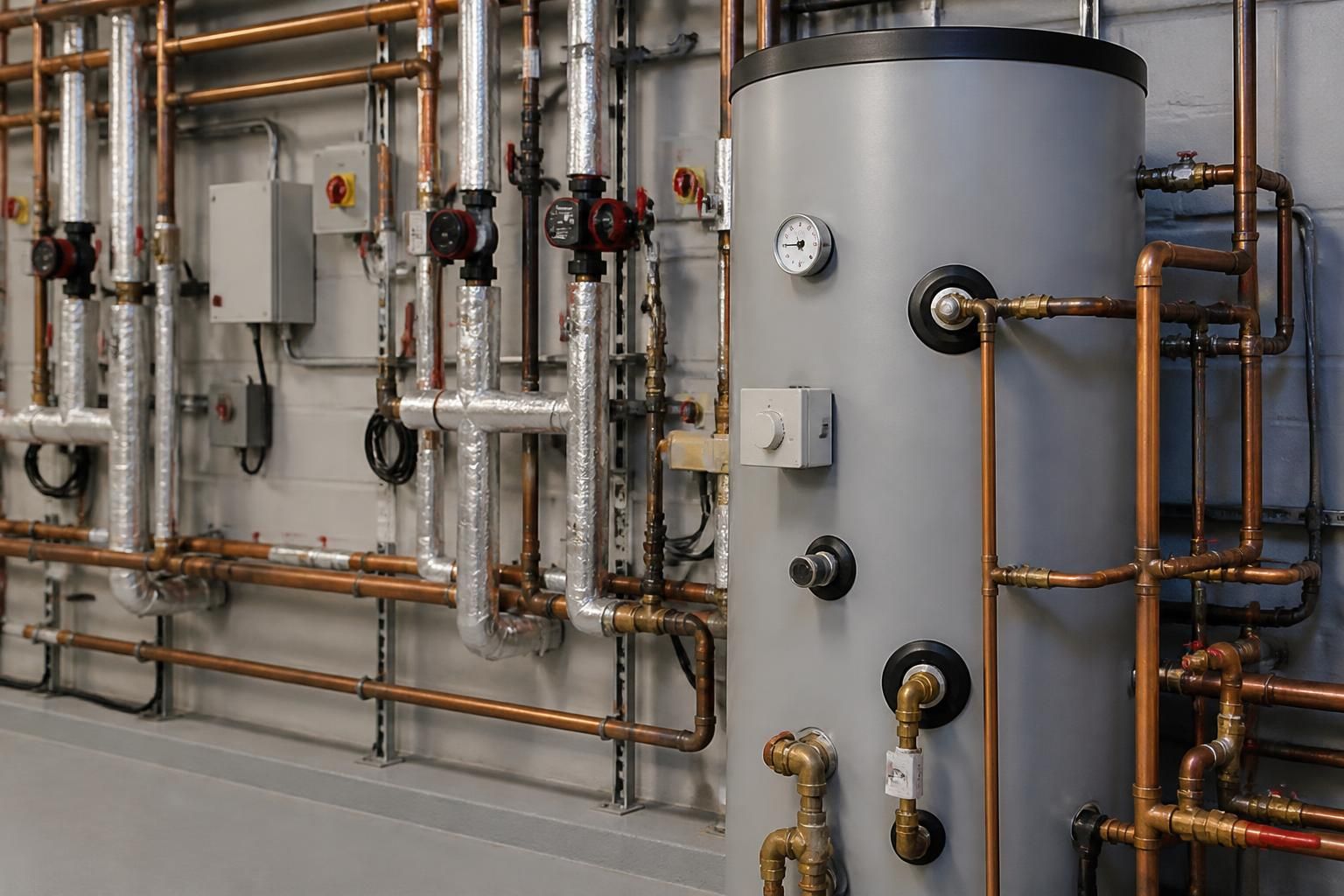
The hot water cylinder systems most likely to need UKAS-accredited water testing are those with stored domestic hot water, multiple outlets, recirculation, complex temperature controls or conditions that could allow Legionella to multiply. The cylinder itself does not create an automatic testing requirement. The decision should follow the findings of the responsible person’s legionella risk assessment, the written control scheme and the system’s monitoring history.
Systems commonly considered for testing include:
- Vented and unvented hot water cylinders supplying showers, taps, baths or other outlets in non-domestic premises.
- Indirect cylinders and calorifiers heated through a primary circuit, particularly where stored water is distributed through secondary hot water pipework.
- Directly heated storage systems in which the stored water is heated within the vessel itself.
- Multiple-cylinder installations connected in parallel or arranged across several buildings, floors or occupancy areas.
- Systems with secondary return circulation, where water travels repeatedly between the cylinder or calorifier and outlets. Poor circulation can leave parts of the system at temperatures that support bacterial growth.
- Systems supplying thermostatic mixing valves. These can reduce scalding risk at the outlet, but they also mean the stored and distributed water must be managed carefully so that safe temperatures are maintained before blending.
- Low-use or intermittently occupied systems, where periods of stagnation, shutdown or reduced demand may affect water quality and temperature control.
A system may warrant sampling even where the cylinder is operating normally if there are concerns about remote outlets, dead legs, poor flow, inadequate return temperatures, deposits, scale, corrosion or repeated temperature failures. Alterations, recommissioning, prolonged closure, a history of remedial work or an earlier positive result may also justify targeted laboratory analysis.
Particular care is needed where cylinders serve healthcare premises, care settings, accommodation with shared facilities or other locations in which occupants may be more susceptible to serious consequences from Legionnaires’ disease. In these circumstances, the risk assessment should consider the vulnerability of the population as well as the design and operating condition of the water system. A similar approach applies to industrial and commercial sites where showers, wash facilities or process activities create regular aerosol exposure.
Not every hot water system needs routine UKAS testing. A small, simple installation with good turnover, effective temperature control and no significant risk factors may be managed through documented monitoring and inspection rather than regular microbiological sampling. Conversely, a relatively small cylinder can still require testing if it serves vulnerable users, has persistent control problems or forms part of a complicated distribution system.
Storage arrangements should be reviewed alongside the associated pipework. Sampling only the cylinder outlet may not represent conditions at the furthest or least-used outlets. Depending on the risk assessment, a competent sampling plan may include water from the storage vessel or nearby outlet, the return circuit, representative distal outlets and locations associated with known temperature or circulation concerns. The purpose is to identify whether conditions are controlled throughout the system, not simply to obtain a result from the most accessible tap.
UKAS accreditation relates to the competence of the testing laboratory for the relevant examination or method. It is therefore important to confirm that the laboratory’s accreditation scope covers the type of legionella analysis required. A report should identify the sample locations, collection details, method, result and any limitations. Sampling and interpretation should also be undertaken by people who understand hot water system design, because a laboratory result cannot explain the underlying cause on its own.
UK health and safety guidance does not make a blanket requirement for every cylinder system to undergo UKAS water testing at fixed intervals. Organisations have a duty to assess and control foreseeable risks, maintain suitable records and act on adverse findings. Where testing is selected as a control or verification measure, the frequency should be justified in the written scheme and changed when the system, building use, occupancy or risk profile changes.
In practice, the strongest candidates for UKAS water testing are cylinder systems where stored water is distributed through extensive or seldom-used pipework, where temperature and circulation controls are difficult to demonstrate, or where users could be exposed to contaminated aerosols. A competent legionella risk assessment should establish whether sampling is proportionate, which locations should be tested and what corrective action will follow the results. Blue Fish Water Management can support organisations with risk-based assessment, accredited laboratory testing and the wider monitoring and control measures needed for cylinder systems.
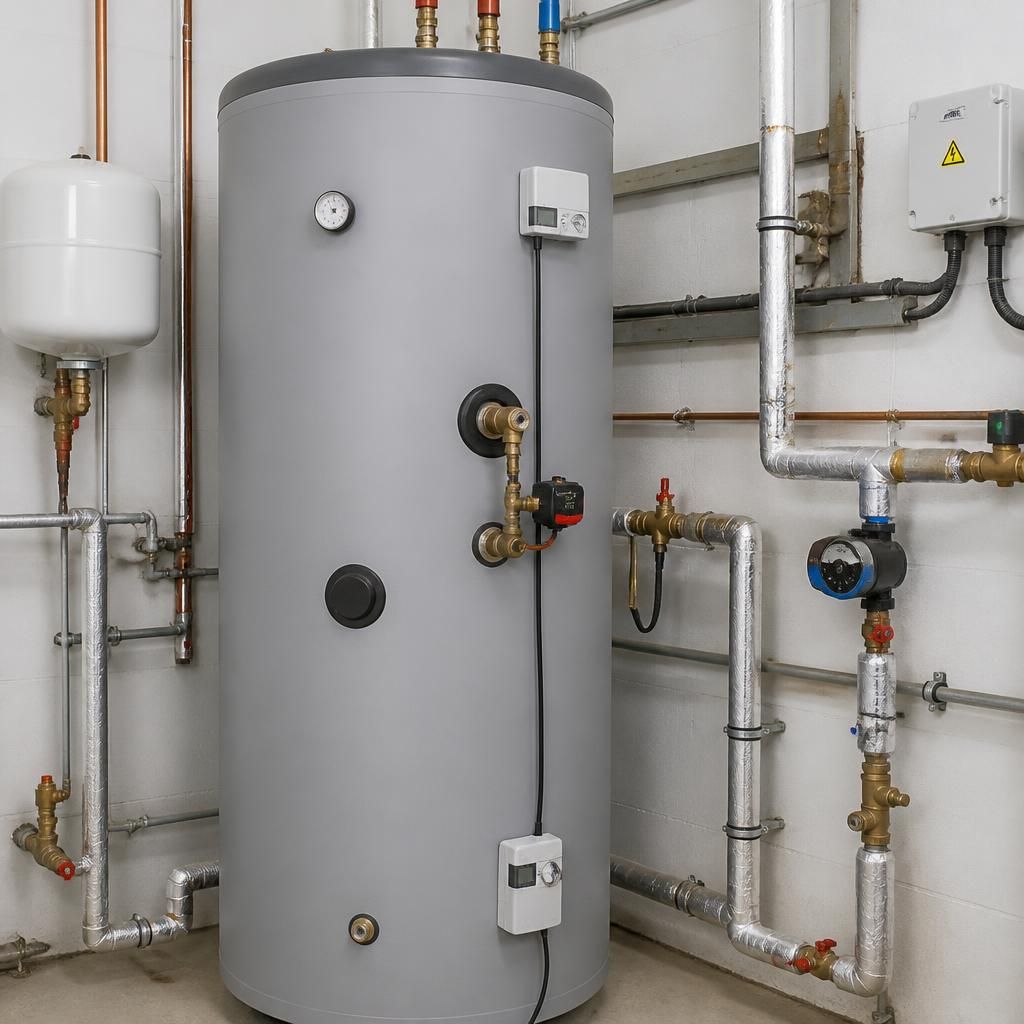
UKAS water testing should normally focus on the stored domestic hot water and its distribution outlets, not on a sealed primary heating circuit. In an indirect cylinder system, the primary circuit transfers heat through the cylinder coil; it does not usually supply water to showers, taps or other points of use. Sampling that circuit would not normally provide meaningful evidence about Legionella risk in the domestic hot water system.
The relevant question is therefore whether the cylinder supplies water that people may use or encounter as an aerosol. Where it does, the sampling plan should reflect the secondary hot water arrangement and the locations at which exposure could occur. This distinction helps organisations avoid testing the wrong part of a system while ensuring that the water actually reaching users is assessed when the risk assessment identifies a need for laboratory analysis.
Assess your hot water cylinder testing requirements
Ask Blue Fish Water Management to review your hot water cylinder arrangements and determine whether UKAS water testing is justified by the system’s risk profile. The review can help define an appropriate sampling approach and any follow-up actions required.