
How should organisations interpret UKAS water testing results for cylinder systems?
Organisations should interpret UKAS water testing results by considering the organisms detected, their measured levels, the sampling location and the cylinder system’s risk assessment. Any result that indicates potential legionella risk should be reviewed against the organisation’s control procedures and followed by proportionate investigation, corrective action and documented follow-up.
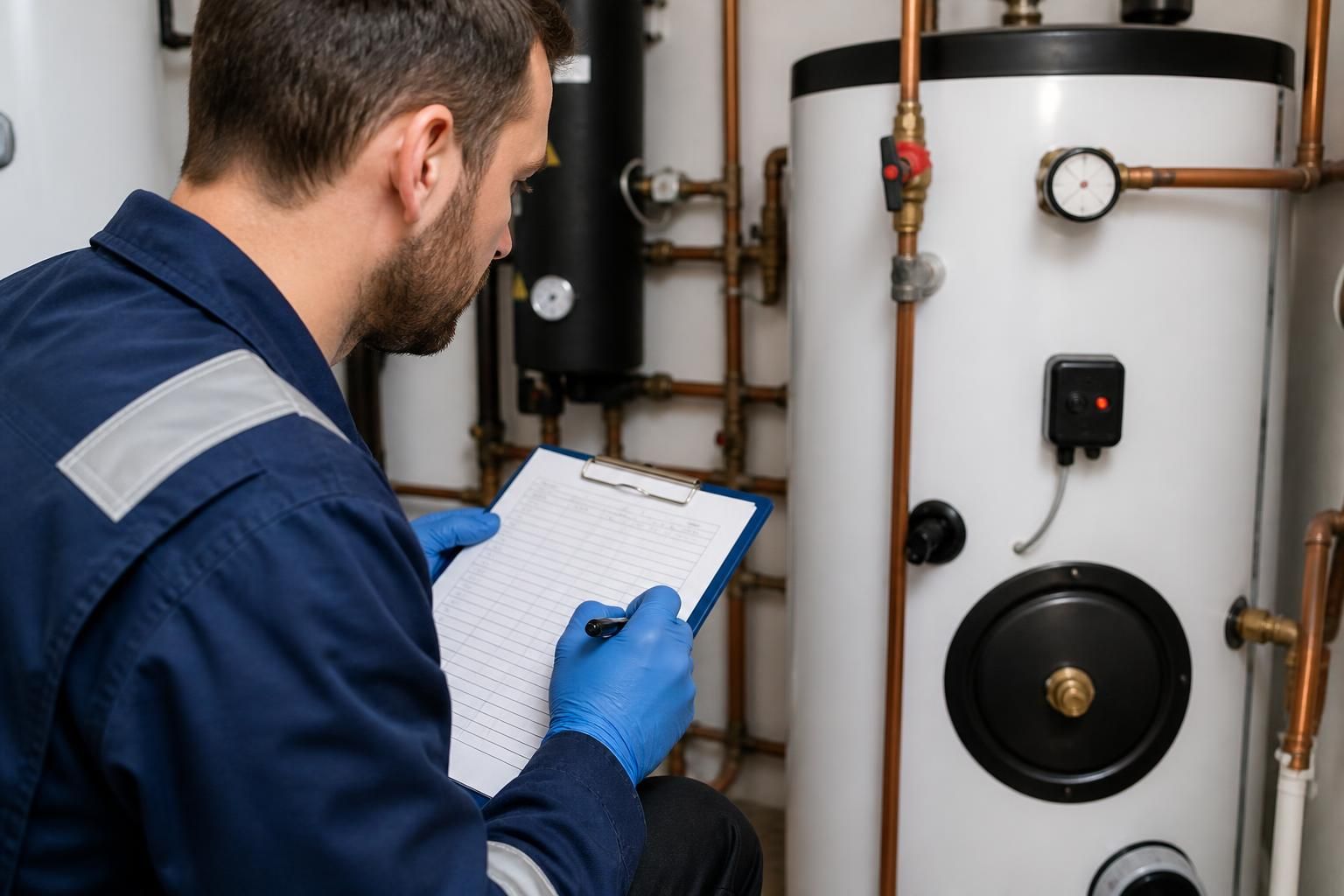
UKAS water testing results for cylinder systems should be interpreted as evidence within the wider water safety management process, not as a pass-or-fail certificate in isolation. The meaning of a result depends on the organism identified, the concentration reported, the sample type, the condition and use of the system, and the controls already in place.
Start with the laboratory report
First, confirm that the report relates to the correct cylinder, outlet and sampling date. Check the sample reference, collection point, sample type, analytical method, reporting units and any comments supplied by the laboratory. A result may refer to a hot-water outlet, stored water, a return or another part of the cylinder system; these locations do not provide interchangeable evidence.
Pay attention to the way the result is expressed. A numerical result indicates the measured concentration, while terms such as “not detected”, “below the reporting limit” or “less than” mean that the organism was not measured above the method’s reporting capability. They do not necessarily prove complete absence from the system. Where a result is qualified by the laboratory, the qualification should be understood before deciding what action is appropriate.
Consider legionella findings in context
A detected legionella result should prompt a review of the system and its controls. The result should be considered alongside:
- the temperature profile of the cylinder, associated pipework and outlets;
- how often outlets are used and whether any areas are seldom used;
- the condition of the cylinder, valves, blending arrangements and connected pipework;
- evidence of stagnation, debris, scale, sludge or biofilm;
- previous test results and any changes since the last sample; and
- the vulnerability of people who may be exposed to aerosols from the system.
The concentration is important, but it is not the only consideration. A low-level finding may still require investigation where temperature control is unreliable, usage is limited or susceptible individuals may be exposed. A higher result generally calls for a more urgent and structured response, guided by the organisation’s written control scheme and competent advice.
Interpret results for other organisms as supporting evidence
Reports may include findings for organisms or indicators other than legionella. These results do not automatically establish a legionella hazard, but they can provide evidence of conditions that support microbial growth or indicate deterioration in water quality. The significance depends on the test requested, the sample point and the system’s history.
For example, a change in general microbiological results, unusual appearance or other laboratory comment may support an investigation into stagnation, contamination, temperature management, cleaning or the integrity of the installation. Organisations should avoid treating one favourable or unfavourable indicator as a complete assessment of the cylinder system.
Compare the result with the control scheme
The next step is to compare the report with the organisation’s risk assessment, written control scheme, temperature records, inspection findings and previous laboratory data. This helps distinguish an isolated result from a recurring trend. A series of results from the same point can show whether conditions are stable, improving or deteriorating; however, results from different locations should not be compared without considering the reason for the different sampling points.
Where the result conflicts with temperature records or other monitoring evidence, the discrepancy should be investigated rather than disregarded. Possible explanations include a poorly representative sample, a change in system operation, a sampling issue or a genuine control failure. The investigation should be recorded with enough detail for another responsible person to understand the conclusion reached.
Decide what action is proportionate
Action should be based on the result and the risk assessment. Depending on the circumstances, this may include:
- checking cylinder and outlet temperatures using suitable equipment;
- reviewing records for temperature control, flushing, cleaning and maintenance;
- examining low-use outlets, dead legs, blending valves and sections where water may stagnate;
- correcting operational or engineering deficiencies;
- cleaning, disinfection or remedial work where the investigation supports it; and
- taking follow-up samples to confirm whether corrective action has been effective.
Corrective work should be proportionate and technically justified. Disinfection or replacement should not be selected solely because a result appears unfamiliar, while a recurring or significant finding should not be dismissed because a single later sample is negative.
Use follow-up testing carefully
Follow-up testing can help verify control, but it is not a substitute for correcting the underlying cause. Samples should be selected to answer a specific question: whether the affected location remains contaminated, whether linked outlets are also affected, or whether conditions have returned to the expected state after remedial work. The sampling plan should reflect the system layout and the findings of the investigation.
Allow enough time for the system to operate under normal controlled conditions before verification, unless an immediate assessment is required for health or operational reasons. The basis for the timing, locations and tests should be documented. If results remain inconsistent, obtain competent interpretation of the sampling strategy, laboratory method and system controls rather than relying on repeated testing without investigation.
Understand what UKAS accreditation does and does not mean
A UKAS-accredited result indicates that the laboratory activity is covered by an accredited scope and has been performed under recognised quality requirements. It supports confidence in the reported analytical process. It does not, by itself, confirm that the cylinder system is safe, that the sample represents every outlet, or that the organisation is complying with its water safety duties. Those conclusions require interpretation of the report alongside the risk assessment, system evidence and management arrangements.
Organisations should retain the report, sampling details, investigation notes, decisions, remedial records and follow-up results together. This creates an auditable chain from laboratory finding to risk-based action and helps demonstrate that results have been actively managed rather than filed without review.
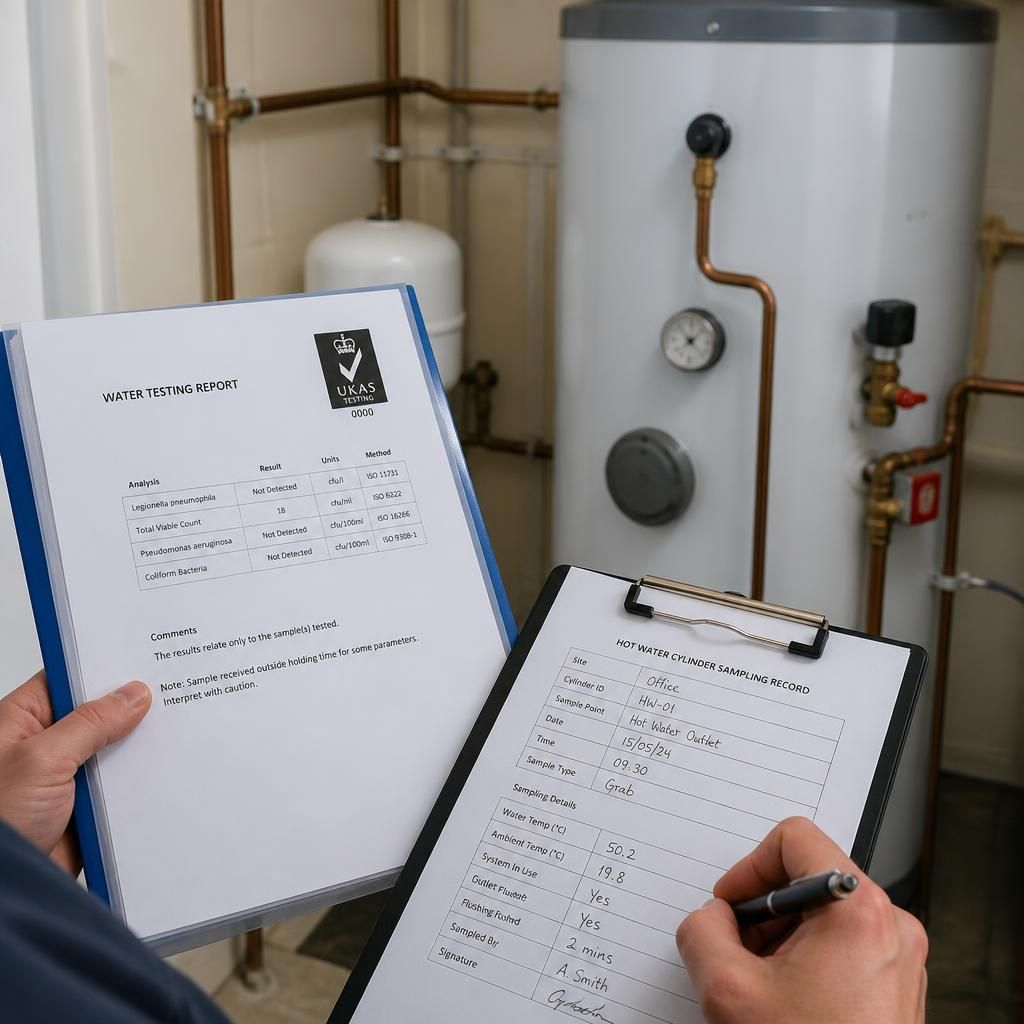
Laboratory comments and sample-quality qualifications should be reviewed before an organisation assigns significance to a UKAS water testing result. A report may indicate that a sample was limited, qualified or affected by a factor that restricts how confidently it can be used to represent the cylinder system. Such a qualification does not automatically confirm a hazard, but it may mean that the result cannot support a firm conclusion on its own.
Where the report identifies a limitation, record its effect on the decision and consider whether a further sample is needed from the same point or from a more suitable location. The follow-up should answer a defined question, such as whether the original finding is repeatable or whether the sample was representative of the water being assessed. This prevents an apparently reassuring result from being treated as proof of control when the laboratory has identified uncertainty.
Discuss your UKAS water testing results
If your organisation is unsure how to interpret a UKAS water testing report, discuss the findings with Blue Fish Water Management Ltd. The team can help relate the results to your cylinder system’s risk assessment and decide what further investigation may be appropriate.