
How are hot water cylinder samples selected for UKAS laboratory testing?
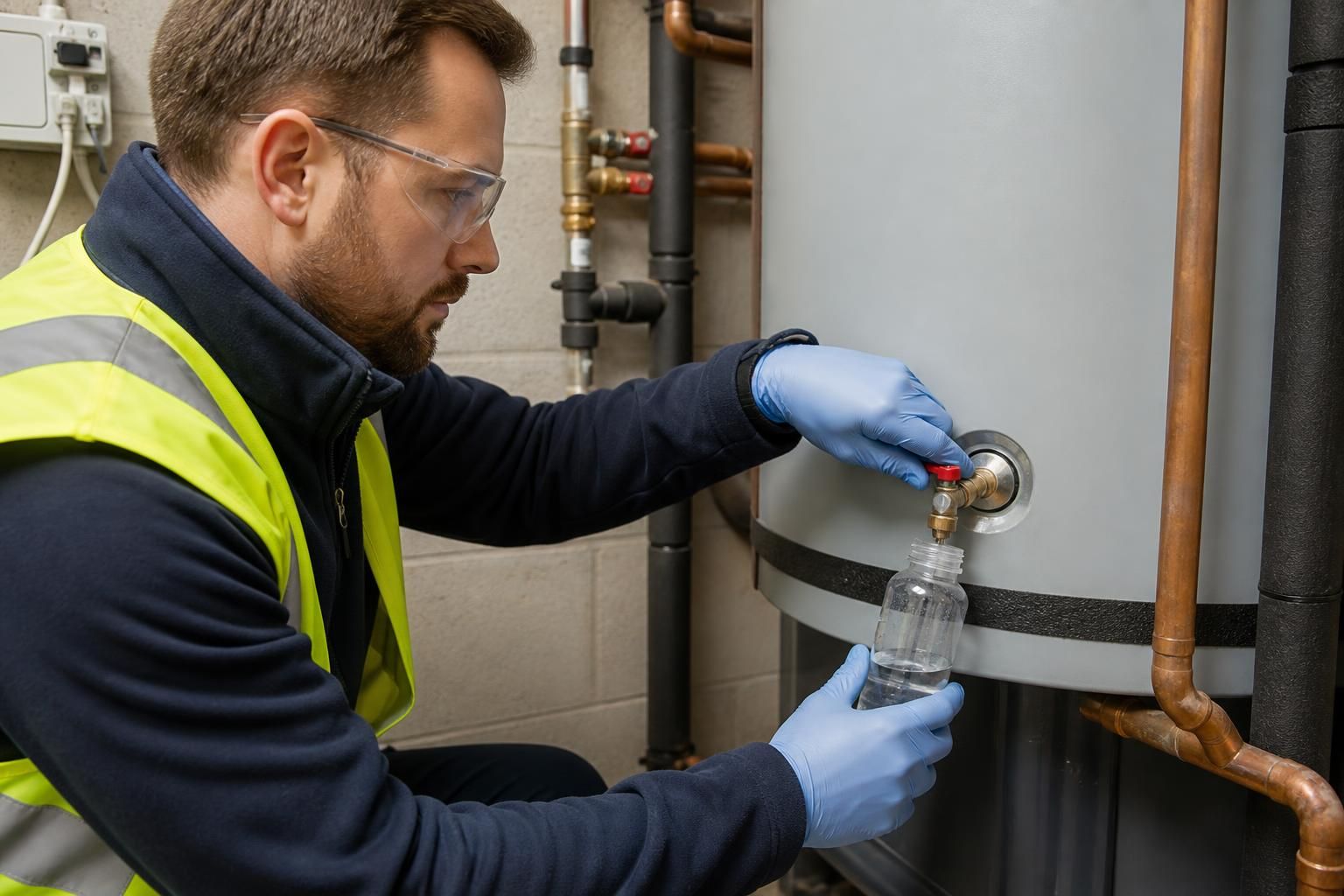
Hot water cylinder samples are selected through a documented, risk-based sampling plan that links each sample to a particular part of the system and a defined testing objective. The plan should identify whether the purpose is routine verification, investigation of suspected contamination, checking the effect of remedial work, or supporting a wider legionella control review.
Start with the system design. Before choosing sample points, the sampler should review available schematics, asset information and maintenance records. This helps establish how water moves through the cylinder system, including the cold-water supply, cylinder outlet, primary or secondary circulation, return pipework, thermostatic mixing valves and connected outlets. Where drawings are incomplete, the system should be traced and the uncertainty recorded rather than relying on assumptions.
- Source or control points: These may help establish the quality of water entering the system or leaving the cylinder before it passes through downstream components.
- Circulation points: Where a secondary return or similar arrangement exists, a sample may be considered from the return to investigate conditions within the circulating loop.
- Sentinel and distal outlets: Outlets that reflect the nearest and furthest parts of the distribution system can provide useful comparisons, particularly where temperature loss, stagnation or poor circulation is suspected.
- Higher-risk outlets: Showers, spray-producing outlets, outlets served through thermostatic mixing valves and locations used by vulnerable occupants may warrant specific consideration.
- Low-use or unusual locations: Infrequently used outlets, branches with limited circulation and sections affected by alterations may be included where they could harbour stagnant water or biofilm.
The final selection is not necessarily the largest possible set of locations. A small, well-justified group may answer the testing objective more effectively than numerous samples with no clear purpose. Conversely, a single result should not be treated as representative of the whole installation if the system contains several cylinders, separate loops, different occupancy areas or substantially different outlet types.
Routine and investigative sampling require different approaches. Routine monitoring generally uses consistent locations so that results can be compared over time. Investigative sampling may extend beyond those points when an unexpected result, complaint, control failure or change to the system suggests a particular area needs examination. In some investigations, samples are taken at more than one stage of the water route so that the likely source or extent of the issue can be assessed.
The sampler should also consider whether samples need to be taken before or after a relevant intervention, such as cleaning, disinfection, component replacement or adjustment of temperature controls. Results taken immediately after a change may answer a different question from results taken during normal operation, so the reason for the timing should be recorded. A laboratory report is more useful when it states the location, asset reference, outlet type, operating condition and purpose of each sample.
Sample selection must be matched to the laboratory request. Legionella analysis, heterotrophic or total viable count testing, and chemical examinations may require different containers, volumes, preservatives or collection arrangements. The organisation arranging the work should confirm the laboratory's instructions before collection and check that the requested examination falls within the laboratory's relevant UKAS-accredited scope. UKAS accreditation of the laboratory does not remove the need for competent collection, accurate labelling and suitable transport.
At each selected point, the sampler should document conditions that could affect the result, such as whether an outlet was in normal use, whether an attachment was removed, whether the outlet was flushed, and the water temperature where this is part of the sampling procedure. These details should follow the applicable method and laboratory instructions rather than being applied inconsistently between locations. Any unusual condition, including restricted access, a damaged outlet or an inability to sample as planned, should be noted.
Samples should be labelled so that the laboratory and the client can distinguish the cylinder, outlet and sampling position without ambiguity. The accompanying record should normally include the collection date and time, sampler identification, sample reference, system or building reference, requested analysis and relevant operational observations. Samples must then be protected from conditions that could alter the examination and delivered in accordance with the laboratory's requirements. Delays, incorrect containers or incomplete records can affect whether a result is accepted or how confidently it can be interpreted.
After testing, the selected locations should be reviewed alongside the laboratory findings and the system information. An unexpected result may justify repeat sampling, additional locations or a review of control measures; it does not automatically identify the source. Equally, results from apparently satisfactory points cannot rule out an issue in an untested branch. Good sample selection therefore combines a clear objective, knowledge of the cylinder system, consistent records and laboratory instructions, creating evidence that can be assessed as part of the organisation's wider water safety management.
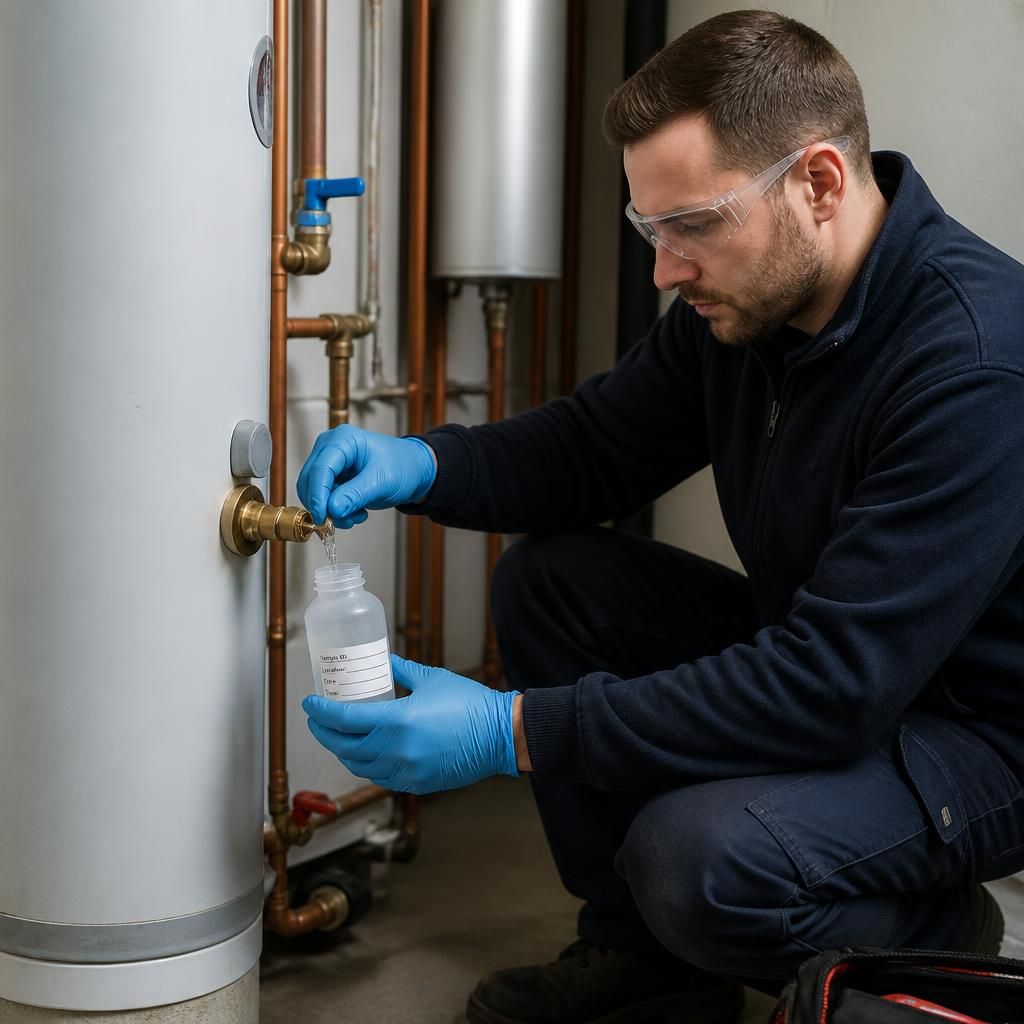
The most suitable sample point depends on whether the test is intended to represent water supplied to users or to investigate a specific part of the cylinder system. A routine outlet sample should normally reflect the water available at that outlet. By contrast, a drain, low-level valve or other non-routine point may contain settled material and should not automatically be treated as representative of the water delivered through normal outlets.
Drain or low-level samples can still be appropriate when the investigation concerns sediment, internal contamination or conditions within the cylinder itself. Their purpose should be stated clearly on the sampling record, because the findings may not be directly comparable with samples collected from outlets. Selecting the point according to the question being investigated helps prevent a technically accurate laboratory result from being given an incorrect meaning.
Discuss Your Hot Water Cylinder Sampling Requirements
If you need to confirm which hot water cylinder samples are appropriate for your testing objective, discuss your system and sampling requirements with Blue Fish Water Management Ltd. Their team can help identify the information needed to arrange suitable UKAS laboratory testing.