
What should organisations do when a hot water cylinder temperature falls outside the target range?
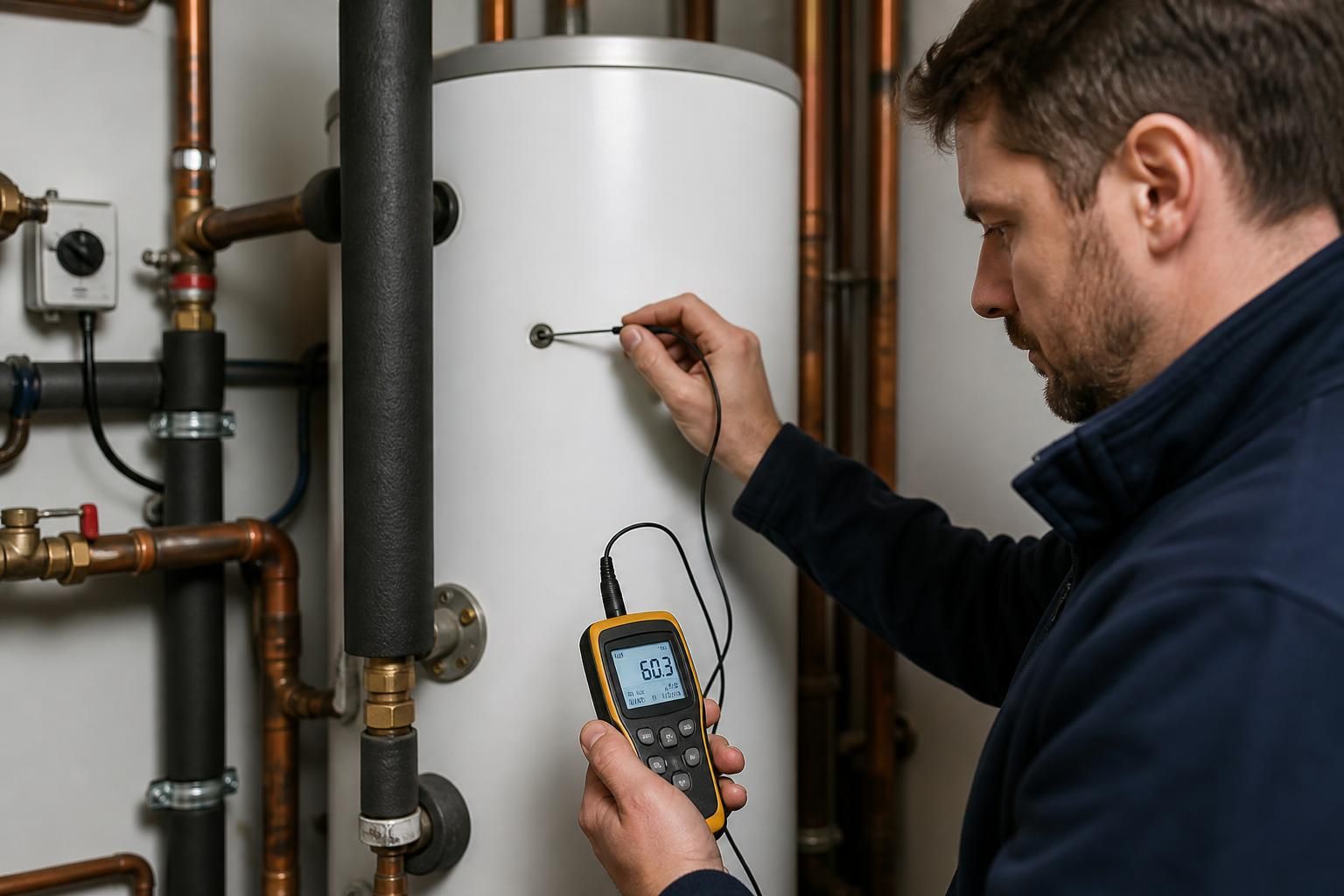
Organisations should treat a hot water cylinder temperature outside its defined control range as a control failure requiring investigation, not as an isolated recording issue. The appropriate response depends on whether the cylinder is under-heating or overheating, the reliability of the reading, the system design and the vulnerability of people using the water.
Temperature limits should be set through the organisation’s water safety arrangements and risk assessment. They should reflect the type of hot water system, the cylinder’s role, the distribution network, the presence of thermostatic mixing valves and the potential for Legionella growth or scalding. A generic target should not be applied without considering the whole system.
First, confirm the result. Before adjusting equipment, a responsible person should:
- Repeat the measurement using an appropriate, suitable thermometer or temperature probe.
- Check that the measurement method and location are consistent with the organisation’s monitoring procedure.
- Consider whether the probe is making proper contact and whether the reading may have been affected by recent water use, recovery time or stratification within the cylinder.
- Compare the result with recent records to identify whether this is a single deviation or part of a developing trend.
- Check that the monitoring equipment is maintained and verified in accordance with the organisation’s procedures.
If the result is confirmed, the deviation should be entered into the water temperature records with the date, time, location, measured value, target range and name of the person carrying out the check. The record should also show the assessment made, any temporary precautions, the person responsible for follow-up and the outcome of the investigation.
Where the cylinder is colder than required, investigate the possibility of increased Legionella risk. Relevant checks may include the heat source, thermostat settings, programmer or control panel, electrical or mechanical faults, circulation arrangements, insulation, recent maintenance and changes in demand. Low-use outlets, stored water that is not circulating effectively and dead legs elsewhere in the system may also need consideration. A single cylinder reading may therefore indicate a wider problem rather than a fault confined to the vessel.
The organisation should consider whether the affected outlets or parts of the system need temporary controls while the cause is being addressed. The decision should be based on the risk assessment and competent advice, taking account of who uses the water, how extensively the system is affected and whether other monitoring results are satisfactory. Remedial work should be completed by suitably competent personnel, followed by further measurements to demonstrate that control has been restored.
Where the cylinder is hotter than required, assess the scalding risk as well as the equipment fault. The investigation may include the thermostat, temperature controls, safety cut-outs, sensors and any associated mixing or distribution components. Access to affected outlets may need to be controlled until temperatures are brought within the approved range. Any adjustment must preserve the system’s Legionella control strategy; lowering temperatures without considering the wider system can create a different water hygiene risk.
After corrective work, the responsible person should take follow-up readings at the cylinder and, where relevant, at representative outlets or other monitoring points. Results should be compared with the defined control limits rather than judged solely by whether the original reading has changed. Repeated deviations, unexplained fluctuations or failure to regain control should trigger escalation to the person responsible for water safety and a competent water hygiene professional.
The incident should prompt a review of related controls where appropriate. This may include the monitoring frequency, sensor position, maintenance arrangements, staff instructions, risk assessment, written control scheme and training. If the temperature issue has affected other parts of the system, the review should cover those areas rather than closing the action after one satisfactory reading.
Specialist advice is particularly appropriate where the cause cannot be identified, the system serves vulnerable people, corrective work involves disinfection or major alteration, readings remain unstable, or the organisation cannot demonstrate that the system is again operating within its defined limits. A competent water hygiene provider can support investigation, compliance auditing, water testing where indicated and remedial recommendations, while the organisation retains responsibility for implementing and recording its control measures.
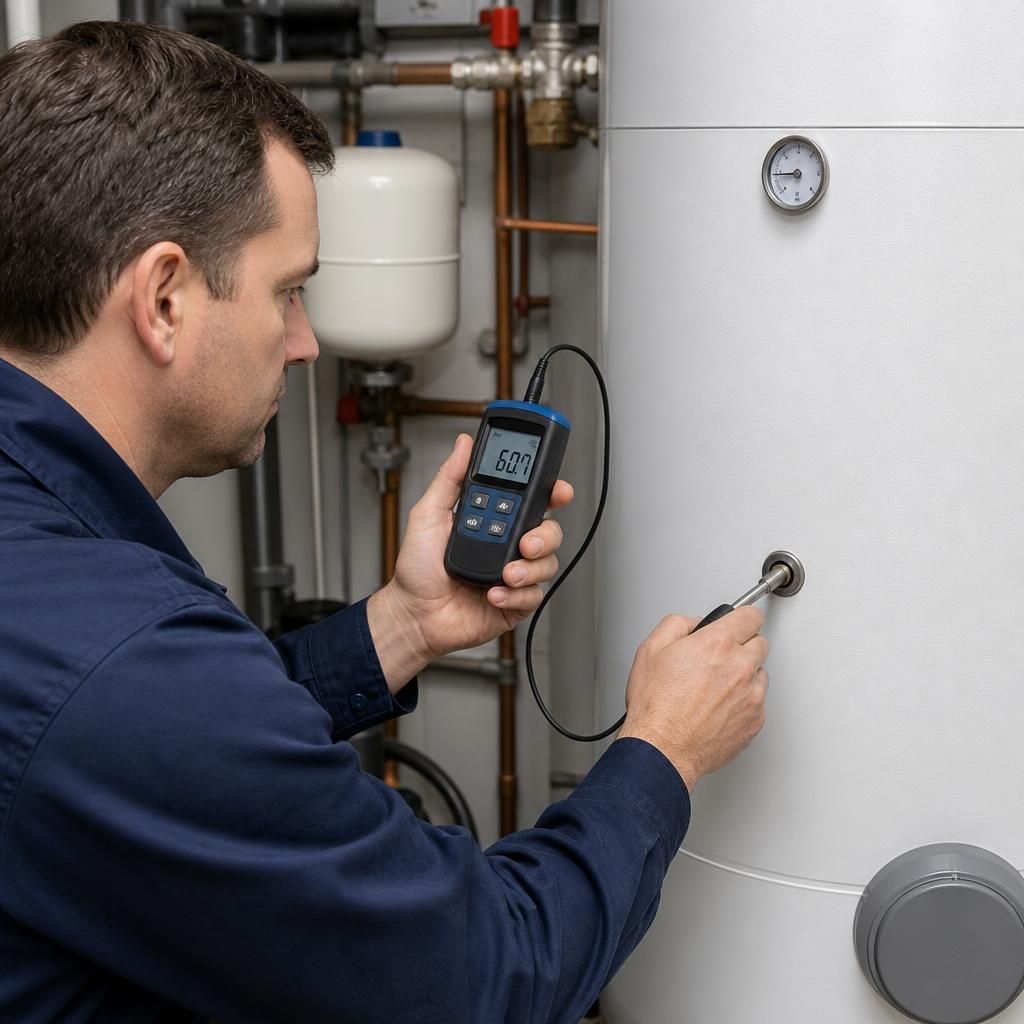
A confirmed temperature deviation should be managed as a documented non-conformance within the organisation’s water safety arrangements. Link the original result to the investigation, work order or other corrective action, and retain evidence such as follow-up readings, engineer’s findings and approval of closure. This creates a clear audit trail showing not only that an adjustment was made, but that the underlying control issue was addressed and reviewed.
Discuss a Hot Water Cylinder Temperature Concern
If a hot water cylinder temperature concern remains unresolved, discuss the system with Blue Fish Water Management Ltd to determine whether further investigation or water hygiene support is appropriate. Have the relevant temperature records and details of any corrective work available to support a focused discussion.