
Who is responsible for hot water cylinder temperature checks?
Responsibility for hot water cylinder temperature checks usually rests with the duty holder or responsible person who controls the premises and its water systems, such as a landlord, property manager or facilities team. They must ensure checks are carried out, recorded and acted on appropriately; a competent water hygiene contractor can perform the checks, but accountability remains with the duty holder.
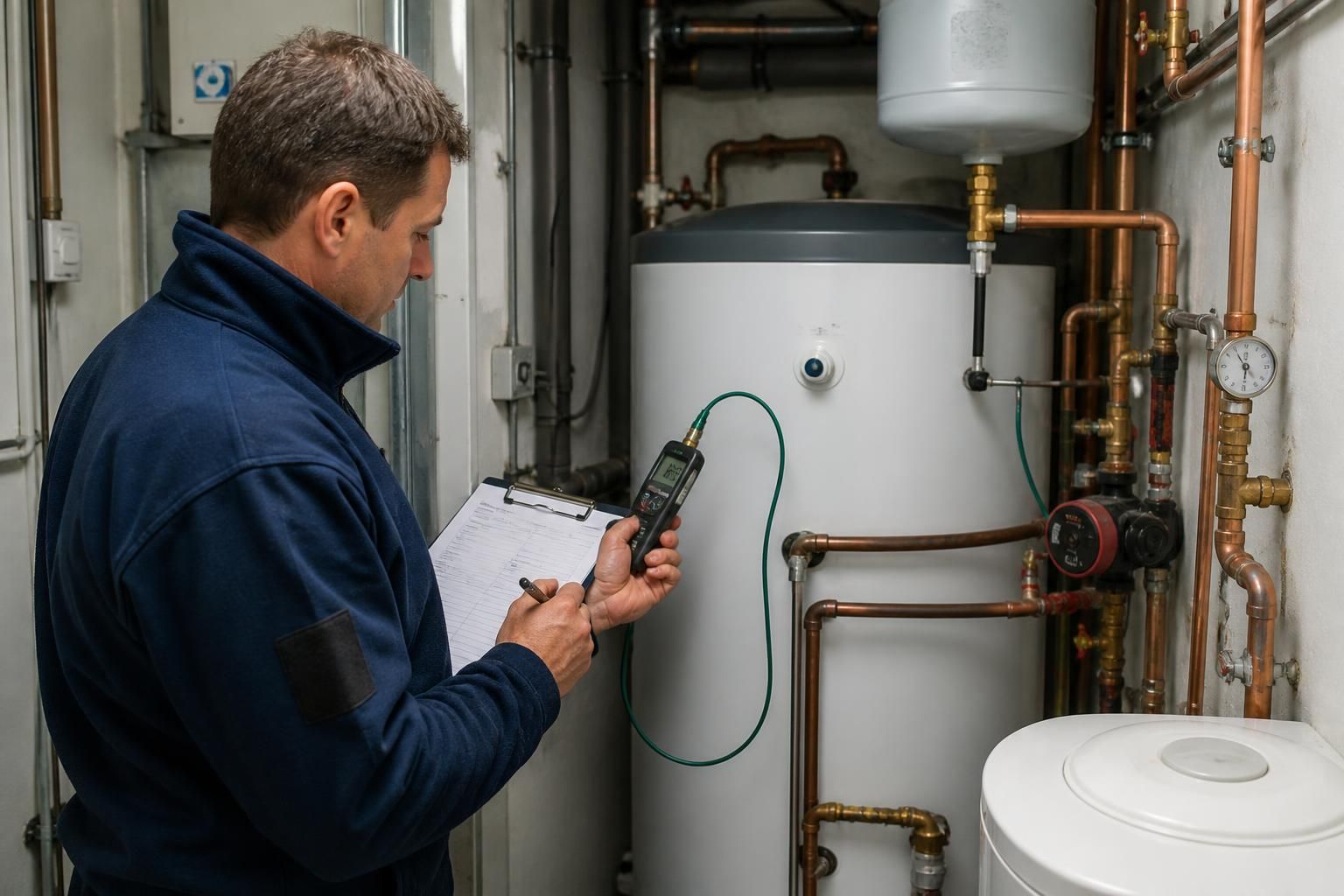
The person responsible for hot water cylinder temperature checks is the individual or organisation with control of the premises and its water system. In practice, this is often the landlord, building owner, employer, managing agent or facilities manager, depending on how responsibilities have been allocated. Their role is to make sure the temperature monitoring arrangements are suitable, completed by a competent person and incorporated into the wider legionella control scheme.
Responsibility should be defined in writing rather than assumed. A water safety policy, legionella risk assessment or contract may identify:
- The duty holder: the person or organisation with overall control of the premises, or the employer where workplace duties apply.
- The appointed responsible person: the individual who coordinates water safety tasks, including arranging checks, reviewing results and escalating defects.
- The facilities or maintenance team: staff who may take readings, inspect cylinders and associated components, and report abnormalities.
- A managing agent or landlord: the party that organises access, maintenance and contractor activity where a property is let or managed on another owner's behalf.
- A specialist contractor: an external competent person may carry out measurements, calibration, sampling or remedial work under an agreed scope.
Appointing a contractor does not automatically remove the duty holder's accountability. The organisation in control should check that the contractor understands the system, has suitable competence and provides records that can be reviewed. The scope should state which cylinders, outlets, thermostatic mixing valves, secondary return systems and other relevant assets are included, as well as who deals with failed readings.
For larger or shared premises, responsibility may be divided between several parties. A facilities manager might control the plant room, while a landlord, managing agent or tenant controls occupied areas. Each party should understand where its duties begin and end. The written arrangements should cover access, isolation of equipment, communication of results, maintenance responsibilities and action when a reading is outside the target range. Ambiguous arrangements can leave important checks missed, particularly where a cylinder serves more than one occupier.
The person carrying out the check needs appropriate instruction and practical competence. This includes knowing how to use the thermometer, select representative measurement points, avoid unsafe contact with hot surfaces, identify equipment that may affect the reading and record the result accurately. Competence is not determined solely by job title. It should reflect the complexity of the water system and the risks identified in the assessment.
The responsible person should also make sure that the temperature target and checking frequency are based on the site's risk assessment and relevant water safety guidance. A single reading may not explain why a cylinder is performing poorly. Results should be considered alongside thermostat settings, stored-water temperature, distribution temperatures, usage patterns, faults, maintenance activity and any history of inconsistent readings.
Where results are unsatisfactory, the responsible person must ensure that the issue is investigated and that corrective action is tracked to completion. This may involve checking the thermometer, examining the thermostat, arranging maintenance, reviewing scalding controls or seeking further technical advice. The record should show the result, the person who took it, the date, the equipment or location checked, any relevant observations and the action taken.
In premises with employees, the employer also has duties to protect people who may be exposed to risks from work activities and building systems. In rented or managed property, contractual arrangements can allocate tasks to an agent or contractor, but those arrangements should be clear, proportionate and actively monitored. The party retaining control should not rely on a contract without checking that the required checks and follow-up actions are actually taking place.
A practical allocation of responsibility is therefore:
- Identify the duty holder and responsible person for the premises.
- Document who performs cylinder temperature checks and who reviews them.
- Specify the locations, equipment and target conditions covered by the monitoring plan.
- Ensure the person taking readings has suitable equipment, instruction and competence.
- Require results and exceptions to be recorded in a form that can be audited.
- Assign named ownership for investigation, remedial work and verification after an issue.
- Review the arrangements when the building, water system, occupancy or management structure changes.
Blue Fish Water Management can support organisations with water hygiene advice, system monitoring, legionella risk management and related compliance activity. The organisation controlling the premises should nevertheless retain clear oversight of its own responsibilities and ensure that any delegated work is properly specified and reviewed.
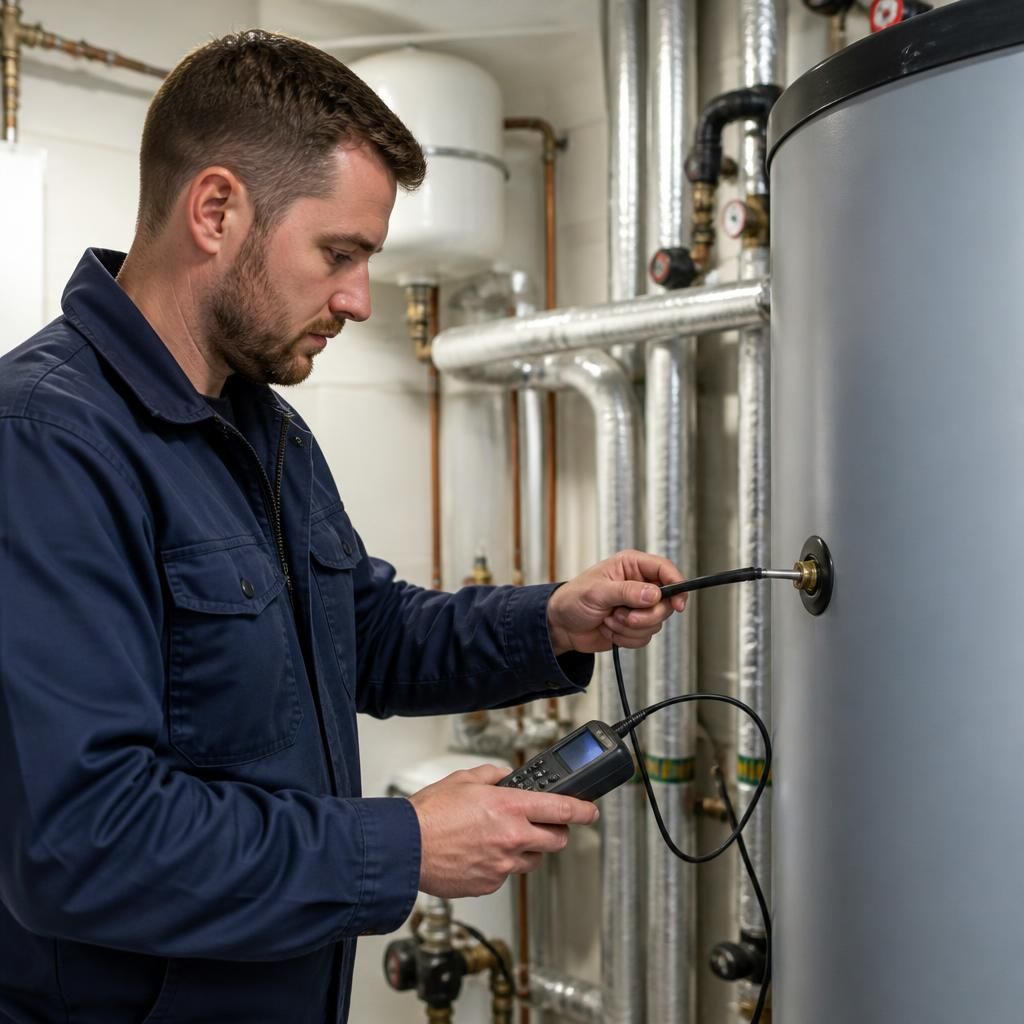
Responsibility for a hot water cylinder should be mapped to the part of the system and building that each party controls. For example, a landlord may own the cylinder, a tenant may control daily operation, and a maintenance contractor may be permitted to adjust the controls. A written responsibility matrix can distinguish these roles and prevent ownership being mistaken for operational control.
The matrix should identify who can authorise access, who may alter settings, who receives the completed check, and who approves work when a defect is found. This is particularly useful where a cylinder serves several organisations or where maintenance is arranged through a managing agent. Reviewing the matrix after a lease, service contract or occupancy change helps keep responsibility aligned with the way the system is actually managed.
Need help assigning responsibility for hot water cylinder temperature checks?
Speak to Blue Fish Water Management about reviewing your hot water cylinder monitoring arrangements and clarifying responsibility for checks, records and follow-up actions.