
What equipment is needed for hot water cylinder temperature checks?
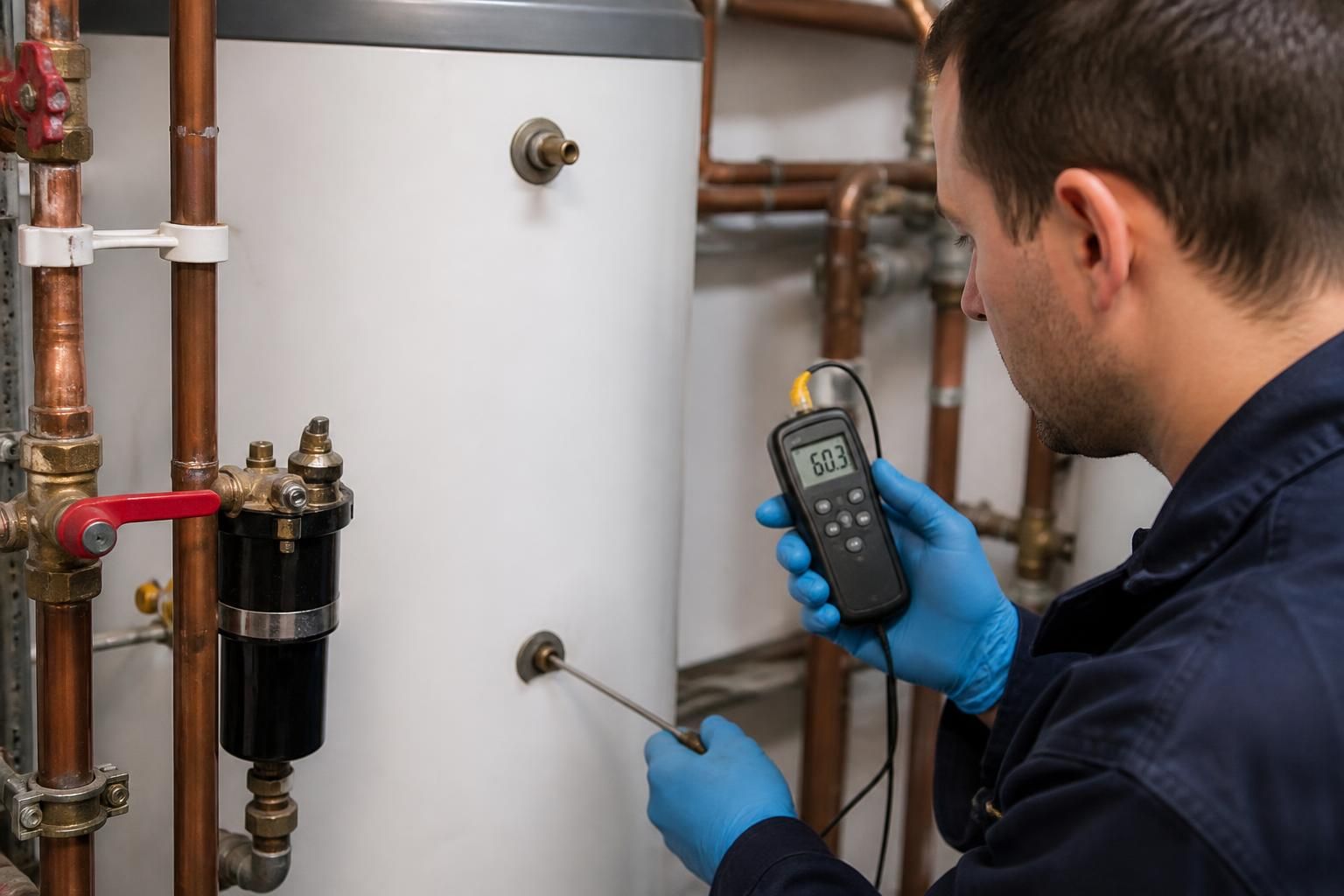
The equipment required depends on whether the check is being made at the cylinder surface, within stored water, or at connected pipework and outlets. In addition to a suitable temperature-measuring instrument, organisations need equipment that supports safe access, hygienic sampling, reliable calibration and accurate record-keeping.
Useful equipment may include:
- Interchangeable probes: a surface probe can assess accessible pipework or the outside of a cylinder, while an immersion probe is more appropriate where a representative stored-water measurement can be taken. The probe should be suitable for the temperature range and construction of the system.
- Probe protection and carrying equipment: a protective case, cable protection and a secure carrying pouch help prevent damage or contamination between locations. A damaged cable, loose connection or cracked probe can affect the reliability of a reading.
- Calibration documentation: the thermometer should be identifiable by serial number or asset reference, with a current calibration certificate and records of any checks carried out between formal calibrations. The organisation should define what happens if an instrument is found to be outside its required accuracy.
- Cleaning and disinfection materials: suitable wipes or disinfectant can be used to clean the probe before and after contact with water or system components. Any product used should be compatible with the instrument and applied in accordance with its instructions, avoiding contamination of the water system.
- Personal protective equipment: gloves and suitable protective clothing may be needed when handling hot components, drawing water, or working in plant areas. Eye protection may also be appropriate where hot water could splash.
- Access equipment: safe access may require a torch, inspection mirror or suitable step access where the thermometer, sensor pocket or associated pipework is difficult to see. Access arrangements must not create a trip, burn or contact hazard.
- Temperature-check forms or electronic records: the recording system should allow the user to identify the asset and location, enter the result and note the measurement point, date, time, operator and relevant observations. Electronic systems may also allow unusual results, corrective actions and follow-up readings to be linked to the original check.
Infrared thermometers can be useful for an initial indication of external surface temperature, but they do not directly measure the water inside a cylinder. Readings can be affected by reflective surfaces, insulation, emissivity and the distance from the target. They should therefore not automatically be treated as an alternative to a properly positioned contact or immersion probe where an internal water temperature is required.
For larger or higher-risk systems, a portable data logger may be appropriate when the objective is to identify temperature variation over time rather than obtain a single spot reading. A logger should be configured for the location and purpose of the monitoring exercise, and its data should be reviewed alongside the system’s operating conditions. It is not a substitute for checking that the sensor is correctly positioned and functioning.
Before use, the operator should confirm that the instrument is within its calibration period, inspect the probe and lead, and allow the equipment to stabilise where the manufacturer’s instructions require this. The measurement point should be clearly identified so that later checks are comparable. If access is unsafe, the equipment is unsuitable, or the result appears inconsistent with other observations, the reading should be investigated rather than accepted without qualification.
Equipment selection should be based on the cylinder design, the available measurement points, the required accuracy, the condition of the installation and the organisation’s written control scheme. Where the system cannot be checked safely or the result may affect legionella control decisions, a competent water hygiene professional should determine the appropriate method and any further investigation.
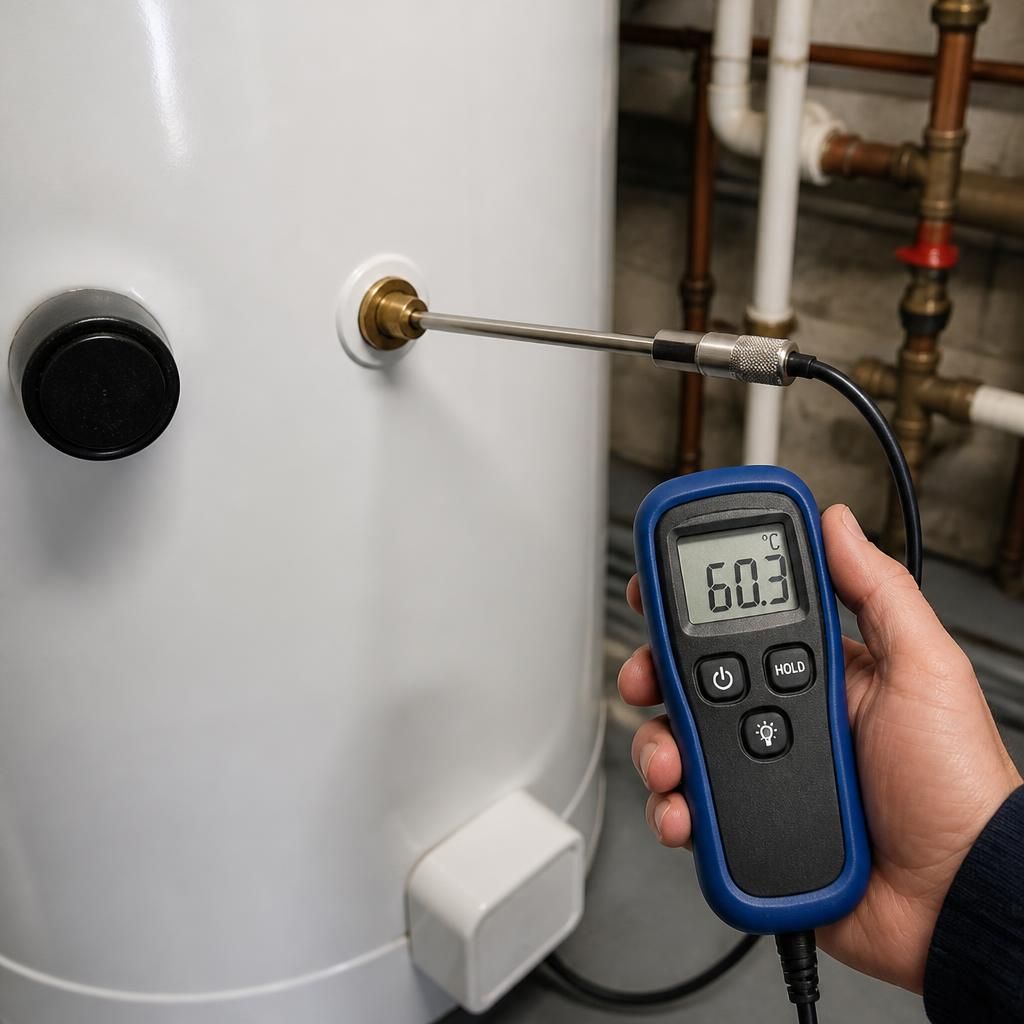
Where a hot water cylinder has a fitted sensor pocket, test point or thermometer port, the checking equipment should be compatible with that access arrangement. A suitable probe extension or immersion sensor may be needed to reach the intended measurement position without dismantling the cylinder or disturbing insulation, valves or connected controls.
Any removable cap, plug or protective fitting should be replaced securely after the reading. Operators should not create a new access point, remove safety components or insert a probe into an enclosed cylinder unless the installation has been designed for that method and the work is authorised. If there is no safe, representative test point, the equipment requirement may need to be determined by a competent person before monitoring begins.
Need advice on hot water cylinder temperature check equipment?
If you need to confirm whether your existing equipment and measurement points are suitable, contact Blue Fish Water Management Ltd for advice on hot water cylinder temperature monitoring and legionella control.