
What should hot water cylinder temperature check records include?
Hot water cylinder temperature check records should identify the cylinder or asset, its location, the date and time of the check, the temperature reading, the measuring method and the person who completed it. They should also note the applicable target range, any abnormal result, corrective action taken, and follow-up verification where required.
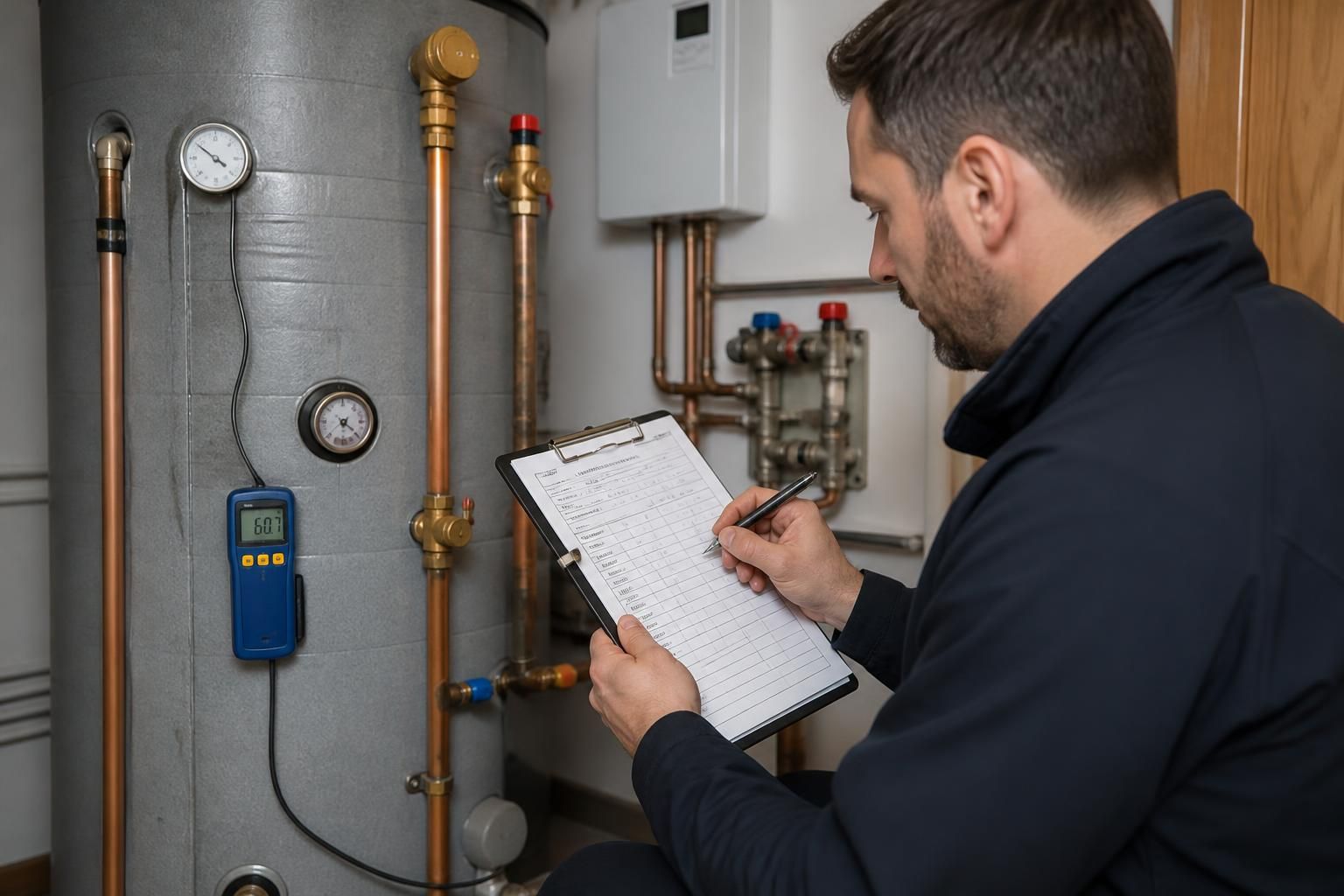
Effective hot water cylinder temperature check records provide an auditable account of the check, the result obtained, how that result was assessed, and what happened afterwards. They should be clear enough for a responsible person, auditor or contractor to understand the condition of the system without relying on the memory of the person who carried out the check.
In addition to the basic reading, each entry should include enough system context to explain what was being assessed. This may include:
- the cylinder’s function, such as primary storage, secondary storage or a specialist application;
- the relevant part of the system, particularly where more than one cylinder serves the premises;
- whether the check formed part of routine monitoring, commissioning, investigation or verification after remedial work;
- the condition of the access point and any factors that could have influenced the reading, such as recent use, maintenance or changes to the system.
The record should identify the person’s role or organisation as well as their name or initials, where this is needed to establish accountability. If checks are completed by different people, consistent identification makes it easier to confirm that those individuals were authorised, suitably instructed and working to the organisation’s agreed procedure.
Where a thermometer or other instrument is used, the record should link the result to the equipment used. Useful supporting information can include the instrument identification number, calibration or verification status, and any limitation affecting the measurement. This helps distinguish a genuine system temperature from a possible equipment or measurement issue.
Records should also show how the result was reviewed. A simple pass or fail may be insufficient where the reading is close to an action threshold or differs from previous results. The reviewer may need to record whether the result was compared with the written control scheme, previous readings, related flow and return temperatures, or other relevant monitoring information.
If the result is unsuitable, the entry should create a traceable corrective-action record rather than merely stating that a problem was found. Include:
- a description of the issue and its potential significance;
- the immediate control applied, if one was necessary;
- the person or role assigned to investigate or rectify it;
- the action reference, work order or other means of linking the check to maintenance evidence;
- any parts of the water system or building users that required further consideration;
- the date the action was completed and the evidence used to close it.
Follow-up entries should make clear whether the corrective action resolved the original issue or whether further investigation remained necessary. A new reading should not be treated as proof of resolution unless it was taken under suitable conditions and assessed against the organisation’s control arrangements. Where a problem persists, the record should remain open or be linked to a continuing action plan.
Good records are legible, protected from unauthorised alteration and stored with the wider water hygiene documentation. Electronic systems should preserve an audit trail when entries are amended, while paper forms should avoid unexplained overwriting. Corrections should remain visible, with the reason for the change and the identity of the person making it.
The information should be easy to retrieve alongside the relevant risk assessment, written control scheme, maintenance reports, laboratory results and training or competency records. Retention arrangements should follow the organisation’s documented policy and any applicable contractual, regulatory or health and safety requirements. Periodic review can identify missed checks, repeated low or high results, unresolved actions and changes in the way the cylinder is operated.
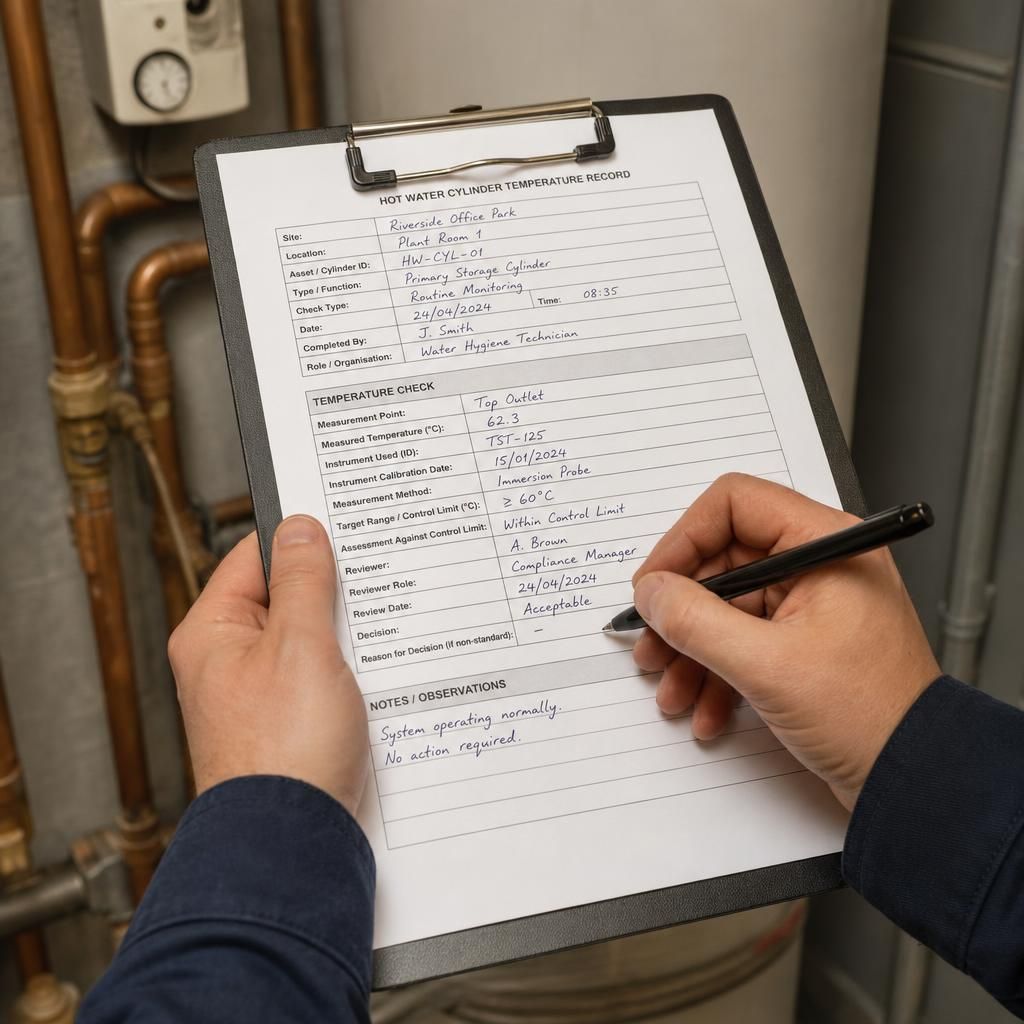
A well-designed temperature check form should separate the measured observation from the decision made about it. This prevents a pass or fail label from replacing the evidence needed to understand the result and supports consistent review by different members of the organisation.
Use dedicated fields for:
- the recorded temperature, exactly as displayed by the instrument;
- the assessment against the organisation’s defined control limit;
- the reviewer’s decision, such as acceptable, investigate or escalate;
- the reason for any non-standard decision;
- the date on which the entry was reviewed, where review is separate from the check.
Keep free-text notes for relevant observations that do not fit the fixed fields, rather than using them to replace required information. This structure makes records easier to compare, sample and audit while preserving the distinction between what was measured and what the result meant.
Need guidance on your hot water cylinder temperature check records?
If you need to review whether your hot water cylinder temperature records support your water safety arrangements, contact Blue Fish Water Management Ltd for practical advice or a legionella compliance audit.