0345 8778911
UK-wide coverage • Commercial, industrial & domestic

When should organisations arrange specialist hot water cylinder temperature checks?

Organisations should arrange specialist hot water cylinder temperature checks during commissioning, as part of routine legionella control, and after alterations, maintenance or periods of non-use. Additional checks are appropriate when readings fall outside the required range or a risk assessment identifies increased risk.
Competent persons
Practical advice
Clear reporting
When should organisations arrange specialist hot water cylinder temperature checks?
Need a legionella risk assessment?
Book a consultation and get clear next steps.
Specialist hot water cylinder temperature checks should be arranged whenever an organisation needs an independent, technically reliable assessment of stored hot water temperatures and the associated legionella controls. The appropriate timing and frequency should be set by the site’s written scheme, current risk assessment and the competence of the person carrying out the checks, rather than by a universal calendar interval. A specialist check is particularly appropriate where:
  • the organisation does not have a suitably trained person to take, interpret and record temperatures;
  • the cylinder forms part of a larger or more complex hot water system, including systems with secondary circulation, multiple outlets or temperature control devices;
  • access to the cylinder, immersion heater, thermostat or associated pipework is restricted;
  • temperature records are incomplete, inconsistent or difficult to interpret;
  • the organisation is preparing for a compliance audit, contract review, property handover or inspection; or
  • there has been a suspected legionella incident, a complaint about water temperatures or another event that calls the effectiveness of existing controls into question.
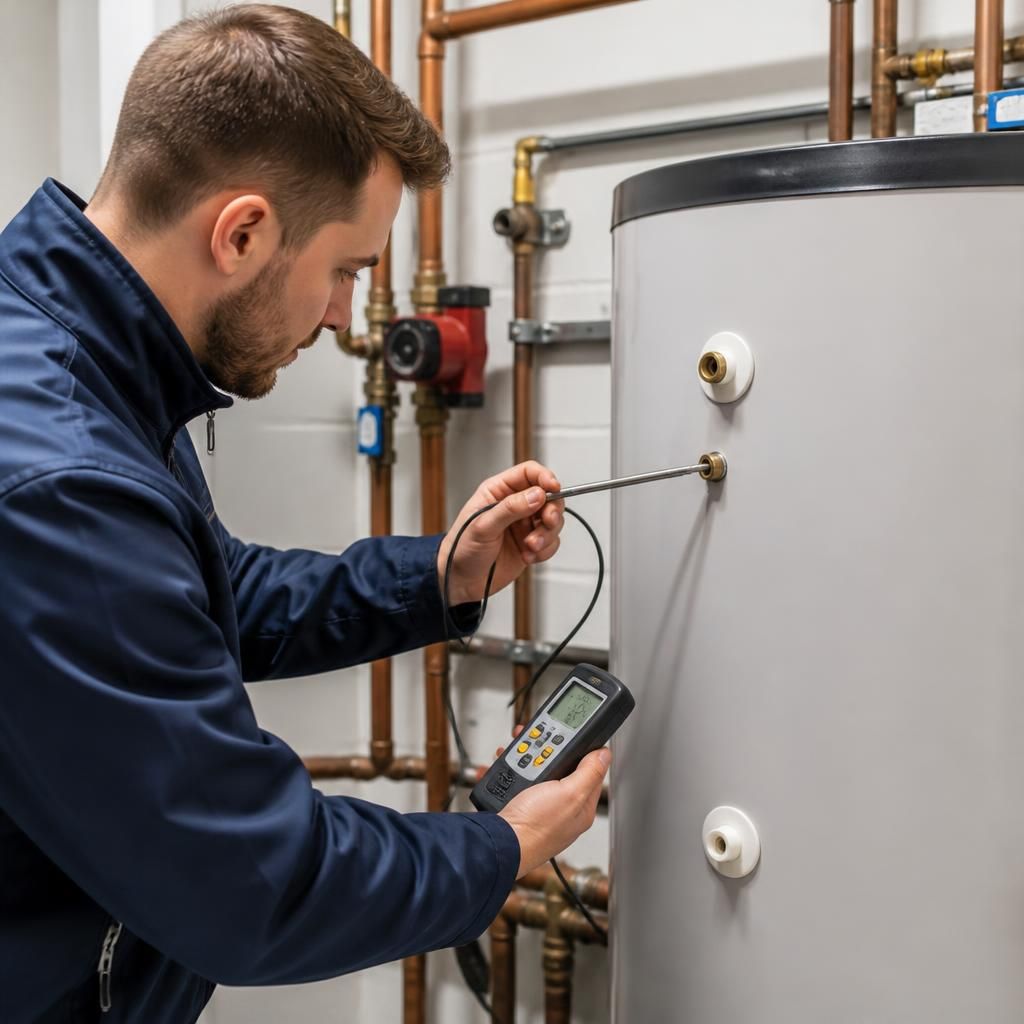
The check should cover more than a single thermometer reading. A competent specialist will consider whether the measured temperature is representative, whether the thermometer is suitable and accurate, and whether the cylinder is achieving and maintaining the required operating condition. They may also review the thermostat setting, heating controls, temperature stratification, accessible outlets and any relevant monitoring records. This helps distinguish an isolated reading from a persistent control failure. Organisations should also arrange a review when the building’s use, occupancy or water demand changes in a way that could affect the hot water system. Examples include bringing previously unused rooms back into service, changing the pattern of occupancy, adding outlets or altering how the building is managed. These changes should prompt a review of the risk assessment and monitoring arrangements, even if the cylinder itself has not been replaced. The frequency of specialist involvement will depend on the findings of the risk assessment. Some sites may use trained employees for routine observations and bring in a specialist for scheduled verification. Others, particularly those with complex systems or higher-risk occupants, may require more frequent independent checks. A specialist can help define suitable monitoring points, confirm that the schedule is proportionate and identify when further investigation is justified. Each visit should produce clear evidence of what was checked, where readings were taken, the equipment used, the results obtained and any corrective action recommended. Records should be retained with the wider water safety documentation so that trends can be identified over time and responsible persons can demonstrate how temperature control is being managed. Where a check identifies a concern, the organisation should follow its escalation procedure and obtain appropriate technical advice rather than treating the visit as a one-off measurement exercise.
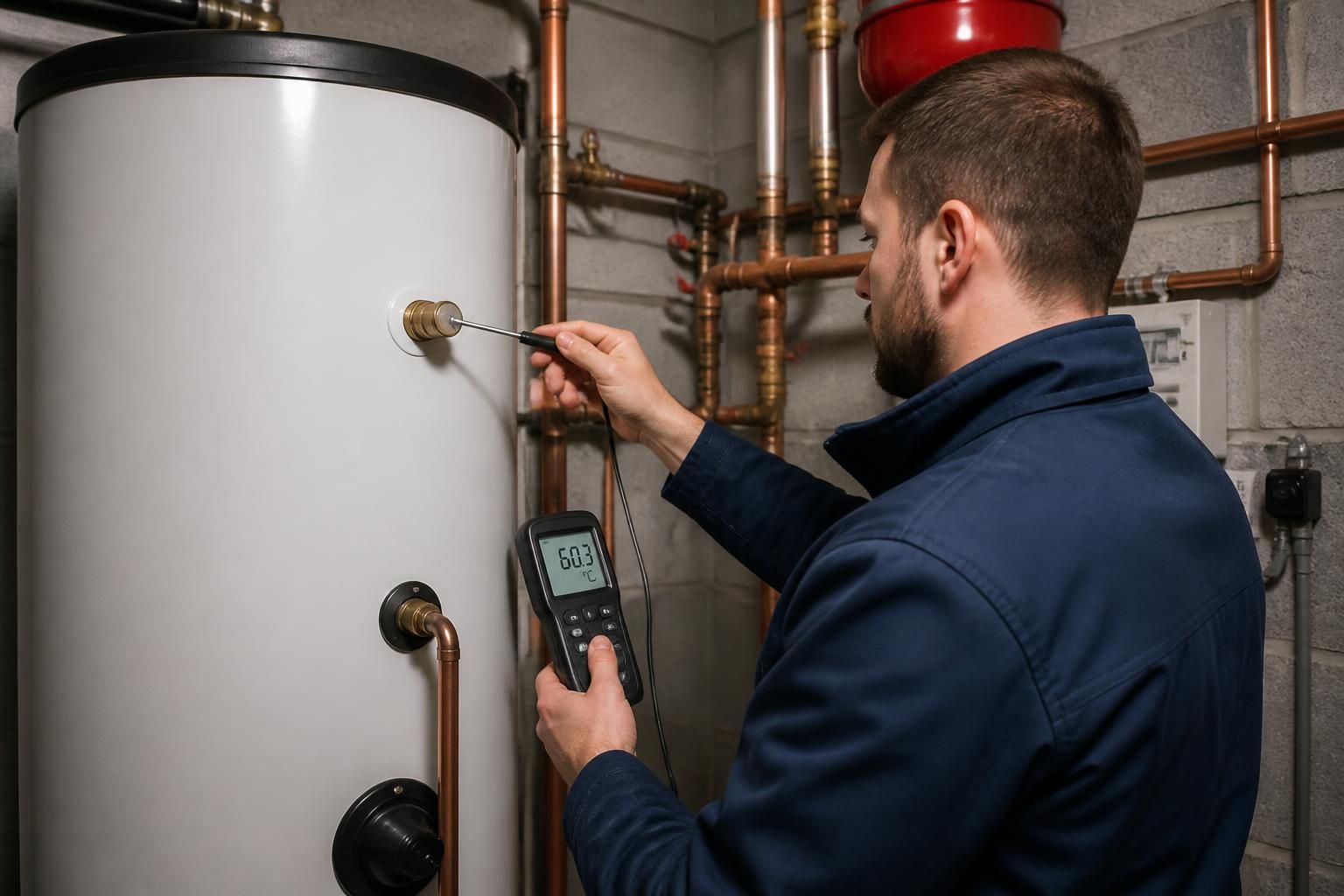
Technician measuring the temperature of a hot water cylinder with a digital thermometer

Arrange a specialist hot water cylinder temperature check when stored-water readings and outlet temperatures appear inconsistent, particularly where thermostatic mixing valves or other temperature-control devices are installed. A cylinder may be operating correctly while an outlet reading is reduced by local controls, or an outlet may present a concern that cannot be explained by the cylinder temperature alone.

A competent assessment can separate these issues by checking the cylinder, relevant control settings and representative outlets together. This is useful before changing thermostat settings or other controls in response to an isolated reading. It helps the organisation identify whether the issue relates to heat generation, storage, distribution or point-of-use protection, so that corrective action is directed at the actual cause.

Discuss your hot water cylinder temperature check requirements

Discuss your organisation’s hot water cylinder temperature check requirements with Blue Fish Water Management Ltd to establish an appropriate approach for your water safety arrangements.

Contact Us