
How is water tank refurbishment documented for compliance?
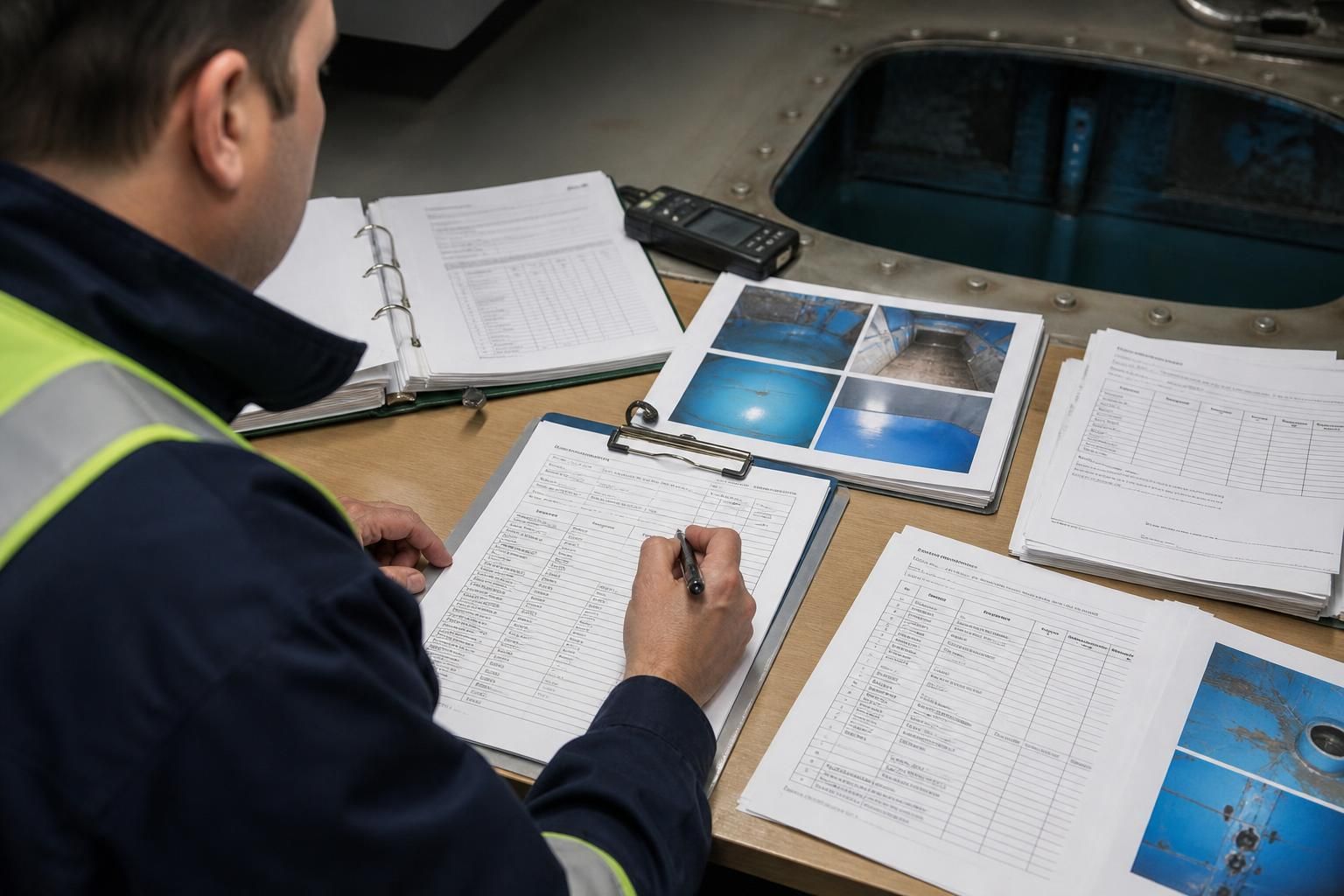
For compliance purposes, water tank refurbishment should be recorded as a controlled change to a water system, with evidence showing why the work was needed, what was authorised, how it was carried out and how the tank was verified before being returned to service. The records should be sufficiently detailed for the responsible person, auditor or enforcing authority to understand the condition of the tank and the safety decisions made.
Pre-work documentation establishes the starting position. This normally includes:
- the tank’s location, identification and relationship to the wider water system;
- the reason for refurbishment, such as corrosion, deterioration, leakage, damaged coatings, contamination or defects affecting cleanability;
- inspection findings, supported where appropriate by dated photographs, measurements, drawings or marked-up plans;
- relevant findings from the site’s legionella risk assessment and water hygiene records;
- the proposed scope of work, including any limitations, exclusions and temporary arrangements; and
- the approval of the responsible person or client representative before work begins.
The condition survey should distinguish between defects that can be corrected through refurbishment and defects that may require replacement or wider system work. Recording this reasoning is important because it links the selected solution to the evidence available at the time, rather than simply documenting the work after completion.
The work specification and method statement should define how the refurbishment will be controlled. It may cover isolation and draining, access arrangements, removal of damaged material, preparation of surfaces, repairs to the tank structure, application of coatings or liners, curing requirements, reinstatement and protection against recontamination. Where the work could affect water quality or system operation, the documentation should also address control measures, responsibilities, risk assessments and any required permits.
Materials should be identified by type and, where relevant, by product documentation or batch information. Records should demonstrate that materials are suitable for their intended contact with water and compatible with the tank substrate and operating conditions. Technical data, installation instructions, certificates and statements relating to potable-water suitability should be retained where applicable. The record should also note preparation requirements, application conditions and curing times, since a coating or repair cannot be assessed properly without knowing how it was installed.
Progress records provide evidence that the approved specification was followed. Useful information includes:
- the dates of preparation, repair and application activities;
- the personnel or contractor responsible for each stage;
- photographs before, during and after the work;
- details of surface preparation and repairs completed;
- material batch or reference details;
- observations about environmental or application conditions where these affect the result;
- any inspections or hold points completed before the next stage; and
- variations from the original scope, together with their approval and technical justification.
Photographs are most useful when they are dated, clearly associated with the tank and supported by written notes. They should show defects, difficult-to-access areas, repaired sections, joints, outlets, fittings and the finished internal surfaces where practical. Photographs supplement inspection records; they do not replace a written account of what was found and what was done.
Cleaning and disinfection records should show how the tank was prepared for return to service. Depending on the system and the work undertaken, this may include records of cleaning, removal of debris, flushing, disinfection arrangements, sampling and the release decision. The documentation should identify who completed or witnessed each activity and record any result that requires further action. Reinstatement should also be recorded, including the condition of access covers, screens, vents, overflow arrangements, warning devices, valves and associated fittings.
Post-work inspection and validation confirm whether the refurbishment achieved its intended purpose. The final inspection should check the integrity and finish of the repaired areas, the absence of visible defects, the condition of seals and fittings, accessibility for future inspection and any features that could promote stagnation or contamination. Where testing or sampling is specified, the report should identify the samples or tests taken, the date, the laboratory or competent tester where relevant, the results and the interpretation of those results.
Validation is not limited to obtaining a test result. It should connect the evidence to the acceptance criteria agreed for the project and record whether the tank was accepted, accepted subject to outstanding actions or rejected pending corrective work. Any remedial action should have its own completion record and, where necessary, repeat inspection or testing.
The handover pack should bring the evidence together in a form that can be retained with the site’s water safety records. It may contain the completed inspection report, approved scope, risk assessments and method statements, material information, photographs, cleaning and disinfection certificates, test or laboratory reports, defect and action logs, final inspection notes and confirmation of handover. Updated asset information, drawings or schematics should be included where the refurbishment changed the system or its access arrangements.
The completed record should also state any ongoing requirements. These may include inspection points, monitoring arrangements, restrictions on use, recommended follow-up checks, outstanding defects or changes needed in the legionella control scheme. The responsible person can then incorporate the refurbished tank into routine monitoring and future risk assessments rather than treating the project as an isolated maintenance event.
Records should be dated, traceable to the correct tank and stored so that they can be retrieved during audits, inspections or later maintenance. Blue Fish Water Management can support this process through water hygiene assessment, testing, compliance review and documentation of refurbishment-related control measures, helping clients maintain a coherent evidence base for their water safety arrangements.
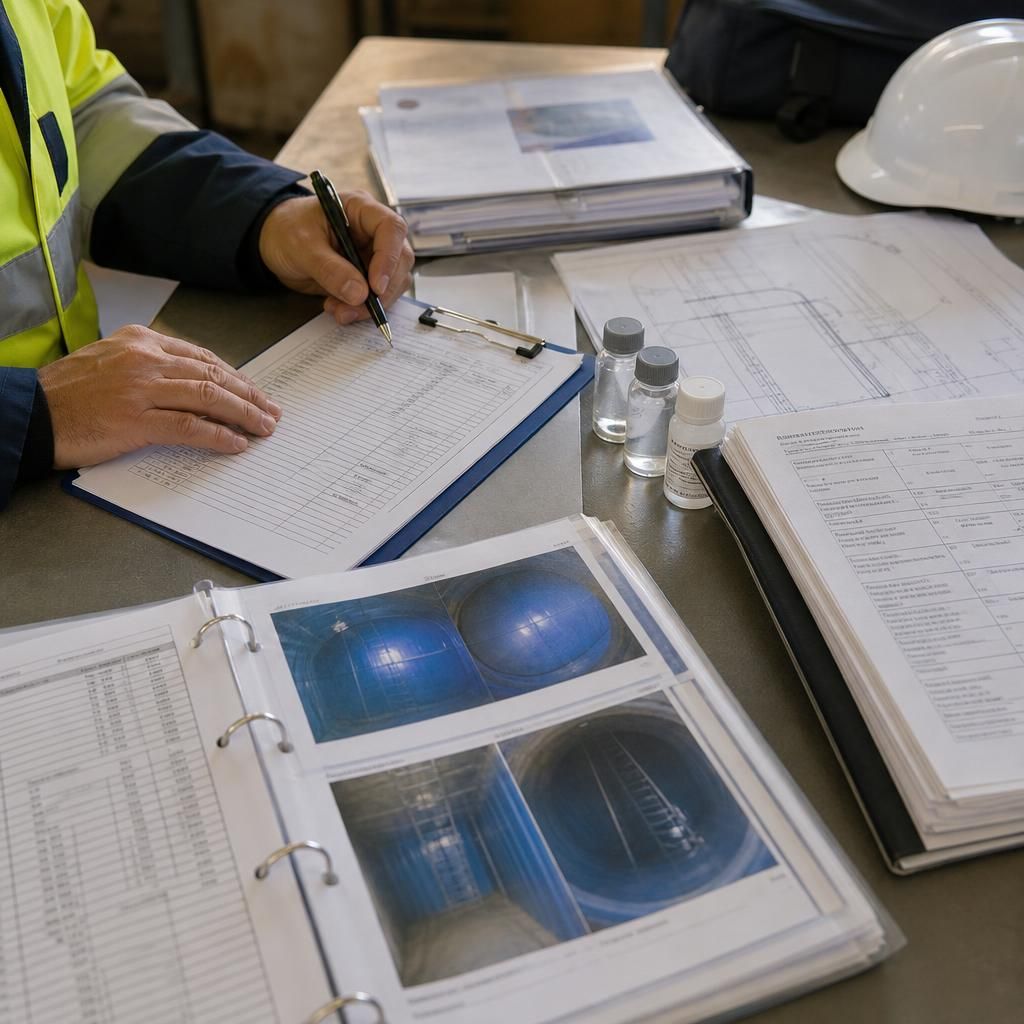
Compliance documentation is strongest when it shows an unbroken, controlled record from the original decision to refurbish through to final approval. Each document should have a clear title, date, revision status and connection to the specific tank, so an auditor can distinguish the current approved information from superseded drafts.
Records should be completed as the work progresses rather than reconstructed afterwards. If an entry needs correcting, the original information should remain identifiable, with the amendment dated and attributable to the person making it. Electronic files should be stored in a controlled location with suitable access permissions and backups, while paper records should be protected from loss or deterioration.
This approach helps demonstrate that compliance evidence is reliable, not simply assembled for an inspection. It also makes later reviews more effective by showing which decisions were made, when they changed and who authorised them.
Discuss Your Water Tank Refurbishment Compliance Records
If you need to review whether your water tank refurbishment records provide a complete compliance trail, discuss your documentation requirements with Blue Fish Water Management.