
What does the water tank refurbishment process involve?
Water tank refurbishment involves assessing the tank’s condition, safely isolating and draining it, removing contamination or corrosion, and repairing or relining damaged surfaces. The completed tank is then cleaned, disinfected and inspected, with appropriate checks and documentation to confirm it is suitable for continued use.
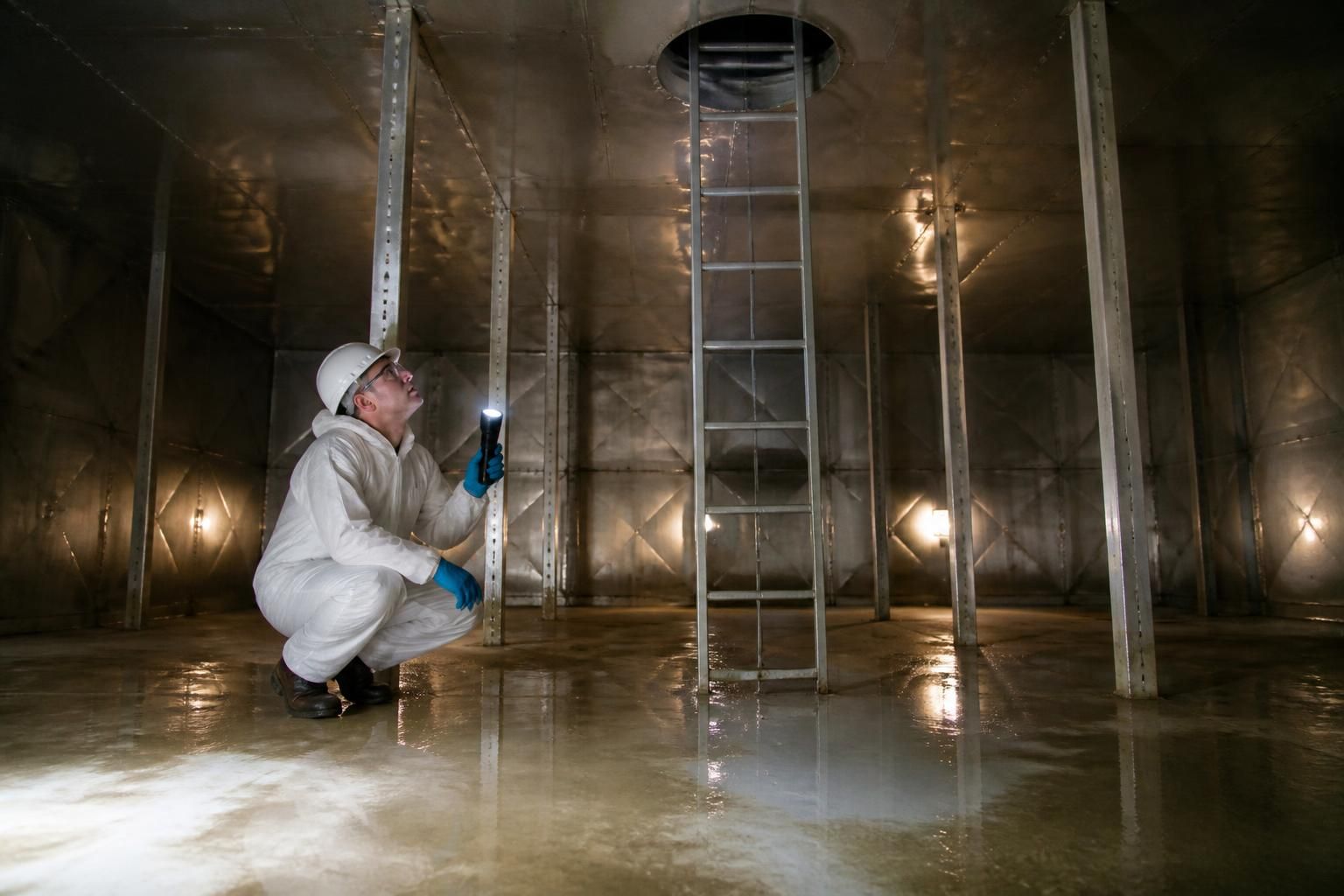
The water tank refurbishment process is a controlled sequence of assessment, preparation, remedial work and verification. Its purpose is to restore the tank’s structural condition and hygienic performance while limiting disruption to the water system and maintaining control of any associated safety risks.
Before work begins, the scope should be established from the tank’s history, current use and available records. This normally includes confirming:
- the tank’s location, capacity, construction and internal arrangement;
- which outlets, pumps, valves and connected services depend on it;
- the type and extent of deterioration, such as failed coatings, damaged joints, scaling or localised corrosion;
- whether the tank supplies drinking water, domestic services, process water or another use; and
- how the system can be taken out of service without compromising essential operations.
A suitable method statement and risk assessment should address isolation, access, manual handling, electrical or mechanical equipment, chemicals, work at height and any confined-space hazards. If access inside the tank is necessary, it must be planned specifically rather than treated as routine maintenance. The work area should also be controlled to prevent tools, dust or other materials entering the water system.
The tank is then prepared for the agreed remedial method. Depending on its condition, this may involve removing unsound existing lining, treating affected areas, preparing surfaces for adhesion or carrying out local structural repairs. Surface preparation is particularly important: a new lining or sealant cannot perform reliably if applied over loose material, active contamination, moisture or an unsuitable substrate. The extent of preparation should therefore match the defect rather than covering problems without addressing their cause.
Where a lining system is specified, the material must be appropriate for the tank’s construction and intended water use. Application should follow the product’s technical requirements, including surface condition, compatibility, curing and any required thickness or coverage checks. Repairs to joints, penetrations, flanges and supports need careful attention because these locations are common sources of leakage or coating failure. Any replacement components or sealants should be suitable for contact with the relevant water type.
During the work, the contractor should check that the agreed repair scope remains appropriate. Hidden defects, deterioration beneath an existing coating or damage around fittings may only become apparent once preparation is under way. Such findings should be recorded and assessed before additional work is undertaken, particularly where they affect the tank’s structural integrity or the performance of connected equipment.
Recommissioning is a separate stage rather than an automatic consequence of completing the physical repairs. The tank and affected equipment should be returned to service in a controlled manner, with checks that access covers, fittings, valves and protective arrangements are correctly reinstated. The system should not be put back into normal use until the required hygiene controls and verification checks have been completed.
Final checks may include a visual examination of repaired surfaces, confirmation that fittings are secure, assessment for leakage and review of any relevant water-quality results. The appropriate checks depend on the tank’s purpose, the work carried out and the requirements of the site’s water safety arrangements. If results or inspection findings are unsatisfactory, further remedial work or investigation may be needed before use continues.
A competent refurbishment programme therefore involves more than applying a new surface. It links the initial condition assessment to a suitable repair specification, manages risks while the tank is unavailable, uses compatible materials and verifies the finished installation before recommissioning. For complex or high-consequence systems, specialist advice can help determine whether refurbishment remains appropriate and what controls are needed throughout the work.
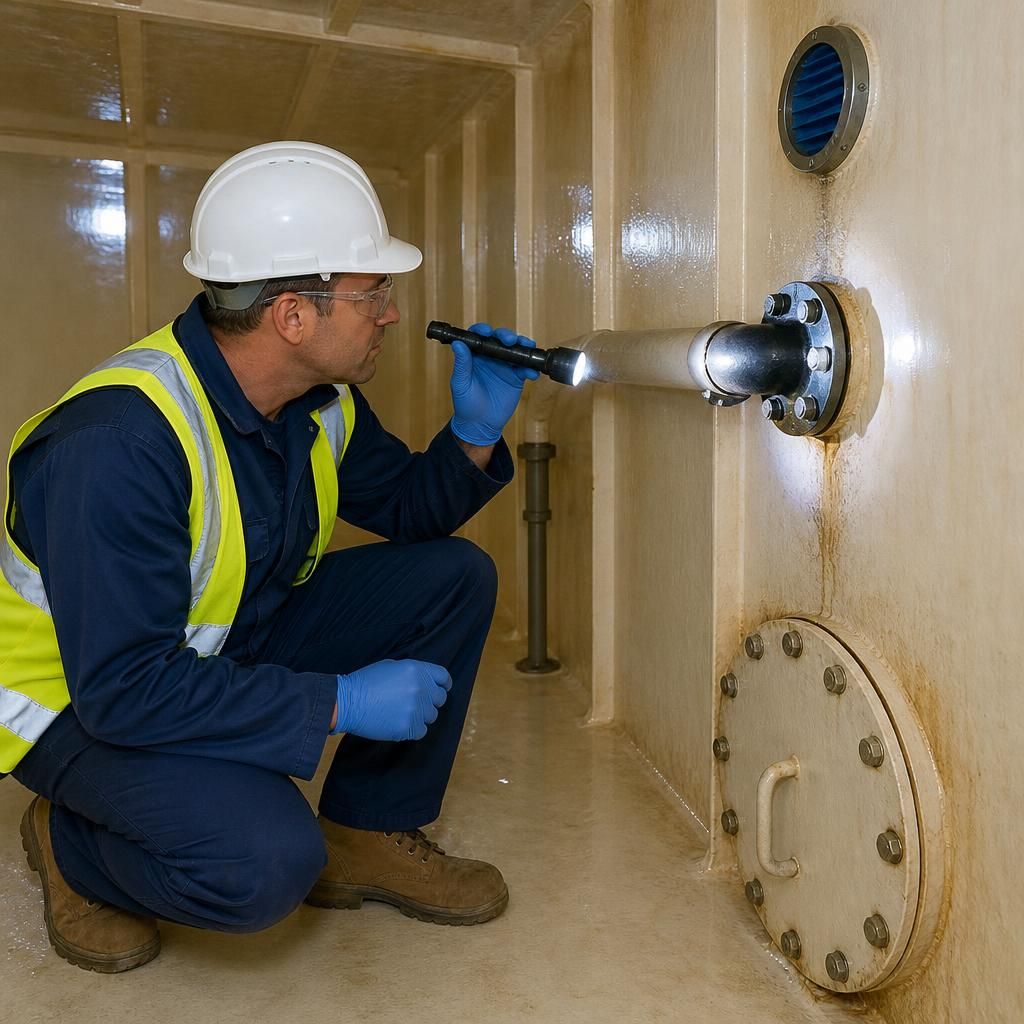
Water tank refurbishment also includes checking the components that protect and control the stored water, not just repairing the tank shell or internal lining. Inlet and outlet connections, overflow arrangements, vents, access covers, screens, supports, valves and seals should be examined for damage, poor fit or deterioration.
These details can affect both hygiene and reliable operation. A damaged cover or ineffective vent screen may allow debris or pests to enter, while a defective valve, support or seal can lead to leakage or uncontrolled flow. Where necessary, ancillary components should be repaired or replaced with materials suitable for the tank and its intended water use. Their condition and any corrective work should form part of the final refurbishment inspection before the tank is returned to service.
Discuss Your Water Tank Refurbishment Requirements
If you are assessing whether an existing tank can be refurbished, discuss its condition, intended use and available records with Blue Fish Water Management Ltd to identify the appropriate next steps.